

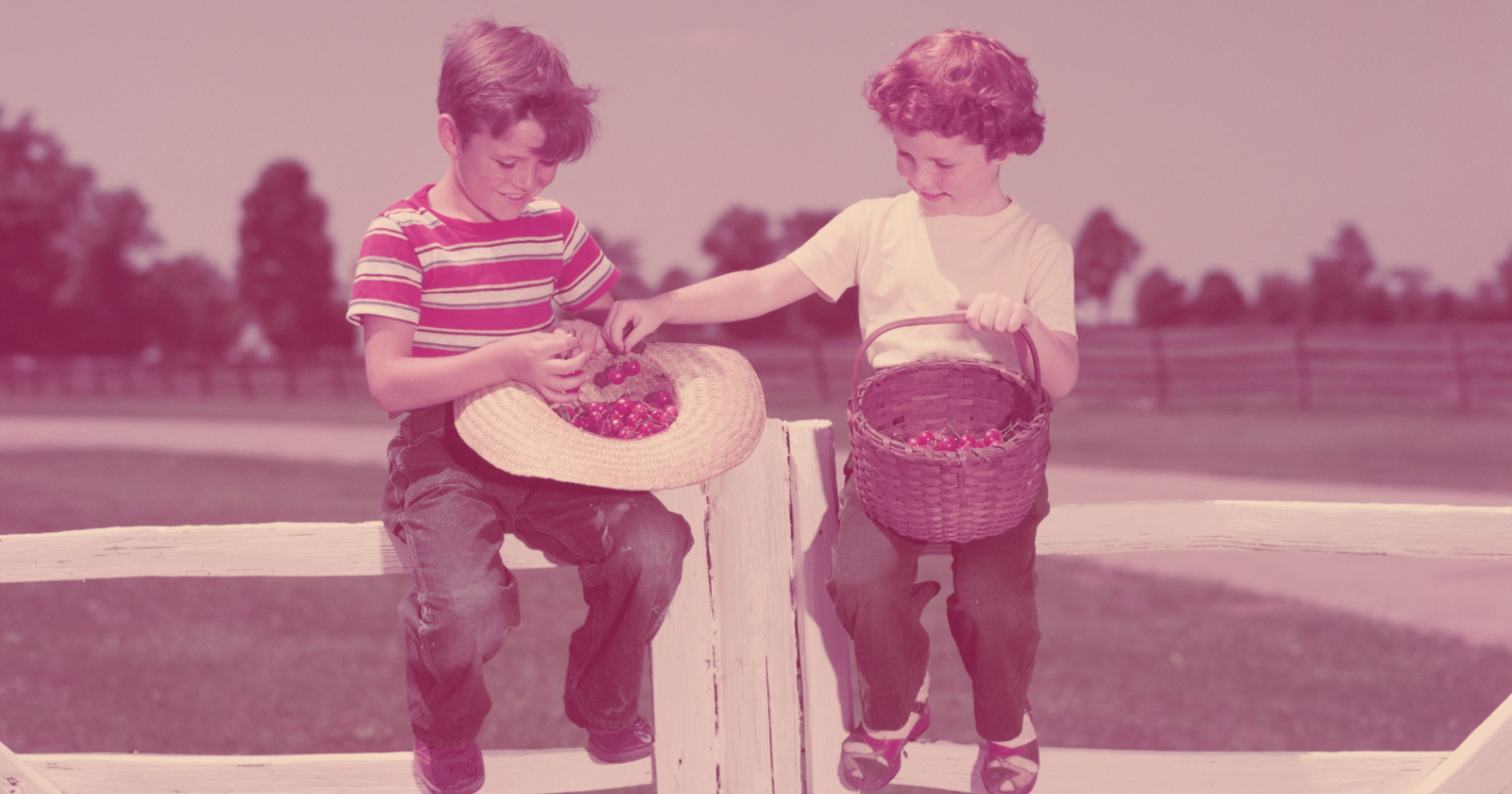
Growing up in a small Midwest town, I spent entire summer days disappearing after breakfast with nothing but a sandwich in my pocket and strict instructions to be home when the streetlights came on. My parents had no idea where I was for eight hours straight, and that was completely normal. Last week, when I mentioned this to another mom at the farmers’ market, she looked at me like I’d described being raised by wolves.
It got me thinking about all the freedoms we had as kids that would probably get parents arrested today. Not dangerous things, mind you—just regular childhood experiences that shaped who we became. As I watch my own little ones play in our backyard sandbox, I can’t help but wonder what we’ve lost in our quest to keep kids perfectly safe every second of every day.
1. Walking to school alone starting in kindergarten
Picture this: five and six-year-olds walking half a mile to school by themselves, maybe picking up friends along the way. No adults, no cell phones, just kids navigating their neighborhood. That was my reality, and probably yours too if you’re over forty. We knew which houses had mean dogs, where the best puddles formed after rain, and exactly how many minutes we could spend looking at caterpillars before we’d be late.
Today? The school pickup line at my daughter’s elementary stretches around the block. Kids who live three houses away get driven. And honestly, I get it—the world feels different now, even if statistics say it’s actually safer.
2. Playing outside unsupervised until dark
Remember when “be home by dinner” was the only rule? We’d build forts in the woods, play elaborate games of tag that spanned multiple yards, and yes, occasionally get into minor trouble. Skinned knees were badges of honor, not reasons for lawsuits.
These days, I feel eyes on me if I let my kids play in our front yard while I’m inside making lunch. The pressure to constantly supervise is exhausting, and I wonder what all this hovering is teaching them about their own capabilities.
3. Riding bikes without helmets (everywhere)
Look, I’m not advocating for this one—helmets save lives. But isn’t it wild to think about how we used to fly down hills, no hands on the handlebars, hair whipping in the wind, without a single piece of protective gear? We’d ride for miles, exploring parts of town our parents had never even seen.
The freedom of those bike rides taught us navigation, risk assessment, and independence. Now when I see kids riding bikes, they’re usually on a designated path with a parent jogging alongside.
4. Buying candy at the corner store with pocket money
By age seven, I could walk to the corner store with a quarter and come back with a paper bag full of penny candy. The shop owner knew every kid in the neighborhood and would sometimes let us sweep the floor for an extra piece of licorice.
Can you imagine sending a seven-year-old to the store alone today? The judgment would be swift and harsh. Yet handling money, making choices, and interacting with adults in the community taught us real-world skills you can’t learn from a worksheet.
5. Drinking from the garden hose
“Don’t come inside unless you’re bleeding or dying” was a common summer directive, and when we got thirsty, we drank from whatever hose was nearby. Nobody worried about BPA or bacteria or whether the water had been properly filtered.
Related Stories from The Artful Parent
- I’m 65 and I stopped arguing politics with my daughter three years ago — not because I gave up on her, but because I finally understood that protecting our relationship mattered more than being right about things neither of us can control
- Psychology says the hardest part of watching your parents age isn’t the physical decline – it’s the moment you realize they’ve started performing competence the same way you performed adulthood when you first moved out, and you’re both pretending not to notice the act
- Psychology says people others describe as ‘easy to talk to’ aren’t being casual — they’re performing one of the hardest social skills that exists
We survived on hose water, and somehow we’re all still here to tell the tale. Though I’ll admit, I bought my kids their own stainless steel water bottles that I religiously fill with filtered water. Old habits die hard, I guess.
6. Settling disputes without adult intervention
When kids had conflicts in the neighborhood, we worked it out ourselves. Sometimes that meant awkward apologies, sometimes it meant not talking for a week, and sometimes it meant learning that not everyone had to be your friend.
Now there’s this expectation that adults should mediate every disagreement. Just last month, another parent called me because our kids had argued over a toy at the park. When I was young, that would have been sorted out in five minutes with no adult involvement whatsoever.
7. Having zero scheduled activities
Boredom was just part of summer. No camps, no classes, no enrichment programs. If you complained about being bored, you got chores. So we learned to entertain ourselves—building elaborate worlds with sticks and rocks, putting on plays nobody watched, creating Olympics in the backyard.
My teaching background tells me that unstructured play is crucial for development, yet I still catch myself feeling guilty when my kids don’t have “enriching” activities planned. The pressure to optimize every moment of childhood is real.
8. Watching whatever was on TV unsupervised
Saturday morning cartoons were a free-for-all. We’d park ourselves in front of the TV with a bowl of cereal and watch whatever came on. No parental controls, no educational content requirements, just pure entertainment.
- Gary Vaynerchuk says bloggers who obsess over monetization before audience-building are making a fatal mistake - The Blog Herald
- The people’s opera: what a 2009 Twitter experiment reveals about audience-led content - The Blog Herald
- How to protect your personal brand on social media as a blogger - The Blog Herald
Sure, we probably watched some stuff that wasn’t age-appropriate, but we also learned to self-regulate. If something scared us, we changed the channel. Simple as that.
9. Using tools and appliances meant for adults
By ten, I could use the stove, the iron, and basic tools without supervision. We learned by doing, occasionally burning ourselves or hitting our thumbs with hammers. These minor injuries taught us respect for dangerous things.
I recently saw a parent Facebook group debating whether twelve-year-olds should be allowed to use butter knives. Butter knives! How did we go from kids using pocket knives to carve sticks to teens needing supervision for spreading peanut butter?
10. Having privacy and secrets
We had diaries with tiny locks, secret clubs with passwords, and hiding spots adults didn’t know about. Our parents didn’t read our notes or listen to our phone calls (when we were old enough to use the phone). Privacy was respected, even for children.
Today’s kids live under constant surveillance—from baby monitors that track breathing to apps that monitor every keystroke. Where’s the space to make mistakes, to figure things out, to be fully human without an audience?
Finding balance in modern parenting
I’m not suggesting we return to the anything-goes parenting of the past. Some changes are absolutely for the better. Car seats save lives. Bike helmets prevent brain injuries. Supervision prevents genuine dangers.
But as I watch my kids play in our garden, carefully contained within our fence, I wonder what adventures they’re missing. What confidence comes from navigating the world solo, even in small ways? What resilience builds when you solve problems without an adult swooping in?
Maybe the answer isn’t choosing between helicopter parenting and free-range kids. Maybe it’s about intentionally creating pockets of freedom within reasonable boundaries. Letting them walk to the neighbor’s house alone. Allowing them to resolve their own conflicts sometimes. Saying yes to climbing that tree, even if it makes your heart race.
Because here’s what I know from my years in the classroom and now as a mom: kids are far more capable than we give them credit for. They just need the chance to prove it—to themselves and to us.
