

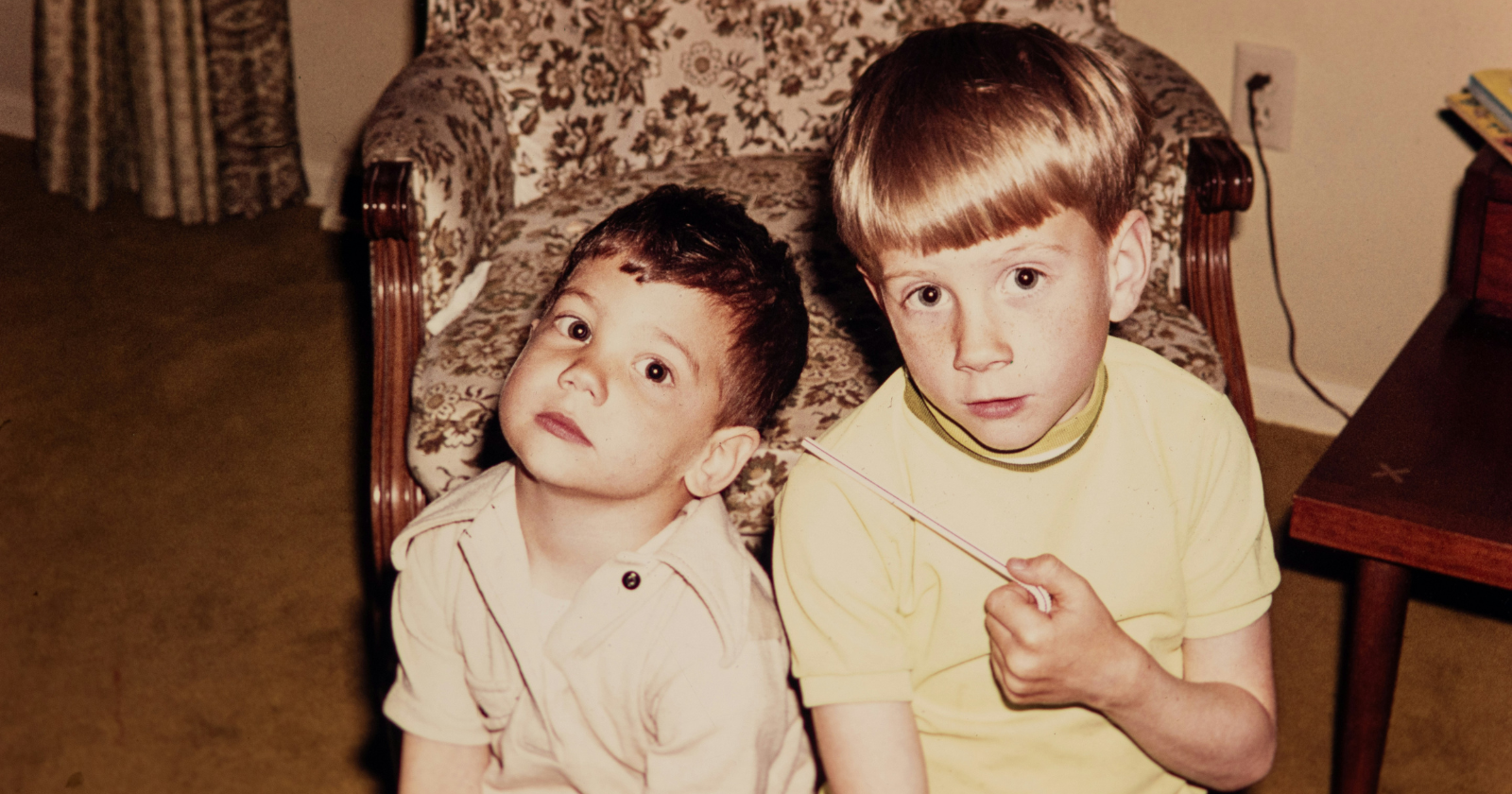
Growing up, Saturday mornings meant one thing: cartoons until noon while my parents slept in. No supervision, no scheduled activities, just me and my siblings making our own breakfast (usually cereal that turned the milk neon colors) and resolving our own disputes over who got the remote. By 10 AM, we’d be outside until the streetlights came on, with no way for our parents to reach us. They had no idea where we were half the time, and that was completely normal.
Fast forward to today, and I can barely let my 5-year-old play in our fenced backyard without checking on her every ten minutes. The shift in parenting between the 1980s and now is staggering, and while some changes are definitely for the better (hello, car seats that actually work!), others make me wonder if we’ve gone too far in bubble-wrapping our kids.
Let’s take a nostalgic and slightly horrifying walk through the parenting rules that shaped our generation but would probably get someone a visit from child services today.
1. Leaving kids in the car while running errands
Remember sitting in the parking lot with the windows cracked while your mom “just ran in for a minute” at the grocery store? That minute usually turned into twenty, and we’d be there sweating, playing with the radio, and honking the horn if we got really bored.
These days, I won’t even leave my kids in the car to return a shopping cart. The judgment alone would be swift and merciless, not to mention the very real safety concerns we’re now aware of. But back then? It was just a random Wednesday.
2. No car seats after toddlerhood
Once you hit about four years old in the ’80s, you graduated from a car seat to… nothing. Maybe a booster if your parents were fancy. Most of us just sat in the regular seat, sliding around on vinyl upholstery during sharp turns, maybe with a lap belt if we remembered.
I distinctly remember standing up in the backseat to see better out the window during road trips. My parents’ main safety device was throwing their arm across us when they braked hard. Now my daughter will probably be in a booster until she’s practically in middle school, and honestly? I’m okay with that.
3. The “be home when the streetlights come on” rule
This was the ultimate childhood freedom. After school and on weekends, we’d disappear into the neighborhood with our bikes and our friends, creating elaborate games, exploring woods, and getting into the kind of minor trouble that builds character. Our parents had absolutely no way to contact us.
Can you imagine? No cell phones, no GPS tracking, no scheduled check-ins. Just pure, unsupervised exploration. My kids think it’s a big adventure when I let them play in the front yard while I watch from the porch. The idea of them roaming the neighborhood for hours without me knowing their exact location makes my anxiety spike just thinking about it.
4. Questionable playground equipment
Metal slides that could give you third-degree burns in summer. Merry-go-rounds that launched kids into orbit. Seesaws that were basically catapults in disguise. And everything was built over concrete or packed dirt.
The playground at my elementary school had this massive wooden structure full of splinters, with gaps big enough for kids to fall through. We loved it. Today’s playgrounds, with their rubberized surfaces and age-appropriate equipment, are infinitely safer. But sometimes I wonder if we’ve traded too many scraped knees for a generation that doesn’t know how to assess risk.
Related Stories from The Artful Parent
- 8 things your teenager is doing that look like disrespect but are actually the healthiest signs of development a parent could ask for
- The way you speak to your partner in front of your children becomes the voice they expect love to sound like—and most parents never make the connection
- 7 “small” moments from childhood that felt like nothing to the parent but became the story the child tells everyone when they describe how they grew up
5. Walking to school alone
Starting in kindergarten, lots of us walked to school by ourselves or with other kids from the neighborhood. No adults, no organized walking groups, just a bunch of six-year-olds navigating traffic and stranger danger on their own.
I lived about a mile from my elementary school and walked every day, rain or shine. These days, the pickup line at my daughter’s future elementary school is legendary for its length. Parents who let their kids walk alone often make the news, and not in a good way.
6. Babysitting younger siblings as a preteen
By age eleven or twelve, many of us were deemed responsible enough to watch younger siblings for entire evenings. No babysitting course, no CPR training, just “don’t burn the house down and make sure your brother eats something besides cookies for dinner.”
I remember being twelve and watching my younger cousins, including a toddler, for hours at a time. Looking at my neighbor’s twelve-year-old now, who still seems to need reminders to brush his teeth, I can’t fathom leaving him in charge of small humans.
7. Drinking from the garden hose
This might seem minor, but it represents something bigger. We drank from hoses, ate food that fell on the ground (five-second rule!), and shared drinks with friends without a second thought. Our immune systems were built through exposure to every germ in the neighborhood.
Now I carry hand sanitizer everywhere, and my kids know to ask for their water bottles instead of drinking from random sources. We’re more aware of water quality issues and contamination, which is good. But sometimes I wonder if all this sanitizing is why every kid seems to have allergies now.
- Psychology says the loneliest part of getting older isn’t being alone – it’s realizing that some friendships don’t survive the moment you stop initiating, and understanding that they were never actually held together by mutual care but by your willingness to do all the work - Global English Editing
- Psychology says the exhaustion that many people accept as a normal part of aging is frequently not about age at all. It’s a nutritional deficit that accumulated so slowly it became part of their identity before they thought to question it - Global English Editing
- Psychology says boomers who planned meticulously for retirement and still feel an inexplicable emptiness once they get there aren’t ungrateful — they optimized obsessively for the finish line and forgot, somewhere along the way, to figure out what they were actually running toward - Global English Editing
8. Discipline that would be considered harsh today
Wooden spoons weren’t just for cooking. Soap wasn’t just for washing hands. And “wait until your father gets home” was a threat that actually meant something. Physical discipline was the norm, not the exception.
I’m grateful we’ve moved away from corporal punishment and fear-based parenting. The gentle parenting approach I try to use with my kids focuses on connection and understanding rather than punishment. But even my fairly traditional Midwest parents would be shocked at how much explanation and negotiation goes into modern discipline.
Finding balance in modern parenting
Here’s what I’ve realized: the 1980s weren’t the parenting golden age some people make them out to be. Kids got hurt in preventable ways. Some experienced real trauma from lack of supervision or harsh discipline. The improvements we’ve made in child safety and emotional awareness are genuinely good things.
But we might have overcorrected in some areas. Our kids miss out on the independence, problem-solving skills, and resilience that came from having more freedom. They don’t get those long, unstructured hours to be bored and creative. They might not develop the same confidence that comes from navigating the world without constant adult intervention.
I try to find middle ground with my own kids. We have safety rules that would seem excessive to my 1980s parents but probably lax to some modern parents. I let them take age-appropriate risks. I resist the urge to hover constantly. I’m working on giving them more independence as they grow, even when it makes me nervous.
Maybe the real lesson isn’t that either era got it completely right. It’s that each generation does the best they can with the information they have, trying to keep their kids safe while still letting them grow into capable humans. And if my kids survive to adulthood without either the neglect of the ’80s or the helicopter parenting of today, I’ll count it as a win.
