
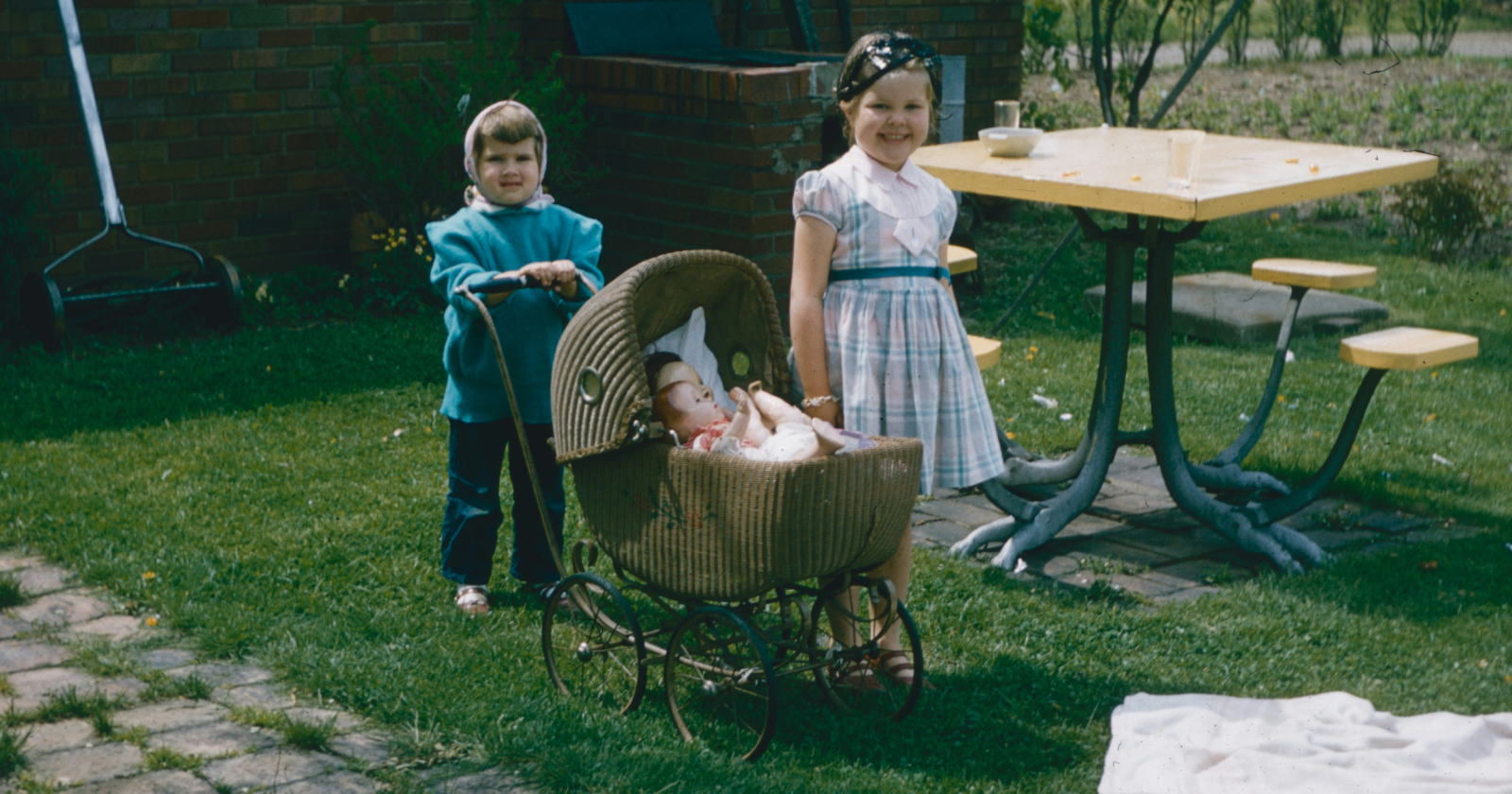
Remember that feeling of grass between your bare toes as you ran through the sprinkler on a hot July afternoon? The metallic taste of water from the garden hose, the sound of screen doors slamming, and the smell of charcoal grills firing up for dinner?
If you grew up before 1980, these weren’t just random summer moments. They were the backdrop to a childhood that operated on an entirely different frequency than what kids experience today.
I’ve been thinking about this a lot lately, especially as I watch my own little ones navigate their world. Sure, they have advantages we never dreamed of, but there’s something about the simplicity and freedom of those pre-1980 childhoods that feels almost magical now.
1. You disappeared for hours and nobody panicked
“Be home when the streetlights come on” was basically our GPS tracker. Can you imagine telling parents today that their kids left at 9 AM and you have no idea where they are, but they’ll probably show up for dinner?
We’d bike to the creek, build forts in the woods, or just wander from house to house seeing who was around. No cell phones, no scheduled playdates, no constant supervision. Just pure, unstructured exploration. The freedom to get bored, get creative, and yes, sometimes get into a little trouble taught us problem-solving in ways that no organized activity ever could.
2. Your entertainment center was a cardboard box
Before screens dominated every room, we turned the simplest things into hours of entertainment. A large appliance box became a spaceship one day, a fort the next, and maybe a toboggan if you were brave enough to slide it down the stairs.
Remember making up elaborate games with nothing but sticks, rocks, and imagination? We didn’t need an app to tell us how to play. We invented our own rules, settled our own disputes, and learned negotiation skills that would make diplomats proud.
3. You learned skills by watching and doing
Nobody Googled “how to change a tire” or watched a YouTube tutorial on fixing a leaky faucet. You stood there holding the flashlight while your dad worked, absorbing knowledge through observation and the occasional “hand me that wrench.”
In our house, with not much money to spare, fixing things yourself wasn’t just practical, it was necessary. I learned to sew on buttons, patch jeans, and tend our garden not from formal lessons but from watching my mom’s hands work their magic. These weren’t just chores; they were life skills passed down through doing.
4. Dinner happened at the table, period
Every night, same time, same wooden table. No eating in front of the TV, no grabbing something on the go. Even if conversations stayed surface-level like they did in our traditional household, there was something powerful about that daily ritual of coming together.
You learned to sit still, use proper manners, and participate in actual conversation. Sure, sometimes it felt like torture when you wanted to be outside playing, but it created a rhythm to family life that’s hard to replicate with today’s scattered schedules.
Related Stories from The Artful Parent
- I’m 65 and I stopped arguing politics with my daughter three years ago — not because I gave up on her, but because I finally understood that protecting our relationship mattered more than being right about things neither of us can control
- Psychology says the hardest part of watching your parents age isn’t the physical decline – it’s the moment you realize they’ve started performing competence the same way you performed adulthood when you first moved out, and you’re both pretending not to notice the act
- Psychology says people others describe as ‘easy to talk to’ aren’t being casual — they’re performing one of the hardest social skills that exists
5. You played through pain and problems
Scraped knee? Rub some dirt on it. Bored? Figure it out. Fighting with your friend? Work it out yourselves or don’t play together.
We weren’t coddled through every minor setback. This wasn’t neglect; it was trust in our ability to handle life’s small challenges. That independence built confidence in ways that constant adult intervention never could have.
6. Your playground was genuinely dangerous
Metal slides that burned your legs in summer. Monkey bars that were actually challenging. Merry-go-rounds that could launch you into orbit if someone got spinning fast enough.
Were they safe by today’s standards? Absolutely not. But navigating those risks taught us to assess danger, trust our instincts, and push our limits responsibly. We learned our physical boundaries by testing them, not by having them predetermined by safety committees.
7. You knew your neighbors like extended family
Mrs. Johnson two doors down kept an eye on all the neighborhood kids. Mr. Peterson would let you pick apples from his tree. Everyone’s parents had implicit permission to discipline you if you were acting up.
This village approach to raising kids meant you were accountable to an entire community, not just your own parents. It created a safety net of adults who cared, and a sense of belonging that went beyond your own backyard.
- Gary Vaynerchuk says bloggers who obsess over monetization before audience-building are making a fatal mistake - The Blog Herald
- The people’s opera: what a 2009 Twitter experiment reveals about audience-led content - The Blog Herald
- How to protect your personal brand on social media as a blogger - The Blog Herald
8. Boredom was your creative catalyst
“I’m bored” wasn’t met with a list of activity options or screen time. It was met with “go find something to do.” And somehow, we always did.
That empty space, that absence of constant stimulation, forced us to become creators rather than consumers. We wrote plays, invented games, started clubs, built things. Boredom wasn’t something to be fixed; it was the launching pad for imagination.
9. You experienced true quiet
No constant hum of electronics, no notification pings, no background TV chatter. When the house was quiet, it was really quiet. You could hear the clock ticking, the house settling, your own thoughts.
That silence taught us to be comfortable with ourselves, to daydream, to process our experiences without constant input. It’s a skill I see my own kids struggling to develop in our increasingly noisy world.
10. Seasons actually changed your life
Winter meant sledding and snow forts. Spring brought bike rides and baseball. Summer was swimming and catching fireflies. Fall meant leaf piles and football.
Your activities, your clothes, even your daily routine shifted with the seasons in a way that connected you deeply to the natural world. You didn’t need a calendar to know what time of year it was; you felt it in your bones.
Why this matters now
Looking back, what made these childhoods special wasn’t what we had, but what we didn’t have: constant supervision, endless entertainment options, bubble-wrapped playgrounds, and scheduled everything.
We had space to fail, to figure things out, to be bored, to take risks. We developed resilience not through formal programs but through lived experience. We learned social skills not through guided interaction but through trial and error with the neighbor kids.
As I raise my own children, I try to sprinkle in some of that old magic when I can. We have our family dinners at the table. I send them outside to play without a plan. I let them be bored sometimes, despite their protests.
They’ll never have the exact childhood we did, and that’s okay. But remembering what made ours special helps me give them something that transcends any generation: the space to grow, the freedom to explore, and the confidence that comes from figuring things out for yourself.
Maybe that’s the real gift of growing up before 1980. Not nostalgia for a simpler time, but wisdom about what really matters in raising confident, capable humans. And that’s something worth passing on, no matter what decade we’re in.