

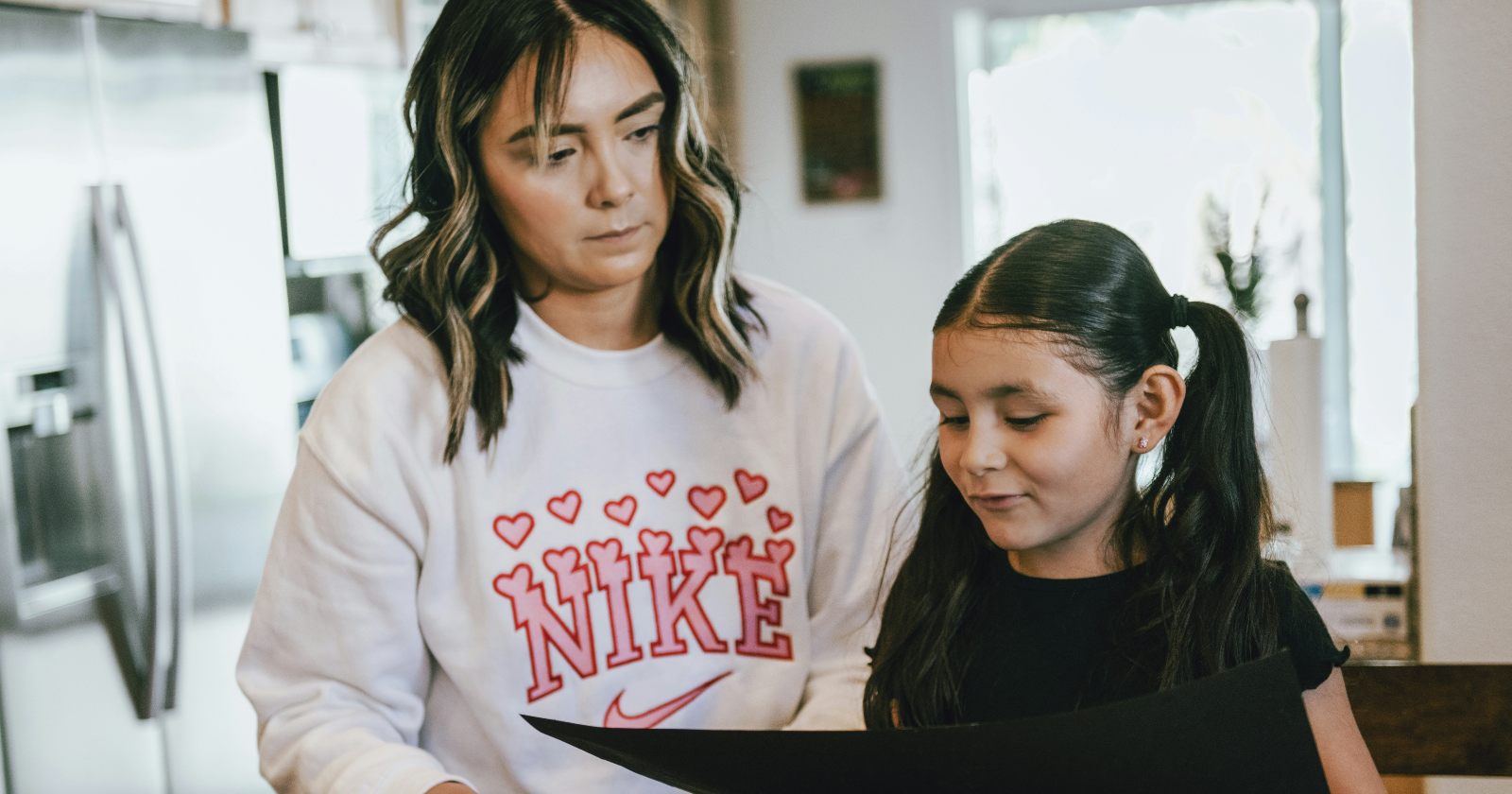
Last night, I watched my five-year-old tie her own shoes for the first time, and instead of feeling proud, I found myself fighting back tears. Not happy tears—the kind that come when you realize the tiny person who once needed you for everything just took another step away from needing you at all.
Here’s what nobody tells you about being a good parent: the better you do your job, the more it feels like you’re working yourself out of one. Every milestone, every triumph of independence, every “I can do it myself, Mama!” is both a victory and a tiny heartbreak. And maybe that’s exactly how it’s supposed to be.
Why success feels like loss
I used to think parenting success would look like perfect family photos and kids who always listened. Seven years in the kindergarten classroom before having my daughter should have taught me better, but somehow I still imagined success would feel, well, successful. Instead, I’m discovering that good parenting often feels like watching someone you love slowly outgrow their need for you.
Maria Montessori captured this perfectly when she said, “The greatest sign of success for a teacher … is to be able to say, ‘The children are now working as if I did not exist.'” Reading that quote hit me like a ton of bricks. All those moments when I step back and watch my kids figure things out on their own? That’s not me failing to help—that’s me succeeding at the hardest part of parenting.
The irony kills me sometimes. We pour everything into these little humans, lose sleep, sacrifice careers (I never did make it back to that classroom), rearrange our entire lives around their needs. And if we do it right? They walk away. They’re supposed to walk away.
The good parent paradox
You know what’s wild? The more capable our kids become, the more we question if we’re doing enough. My two-year-old built an entire fort yesterday without asking for help once. Instead of celebrating, I spent ten minutes wondering if I should be more involved, if stepping back meant I was being lazy.
This paradox messes with our heads. When our kids struggle, we feel like failures for not preventing their pain. When they succeed independently, we feel like failures for becoming less necessary. We’re basically set up to feel inadequate no matter what happens.
But here’s what I’m learning: those feelings aren’t signs we’re doing something wrong. They’re actually signs we’re doing something right. Every time my daughter solves her own playground dispute or my son figures out how to reach his favorite toy, they’re building the exact skills they’ll need when I’m not around.
The Bronfenbrenner Center for Translational Research confirms this: “Research shows that parental autonomy support builds psychological health and promotes academic achievement among kids.” So that uncomfortable feeling when we step back? That’s not neglect—that’s nurturing independence.
When letting go means holding on differently
Yesterday morning, my daughter announced she wanted to make her own breakfast. My instinct was to jump in—she could spill, make a mess, choose something unhealthy. Instead, I sat on my hands and watched her carefully pour cereal, splash milk everywhere, and beam with pride at her soggy creation.
The mess took five minutes to clean. The confidence she gained? That’s going to last a lifetime.
Related Stories from The Artful Parent
- I’m 35 and I love my parents but I also resent them — and I spent years believing those two things couldn’t both be true before I understood that love and resentment are not opposites, they are the specific combination that forms when you were raised by people who did their best and whose best had limits and whose limits became your wounds
- Psychology says when adult children avoid their parents, it’s rarely about one dramatic event — it’s about a thousand small moments where the child learned that being authentic around the parent felt more dangerous than being distant
- I finally understand why my father always backed the car into the driveway — it wasn’t about convenience, it was a man who spent his whole life making sure everyone else could leave first
I think about this constantly now. How do we stay connected while letting them drift away? How do we remain their safe harbor while encouraging them to sail into open waters? The answer isn’t in doing more—it’s in being present differently. It’s in becoming the cheerleader instead of the player, the safety net instead of the cage.
Redefining what good parents do
Maybe we need to flip our whole definition of parenting success. What if instead of measuring ourselves by how much our kids need us, we measured ourselves by how well they function without us?
Jim Taylor, Ph.D., puts it this way: “Failure is an inevitable-and essential-part of life. Failure can bolster the motivation to overcome the obstacles that caused the failure. It shows children what they did wrong so they can correct the problem in the future. Failure connects children’s actions with consequences which helps them gain ownership of their efforts.”
When I read that, something clicked. All those times I’ve wanted to rush in and fix things, prevent the tears, smooth the path—I wasn’t protecting my kids. I was protecting myself from the discomfort of watching them struggle.
Good parents don’t prevent all failures. Good parents create safe spaces for kids to fail, learn, and try again. Good parents resist the urge to tie the shoes, solve the homework problem, or referee every sibling squabble. And yeah, it feels terrible sometimes. It feels like we’re not doing our job.
But we are. We’re doing the hardest part of our job—preparing them for a world where we won’t always be there.
Finding peace in the process
I’m trying to embrace a “progress not perfection” approach these days. Some mornings I nail it, stepping back while my kids navigate their own challenges. Other days I hover like a helicopter that’s forgotten how to land. Both responses come from love, and I’m learning to be gentle with myself about that.
What helps is remembering that independence doesn’t mean disconnection. My daughter still runs to me with her triumphs and her scraped knees. My son still needs his bedtime snuggles after conquering the playground alone. The relationship changes, but it doesn’t disappear. It transforms into something different—maybe even something better.
We’re not losing our children when they become independent. We’re gaining young humans who choose to be with us, not because they have to, but because we’ve built a relationship worth maintaining even when the dependency ends.
A different kind of success story
So here’s what I want you to know if you’re lying awake at night wondering if you’re enough: that ache you feel when your child doesn’t need your help? That’s not failure. That’s love doing exactly what love is supposed to do—preparing someone to thrive without us.
The next time your kid says “I’ve got this,” and your heart simultaneously swells and breaks, remember that’s exactly how success is supposed to feel in this strange, beautiful, backwards job of parenting. We’re the only professionals whose greatest achievement is making ourselves obsolete.
And maybe that’s the most successful thing we can do—raising humans who are brave enough to not need us, while knowing they’re loved enough that they’ll always want us around anyway. The feeling of failure? That’s just success wearing a really good disguise.
