

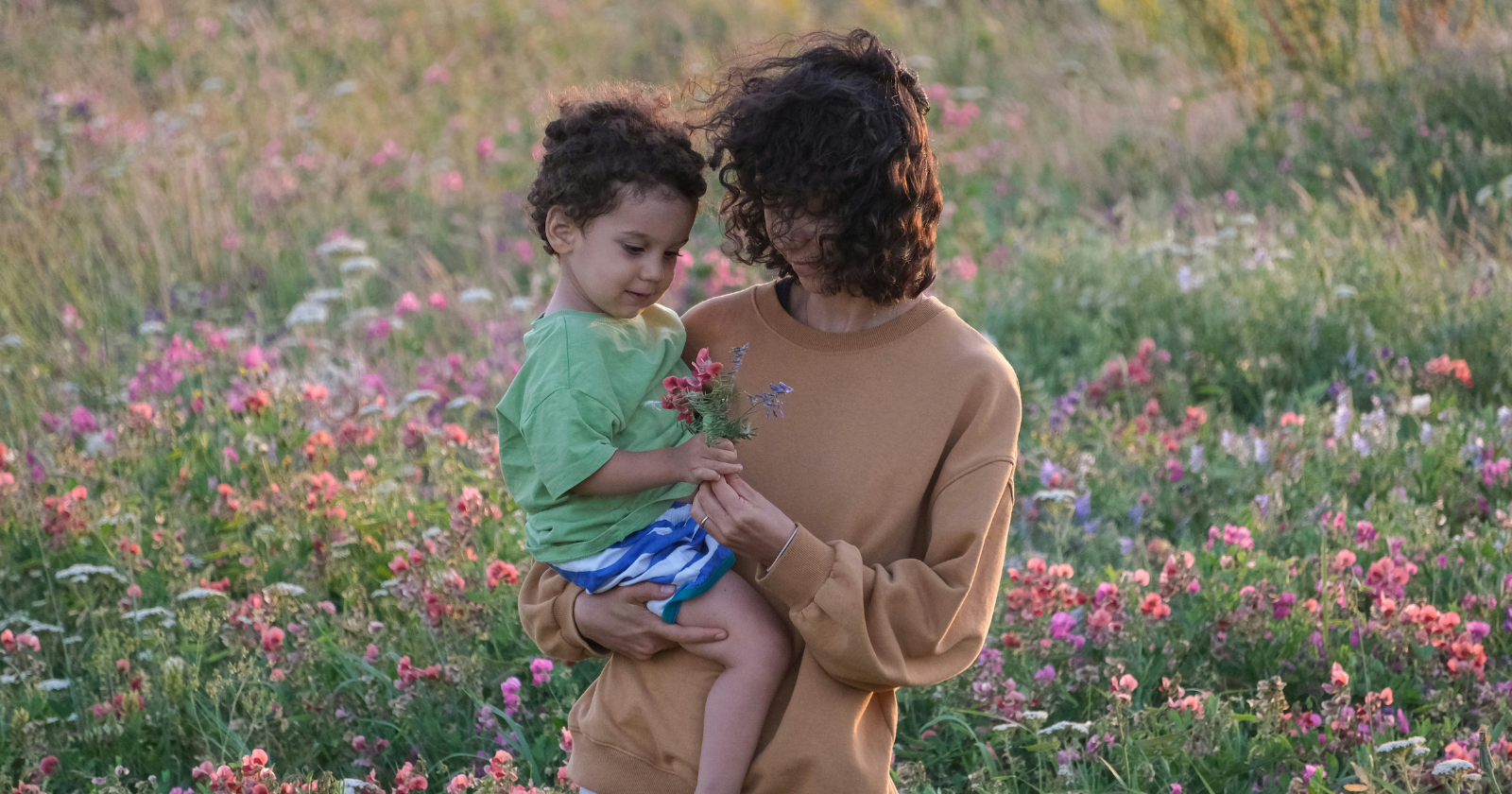
When my son was barely two, I watched him at the playground trying to climb a structure that was clearly too big for him.
Every maternal instinct screamed at me to rush over, to lift him up, to protect those chubby little legs from scraping. But I stayed put, hands clasped tight around my coffee cup.
He struggled, slipped, tried again. When he finally made it halfway up and beamed at me with pure joy, I realized something crucial: raising boys isn’t about protecting them from every challenge.
It’s about giving them the tools to face those challenges with emotional intelligence intact.
After seven years teaching kindergarten and now raising my own little guy, I’ve noticed something striking. The boys who thrived weren’t necessarily the toughest or the smartest.
They were the ones whose mothers had quietly revolutionized how we raise sons—moving away from “boys don’t cry” toward something far more powerful.
1. They let their sons cry (and teach them why it matters)
Remember when crying was considered weakness in boys? Yeah, we’re done with that. When my two-year-old melts down because his tower collapsed, I don’t rush in with “You’re okay!” or “Big boys don’t cry.”
Instead, I sit nearby and say, “That’s frustrating when things fall apart, isn’t it?”
Emotionally intelligent mothers know that tears are just another form of communication. They’re teaching their sons that feelings aren’t enemies to conquer but signals to understand.
This doesn’t mean wallowing in every emotion, but acknowledging them as valid data points about what’s happening inside.
2. They model emotional vocabulary from day one
“Use your words” takes on new meaning when you actually give kids the words to use.
Related Stories from The Artful Parent
- Psychology says parents who lose the respect of their adult children don’t lose it because they were imperfect, they lose it because they were unreachable—too defensive to reflect, too prideful to apologize, and too afraid of shame to become the parent their adult child still wanted to trust
- Psychology says parents who can’t stop helping their adult children aren’t being loving — they’re unconsciously protecting themselves from the terror of becoming unnecessary
- Psychology says parents who constantly ask themselves ‘was I a good parent’ usually were — the ones who caused real damage rarely question themselves at all
I’ve made it a point to narrate emotions—mine and his—throughout the day. “Mommy’s feeling overwhelmed because we’re running late” or “You seem disappointed that we have to leave the park.”
It might feel silly at first, talking to a toddler about complex emotions. But watch what happens when a three-year-old can say “I’m frustrated” instead of throwing blocks across the room. That’s power.
3. They embrace the mess of big feelings
Here’s what I learned teaching kindergarten: the kids who could identify and work through difficult emotions became better problem-solvers.
So when my son rages about seemingly tiny things, I remind myself that he’s practicing for bigger challenges ahead.
“Tell me more” and “I’m listening” have become my go-to phrases. Not “You’ll be fine” or “It’s not that bad.” Those shut down conversations. But “Tell me more”? That opens doors.
Sometimes he can’t tell me more because he’s two and his vocabulary consists mainly of truck noises. But he knows the invitation stands.
4. They reject outdated masculine scripts
My neighbor recently told her son to “man up” when he scraped his knee. I bit my tongue, but inside I was screaming. We’re still doing this? In 2024?
Emotionally intelligent mothers have thrown out the old playbook. They’re not raising boys to be emotionless providers. They’re raising future partners, fathers, and friends who can connect authentically with others.
This means celebrating gentleness as much as strength, kindness as much as courage.
5. They prioritize connection over correction
When my little guy hits or pushes (because toddlers gonna toddler), my first instinct isn’t punishment. It’s connection. “You were angry because someone took your toy. Being angry is okay. Hitting isn’t. Let’s figure out what to do when we feel that way.”
Does this take longer than a time-out? Absolutely. But we’re not raising robots who follow rules out of fear. We’re raising humans who understand the why behind boundaries.
6. They create space for all interests
My son loves trucks AND playing with my old teaching supplies—including the sparkly stickers and purple glitter glue. Both get equal enthusiasm from me.
Why? Because interests shouldn’t be gendered, and creativity doesn’t care about stereotypes.
Emotionally intelligent mothers let their sons explore without the weight of “boy things” versus “girl things.” They know that a kid who can build with blocks AND play pretend tea party is developing a fuller range of skills and empathy.
7. They teach consent and boundaries early
“Do you want a hug?” seems like a simple question, but it’s revolutionary when asked to a two-year-old boy.
We’re teaching that bodies have boundaries, that no means no, and that affection should always be consensual—even with grandparents, even with mom.
This extends to respecting when he doesn’t want to share (gasp!) or when he needs space. We’re creating a family culture where emotional boundaries are just as important as physical ones.
8. They show their own struggles appropriately
Sometimes I mess up. Sometimes I yell when I shouldn’t or feel overwhelmed by the constant demands.
Instead of hiding these moments, I use them as teaching opportunities. “Mommy got too frustrated and raised her voice. I’m going to take some deep breaths. Want to do it with me?”
Our sons need to see that everyone struggles with emotions, and more importantly, that there are healthy ways to handle them. They need to know that repair after rupture is possible and that apologizing doesn’t diminish your authority—it enhances your humanity.
9. They celebrate emotional bravery over physical toughness
Last week, my son told me he was scared of the dark. Old-school parenting might have dismissed this. “There’s nothing to be afraid of!” But acknowledging fear takes courage. So I celebrated it: “Thank you for telling me how you feel. That was brave.”
We talk about different kinds of brave. Brave like trying new foods. Brave like saying sorry. Brave like admitting you need help. Physical courage has its place, but emotional bravery? That’s the stuff that changes lives.
The path forward
Raising emotionally intelligent boys isn’t about creating soft kids who can’t handle the real world. It’s about raising whole humans who can navigate life’s complexities with their hearts and minds intact.
It’s about breaking cycles that told generations of men that feeling equals weakness.
Some days I nail it. Other days, I’m googling “how to stay calm when toddler throws food” at 2 AM.
But every small shift away from “toughen up” and toward “tell me more” is creating a different future—not just for our sons, but for everyone who will love them, work with them, and depend on them someday.
The playground will always have structures too big for little legs. But when we raise boys who understand their emotions, who can ask for help, who can offer comfort as easily as they accept it, we’re not just helping them climb higher.
We’re changing what it means to stand tall.
