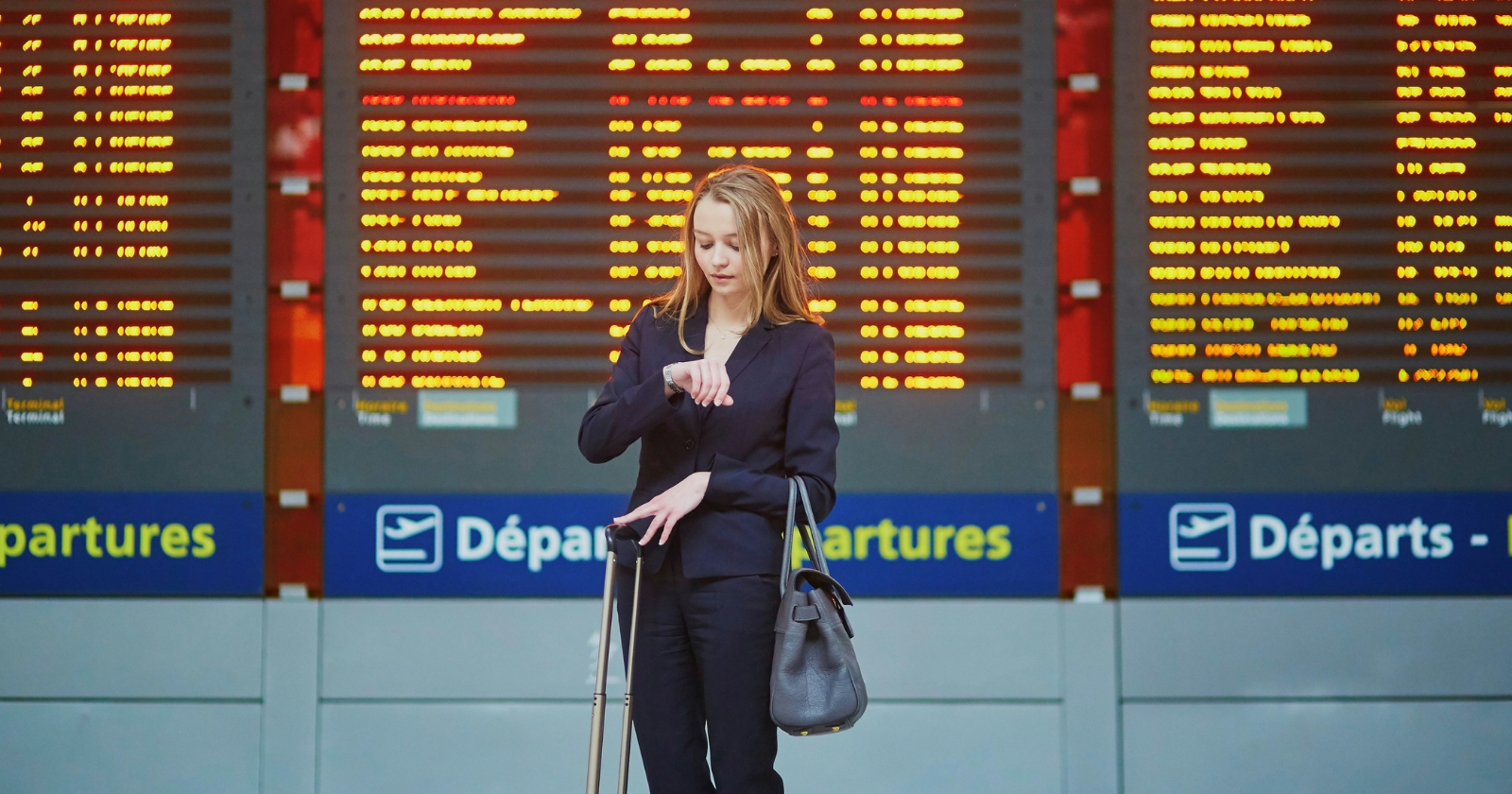
Three hours only looks excessive from the outside, to the person watching you leave the house before most flights would even be worth tracking on an app. I was reliably that person for the better part of my adult life, until a toddler and a pregnancy made the mathematics of leaving the house anywhere close to on time the actual challenge. But before that era, the three-hour airport arrival was something I did without much thought, the way some people build an extra hour into a morning before the day begins, or leave a party just slightly before they’re ready to. It felt like the only sane approach, and no one was going to convince me otherwise.
The diagnosis applied to this habit from the outside is usually anxiety. The nervous flyer who needs to see the gate before they can breathe. The worrier cataloguing all the things that could go wrong between the front door and the departures board. That diagnosis fits some early arrivers. It doesn’t fit most of them. For a large number of people who are routinely through security two hours before boarding begins, the extra time is simply what calm has always looked like: a preference, a mode of operating, a way of treating the beginning of a journey as something that deserves its own unhurried beginning. The habit comes from a different place than anxiety, and it tends to produce a different result.
They have stopped treating the journey to the airport as part of the trip
For the person who cuts it close, the journey begins at the gate, and everything before that is an obstacle to clear. Getting to the airport is a problem to solve: the traffic, the check-in queue, the security line, the sprint to the terminal. The flight is the thing; the getting there is the cost of it.
The chronic early arriver has reorganized this entirely. The trip begins at check-in. Everything from that point forward is the experience itself: the walk to the gate, the coffee bought without checking the time, the half hour of reading that belongs to no one in particular. The journey to the airport is still a problem, but it’s a problem that happened earlier, in a different portion of the day, before it had any power to contaminate the trip itself. By the time the early arriver is through security, the logistical portion is done. What remains is only the pleasant part.
This is a small organizational shift, but the psychological effect of it is significant. The trip starts well, because the difficult part has already passed. The mood that arrives at the gate is the mood that boards the plane.
The extra time is a form of stress prevention, not stress relief
There is a meaningful difference between managing stress after it has arrived and arranging things so that it is less likely to arrive in the first place. Psychologists call the second approach proactive coping, and Aspinwall and Taylor, who defined the concept formally in 1997, described it as a set of processes through which people anticipate or detect potential stressors and act in advance to prevent them or to mute their impact. The early airport arrival is a near-perfect illustration of the principle applied to daily life. The potential stressors are all predictable: traffic, queues, a delayed bag check, a security line longer than expected. Acting in advance turns potential crises into mild inconveniences that play out inside a generous buffer.
The same researchers noted that addressing a problem earlier in its course requires fewer resources and may be more likely to be successful. The person who arrives at the airport with thirty minutes to spare is managing an emergency. The person who arrives with three hours is on a walk. The same problems, met at different stages, cost entirely different amounts of energy.
The early arriver has simply decided, at some point, that they would rather spend that energy on nothing in particular. A long airport wait costs time. A missed flight, or even a rushed boarding, costs something harder to recover from.
For them, the airport is one of the few places where waiting is structurally acceptable
Most waiting is a form of failure: you are behind, late, unprepared. The waiting room at the doctor’s office is not pleasurable. The queue at customs on arrival exists to be endured. Most modern waiting carries an undercurrent of lost time, the sense that something that should have been smooth is taking longer than it was supposed to.
The airport departure lounge is different. It is one of the few spaces in adult life where waiting is the designed state, where the chair and the coffee and the hour of doing nothing in particular are exactly what the architecture intended. There is no failure in sitting at a gate two hours early. The place was built for this. The early arriver knows this, and uses it, turning what could be an anxious run into something that has the texture of a sanctioned pause.
This matters particularly now, when unscheduled stillness is hard to come by. An early airport arrival is, among other things, an enforced window of time that belongs to no one. There are no tasks in an airport gate that follow you from home. The usual obligations do not clear security. For a certain kind of person, the three hours before a flight are some of the more genuinely restful hours of the month.
They have done the arithmetic on rushing — and the numbers never work out
There is a mental calculation that the early arriver has made, usually at some point in their past, and usually after a flight that did not go the way it was supposed to. The calculation involves comparing two versions of the same trip: the one where they left with plenty of time, and the one where they left with just enough.
In the first version, every obstacle is an inconvenience. Traffic makes the airport arrival slightly later, but still fine. The security line is long, but there is still time to find the gate at a walk. The flight is boarded without hurry, and the seat is settled into before the stress of the journey has a chance to begin. The trip starts well.
In the second version, every obstacle is a threat. The same traffic becomes a catastrophe. The security line is something to push through. The walk to the gate is a run. The seat is arrived at breathing hard, and the first hour of the flight is spent coming down from the sprint to get there. The trip starts poorly, and often stays that way.
The early arriver has looked at these two versions and made a decision that the first one is worth the extra sitting time. The decision comes from experience, from having compared the two versions enough times to know which one leaves them fit to actually enjoy where they are going.
The habit isn’t about managing fear — it’s about protecting a mood
What the early airport arrival does for the person is often better understood through what it keeps intact than through what it avoids. The person who arrives three hours early has usually long since made peace with the fear of missing the flight. What drives the habit is something more specific: attachment to a particular version of themselves at the start of a journey, unhurried and present, capable of noticing the trip, and they have learned that this version requires a certain amount of lead time to exist.
The rush version of the same person is a different person: shorter with the bag drop attendant, missing the city on approach, spending the first two hours of a destination already calculating the return. The early arriver is protecting a state of mind, one they know from experience they cannot simply decide to inhabit at boarding time if the two hours before it were spent on the edge of a sprint.
That psychologist Lawrence T. White, reviewing the research on personality and punctuality, found that personality traits are generally poor predictors of arrival behavior is, in its way, clarifying. The early arriver falls outside standard personality typing. What the habit reflects is a choice about what the beginning of a trip is worth to them. The habit looks the same whether it comes from anxiety or from a deep preference for calm, but the people inside the habit often feel very different about it. The anxious early arriver is managing a problem. The calm one is simply living at the pace that suits them.
Calm, for some people, is something you have to plan to arrive at
My husband thinks I am excessive. He is Chilean, which means his relationship with time is genuinely flexible in ways mine is not, and he has watched me head toward the door for flights with a certainty that suggests I have reason to believe the airport might move location before we get there. He is not wrong that three hours is more than we need. He is also not entirely right that it is wasted.
What I have noticed, over many years of airports and transit and the particular quality of time that exists in departure lounges, is that the extra hour is the hour in which the trip actually begins, before the urgency of a gate announcement or the press of boarding groups, and it does not feel like waiting at all. The flight is the same flight either way. The person on it is the variable. And the person who walked to the gate is, consistently, a better companion for the trip than the person who ran.
Some people arrive at calm by sitting in a departure lounge long enough. Some people have never needed to. Both are fine. The first group tends to be people who have simply learned, at some point, what the beginning of a good trip requires, and arranged their departure time accordingly.