

Last summer, I watched my daughter trying to help me in the garden, and it hit me: she had no idea how to properly hold a trowel or tell when tomatoes were ripe.
My grandmother would have had me out there at dawn, teaching me which beetles were friends and which were foes, showing me how to test soil between my fingers. By five, I knew the difference between lamb’s quarters and actual weeds.
That moment stuck with me because it perfectly captured something I’ve been noticing everywhere.
Our kids are missing out on a whole world of wisdom that used to pass naturally from grandparent to grandchild. And while we’re busy filling their schedules with enrichment classes and educational apps, we’re losing something quieter but perhaps more essential.
1) The art of being bored (and what came from it)
Remember those long afternoons at grandma’s house with absolutely nothing planned? No tablets, no structured activities, just you and maybe some old magazines or a deck of cards? My grandmother never entertained us. If we complained about being bored, she’d hand us a dishrag or point us toward the garden.
Today’s kids rarely experience true boredom.
We’ve become so afraid of empty time that we fill every moment with something. But those boring hours at grandma’s taught us to create our own fun, to daydream, to figure things out. My kids struggle with this. Give them an unstructured hour, and they’re lost without a screen or an adult-led activity.
The cost? Kids who can’t self-entertain, who need constant stimulation, who never learn that magical transformation where boredom becomes creativity.
2) Stories without screens
Grandparents were master storytellers. Not reading from books (though they did that too), but telling stories from memory about the Depression, the war, the time uncle Henry tried to ride a bull, or how they met grandpa at a dance hall.
These weren’t just stories; they were family history, moral lessons, and entertainment rolled into one. My grandmother could stretch a single story about her childhood Christmas across an entire afternoon of shelling peas.
Now? Stories come from screens. Even when grandparents are around, everyone’s distracted. We’re losing the oral tradition that connected generations, and with it, our family histories are disappearing. My kids know every Disney plot by heart but couldn’t tell you how their great-grandparents met.
Related Stories from The Artful Parent
- I sacrificed my career, my hobbies, and most of my friendships to be a full-time mother — and when my youngest turned 25 and said she wished I had pursued my own dreams so she didn’t feel like the reason I gave everything up, I realized martyrdom isn’t actually love
- Psychology says the reason good parents often feel like failures isn’t because they did anything wrong — it’s because parenting is the only job where success looks like the person you devoted everything to no longer needing you
- The hardest part of parenting adult children isn’t letting go — it’s these 8 quiet realizations about how much of yourself you gave away and whether you’ll ever get it back
3) Practical skills taught with patience
Grandparents had time. Time to teach you to darn a sock, fix a leaky faucet, or make bread from scratch. They’d let you mess up seventeen times while learning to crochet a simple chain. There was no rush, no agenda, just the slow passing of knowledge from old hands to young.
I learned to sew on my grandmother’s ancient Singer, making crooked seams on scraps for hours. She never grabbed it away to “just do it right.” Today, if something takes more than five minutes to learn, we YouTube it or give up. My daughter’s friends don’t know how to sew on a button or cook without a microwave.
We’re raising a generation that’s incredibly tech-savvy but practically helpless. They can code but can’t change a tire, can navigate complex social media but not a basic recipe.
4) Understanding where food really comes from
Most grandparents of that era grew up closer to the land. They knew which mushrooms would kill you, how to tell if a melon was ripe, when to plant peas. Food wasn’t just something from the store; it had seasons, stories, and work behind it.
My grandmother taught me to snap beans, showed me how to tell if an egg was fresh, let me help her can tomatoes even though I made a mess. Food preparation was communal, unhurried, and educational.
Now our kids think food just appears. Even my attempts at gardening feel rushed and performative compared to the natural rhythm my grandmother had with growing things. The connection between earth and table has been severed, and with it, an understanding of cycles, patience, and gratitude for what we eat.
- Psychology says the people who become genuinely happier in their 60s aren’t the ones who added the most to their lives — they’re the ones who became ruthless about what they removed, who understood that at this point the subtraction is almost always more valuable than the addition, and who stopped treating their time and energy as things available to anyone who asked - Global English Editing
- Behavioral scientists found that people who arrive at their late 60s with no close friends didn’t lose them through any single rupture — they lost them through the cumulative weight of a hundred small deprioritisations, each completely reasonable, each leaving the friendship slightly thinner, until the connection was so attenuated that neither person could quite remember the last time it had felt real - Global English Editing
- Psychology says adults who take hours or days to respond to texts aren’t disorganized or avoidant — they’re operating with a nervous system that treats every notification like an urgent demand that requires a perfectly calibrated response - Global English Editing
5) The value of making do
“Use it up, wear it out, make it do, or do without.” How many times did you hear that? Grandparents who lived through the Depression knew how to stretch everything. Buttons were saved, wrapping paper carefully folded for reuse, and nothing edible was wasted.
They taught us that broken didn’t mean garbage, that patches could be decorative, that leftovers could become something new. This wasn’t about being poor; it was about being resourceful and respectful of resources.
Our kids grow up in a disposable culture where everything’s replaceable. When my son’s toy breaks, his first instinct is to ask for a new one, not to fix it. This mindset costs more than money; it costs us creativity, problem-solving skills, and environmental awareness.
6) Intergenerational living wisdom
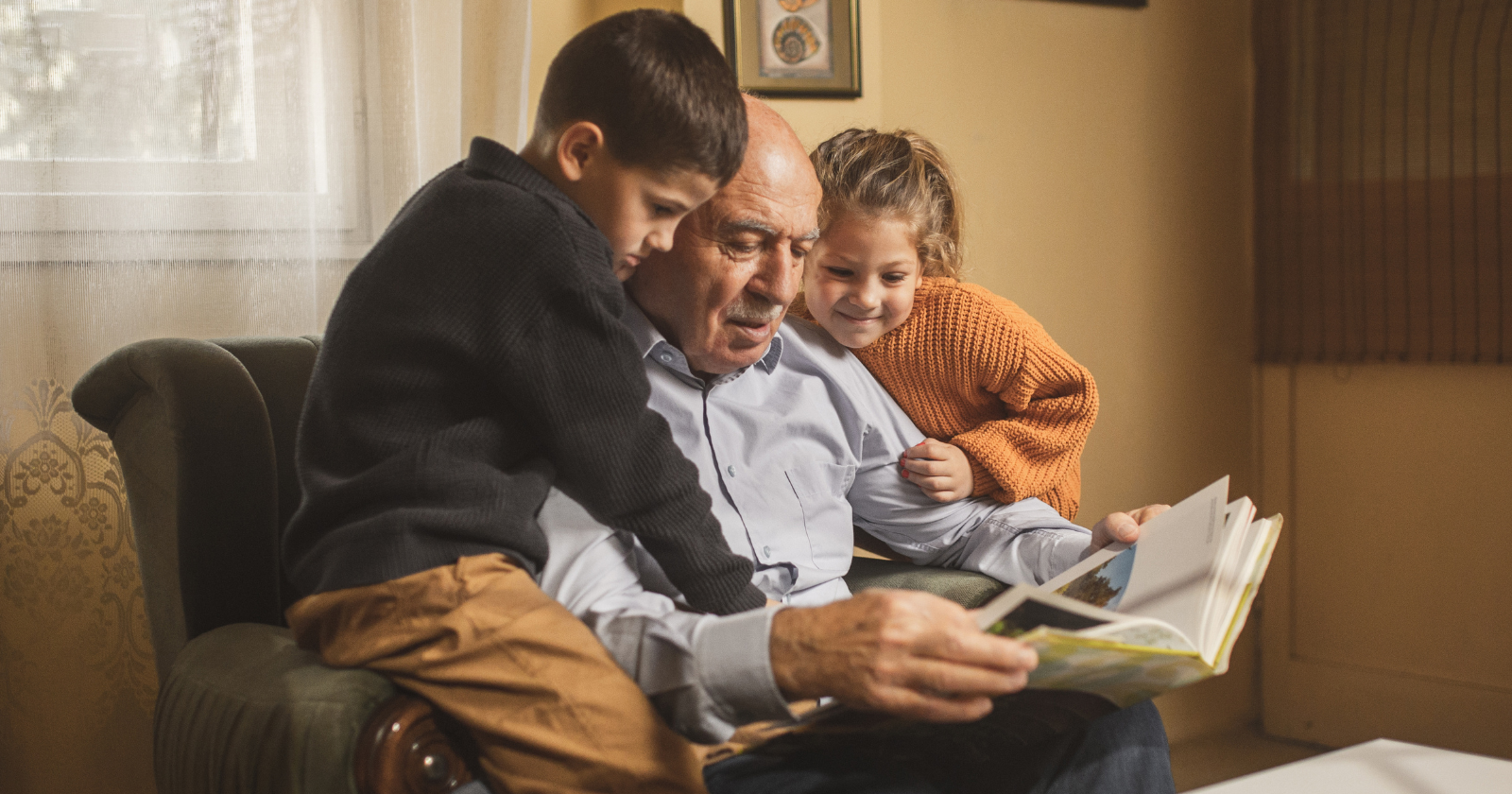
Grandparents lived in or near the family home more often back then. They were daily fixtures, not holiday visitors. This meant constant access to their wisdom, their different perspective, their stories about how mom or dad were as children.
They provided a buffer between parent and child, someone to talk to when mom seemed unfair, someone who’d lived long enough to know that most problems weren’t the end of the world. They normalized aging, death, and the cycle of life just by being present.
Today’s geographic sprawl means many kids see grandparents a few times a year at best. They miss out on that steady, calming presence, that long view of life that only comes with age.
7) Slower rhythms and seasonal living
Life at grandma’s moved differently. Meals took hours to prepare. Walks were for walking, not getting somewhere fast. There were seasonal rhythms: spring cleaning, summer canning, fall leaf raking, winter knitting.
This taught patience and presence. You couldn’t rush bread rising or strawberries ripening. You learned to work with natural timing, not against it.
Our kids live at digital speed, expecting instant everything. The ability to wait, to work slowly toward something, to understand that good things take time is becoming extinct.
8) Unfiltered truth about hard times
Grandparents who lived through real hardship didn’t sugarcoat life. They talked about loss, struggle, and survival in matter-of-fact ways. Death wasn’t hidden; difficult history wasn’t sanitized.
This gave kids perspective and resilience. Hearing how grandpa survived the war or grandma raised eight kids alone made your problems seem manageable. It taught that hard times pass, that people are stronger than they think.
Today we bubble-wrap our kids from harsh realities, then wonder why they crumble at the first real challenge.
What we can do about it
I’m not saying we should go back to the ’60s. But we can intentionally reclaim some of what’s been lost. Put down the phone during family meals. Tell stories about your childhood, even if they feel boring compared to YouTube. Teach a practical skill, even if it takes forever. Let your kids be bored sometimes.
Most importantly, if you’re lucky enough to still have grandparents or elderly relatives around, create space for them in your children’s lives. Not staged visits, but regular, ordinary time together. Let them teach what they know, share their stories, pass on their wisdom.
The quiet cost of losing these eight things isn’t dramatic or immediate. It’s a slow erosion of resilience, creativity, patience, and connection. But recognizing what we’ve lost is the first step to reclaiming it, one story, one skill, one boring afternoon at a time.
