

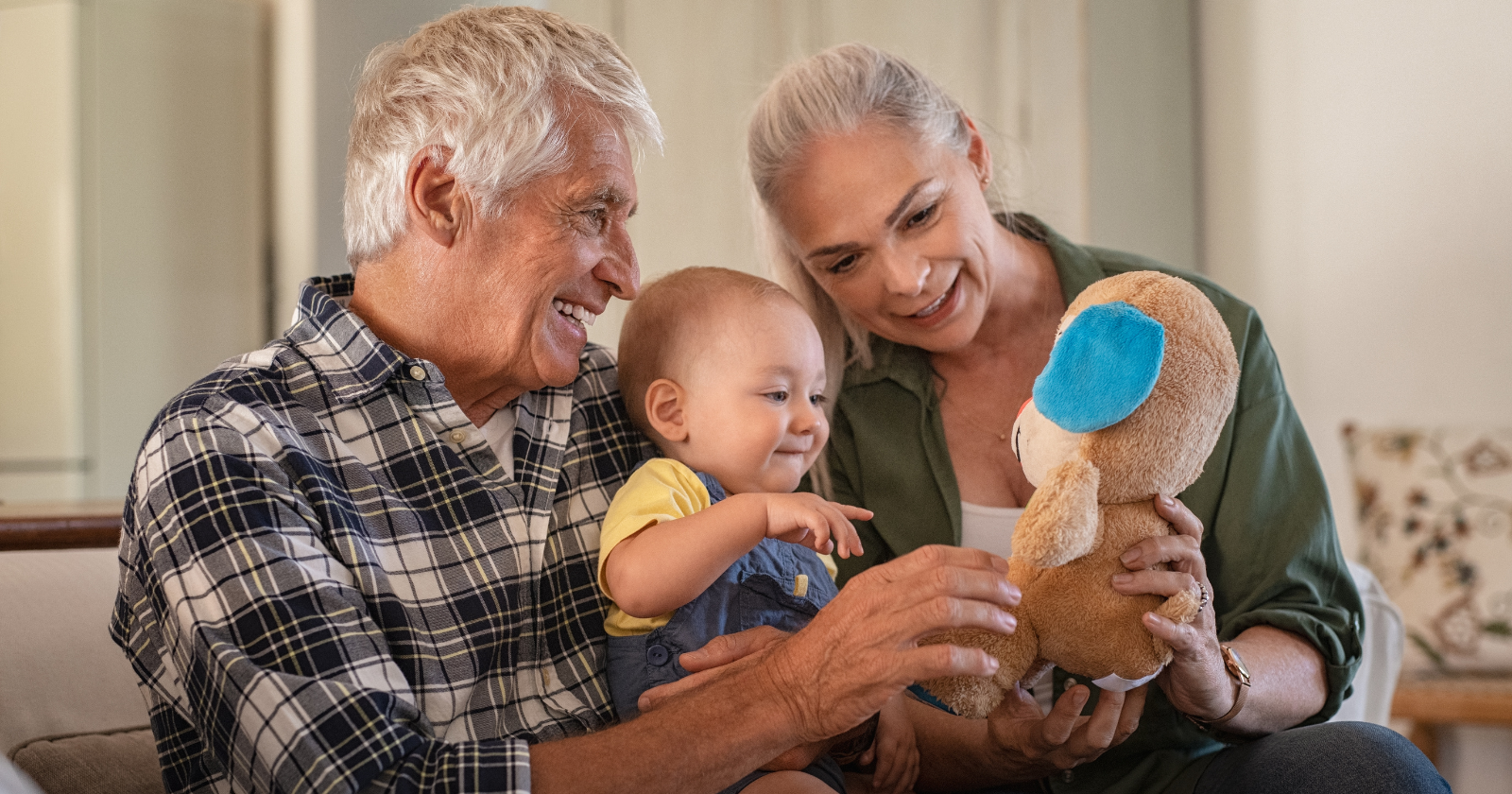
Ever notice how the same parents who once sent you to your room for crying are now the ones sneaking your kids extra cookies and saying “let them stay up a little later”?
I’ve been watching this transformation happen with my own parents, and it hit me recently during a family dinner when my mother – who once wouldn’t let me leave the table until I’d eaten every vegetable – cheerfully told my picky eater Ellie that she could just have bread if she wanted.
At first, I felt a twinge of frustration. Where was this understanding woman when I was five? But then I started thinking about what really changed between then and now. It wasn’t just age softening them – it was something deeper.
The weight of providing shapes everything
Growing up, my father worked long hours, coming home exhausted and emotionally distant. We didn’t have much money, but we always had our garden and homemade meals. Every decision my parents made carried the weight of keeping us fed, clothed, and housed. That kind of pressure changes how you parent.
I remember the tight jaw my mother would get when grocery shopping, calculating every penny. The way my father would snap at us for leaving lights on. They weren’t being harsh for the sake of it – they were drowning in the responsibility of keeping everything afloat.
Now, as grandparents, that crushing financial burden is gone. They’re not worried about making rent or stretching the grocery budget. They can just… be present. When Milo spills juice on their carpet, they laugh it off. When I was a kid, that same spill would have triggered a lecture about wasting money and being careless.
When the village becomes the judge
Beyond the economics, there was something else my parents faced that I’m only now beginning to understand: the constant scrutiny of how they were raising us. Every parenting choice was watched, evaluated, and often criticized by extended family, neighbors, and society at large.
My mother recently confided that she let us “cry it out” not because she wanted to, but because that’s what everyone said good mothers did. She worried constantly about what others would think if we seemed “spoiled” or “soft.”
Research from Columbia University found that economic hardship leads mothers to engage in harsher parenting behaviors, particularly among those with a genetic predisposition to environmental stress. But it’s not just about money – it’s about the judgment that comes with struggling.
Parents under financial strain often feel they have to be stricter to prove they’re not letting poverty make them “bad parents.”
The freedom of grandparenthood
What strikes me most about watching my parents with my kids is how free they seem. They’re not worried about whether Ellie will be disciplined enough for kindergarten or if Milo’s attachment to his stuffed animal means he’ll be clingy forever. They just enjoy them.
Related Stories from The Artful Parent
- Children who were raised by parents who never admitted they were struggling financially often carry these 8 complicated feelings about money, generosity, and what they owe their parents as adults
- Children who were raised by parents who apologized when they were wrong often display these 8 traits as adults that most people never develop
- I worked two jobs for fifteen years so my kids could have opportunities I never had — and when my daughter casually mentioned she doesn’t remember me being around much, I realized the cost of providing was that I sacrificed being present
This shift makes sense when you think about it. Grandparents have already proven themselves. They raised kids who became functional adults. The pressure is off. They don’t have to demonstrate to anyone that they’re doing it “right.”
My parents, who were once skeptical of what they called my “hippie parenting” – the co-sleeping, the extended breastfeeding, the gentle discipline – are slowly coming around. Not because they think I’m right and they were wrong, but because they can see it from a different vantage point now. They’re not in the thick of it, terrified that one wrong move will ruin everything.
The gift of perspective changes everything
When you’re raising kids, every decision feels monumental. Will letting them quit piano ruin their work ethic? Will being too lenient make them entitled? These questions keep parents up at night. But grandparents have the gift of knowing how the story ends – at least the first few chapters.
My mother told me recently that she wishes she’d worried less about whether we were meeting milestones and spent more time just playing with us. But how could she have known that then? She was doing her best with the information and resources she had.
Research published in Behavioral Sciences indicates that positive grandparenting dimensions and styles are significantly associated with lower levels of depression and anxiety in children and adolescents. Maybe it’s because grandparents can offer what stressed parents often can’t: unconditional acceptance without the burden of shaping a future adult.
Breaking cycles while honoring the past
Understanding why my parents were the way they were has helped me process how my strict upbringing affects my current parenting. I’m actively creating a different family culture with more emotional openness, but I’m trying to do it without resentment.
- Psychology says the loneliest part of being an aging parent isn’t being alone – it’s realizing your children love you but don’t actually enjoy spending time with you, and understanding that gap is something you created decades ago - Global English Editing
- Psychology says the freedom that childless couples experience in midlife carries a hidden cost. Without the natural structure that children impose on time, weekends, holidays, and decades, they must generate their own sense of purpose continuously, and that ongoing act of self-creation is both the privilege and the exhaustion nobody warns them about. - Global English Editing
- Psychology says staying silent in these 8 specific situations isn’t weakness or avoidance—it’s the most precise form of self-respect that most people only learn after saying the wrong thing one too many times - Global English Editing
When I see my father reading stories to Ellie with all the voices and sound effects – something he never did with me – I could choose to be bitter. Instead, I’m choosing to see it as healing. He’s getting a second chance to be the parent he might have been without all that pressure.
Researchers studying family communication found that grandparents’ affectionate communication is indirectly associated with reduced loneliness, depressive symptoms, and stress in adult grandchildren, mediated by a strong sense of shared family identity.
This warmth doesn’t just benefit the little ones – it helps heal wounds across generations.
What this means for us
So what do we do with this understanding? First, maybe we can release some of our own parenting guilt. If our parents – with all their strictness and rules – can become these warm, patient grandparents, maybe we’re not permanently damaging our kids with our imperfections either.
Second, we might consider what pressures we’re carrying that we don’t need to. Are we being harsh because we’re afraid of judgment? Are we making decisions based on fear rather than love?
I watch Matt playing with the kids, building elaborate cushion forts without worrying about the mess, and I realize he might be onto something. Maybe the secret isn’t waiting until we’re grandparents to be warm and easy. Maybe it’s recognizing right now which pressures are real and which ones we’re imagining.
Conclusion: Rewriting the story
The transformation of strict parents into doting grandparents isn’t just about mellowing with age. It’s about freedom – from financial terror, from social judgment, from the overwhelming responsibility of shaping a human being while barely keeping your head above water.
Understanding this hasn’t erased all my childhood frustrations, but it’s given me compassion for the parents mine were and gratitude for the grandparents they’ve become.
Every time they sneak my kids an extra treat or let them break a rule that would have earned me a timeout, they’re not undermining my parenting. They’re showing my children what it looks like to love without fear.
And maybe that’s the real gift – not just for Ellie and Milo, but for all of us. We’re learning together that love doesn’t have to come with conditions, that joy doesn’t need to be earned, and that sometimes the best parenting happens when we stop trying so hard to get it right.
