

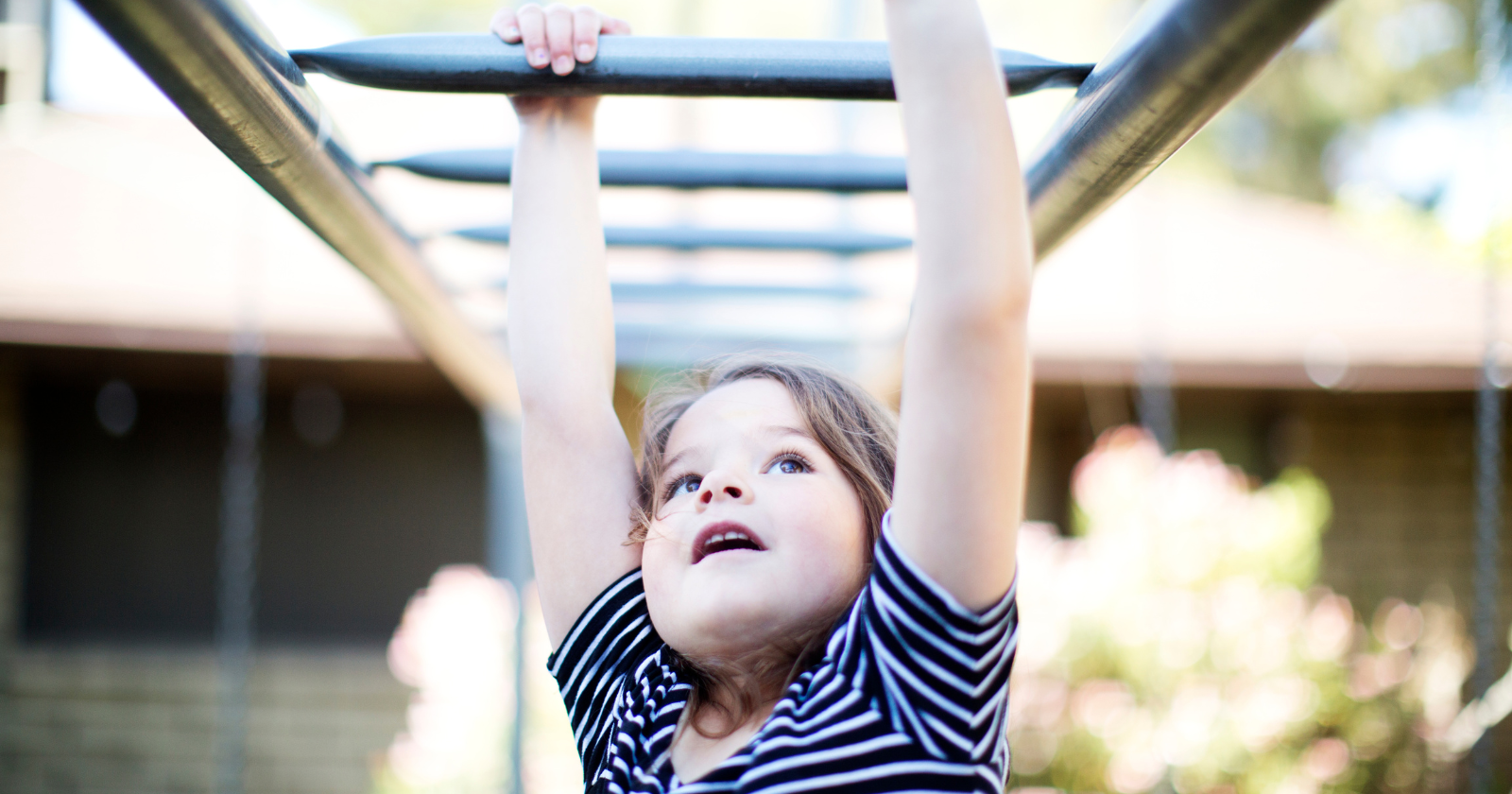
Last week at the playground, I watched two moms handle the exact same situation completely differently.
Both kids had climbed too high on the jungle gym and gotten stuck.
One mom rushed over immediately, lifting her child down while reassuring him everything was okay.
The other mom stayed on the bench, calmly calling out, “You got up there, sweetie. Take your time and figure out how to get down.”
Guess which kid scrambled down on their own five minutes later, beaming with pride?
As a former elementary school teacher turned parenting educator, I’ve seen this pattern play out countless times.
The kids whose parents consistently step back and let them work through challenges develop something special.
Something that shows up years later in ways we might not expect.
Psychology research backs this up too.
Studies show that children who are given space to solve their own problems develop unique strengths that serve them throughout adulthood.
These aren’t just any strengths either.
Related Stories from The Artful Parent
- A clinical psychologist explains that today’s parents give children more freedom, more voice, and more emotional validation than any generation before them, and the children are more anxious than ever — not because freedom is harmful, but because a child’s brain was never designed to carry the weight of unlimited choice before it can carry a conversation
- Most people assume the grandmother who keeps calling even when nobody picks up is lonely — they don’t realize she’s doing the only thing she knows how to do with love that no longer has anywhere to land
- The hardest lesson of parenthood doesn’t arrive when your children are small, it arrives when they’re grown and you hear yourself described through their memories — because the parent you thought you were and the parent they experienced are almost never the same person, and sitting with that gap is the real work of later life
They’re the rare kind that set people apart in their careers, relationships, and overall life satisfaction.
So what exactly are these strengths?
Let me walk you through the nine that keep showing up in the research and in real life.
1) They become natural problem-solvers
When you let kids figure things out, their brains literally get wired for creative solutions.
Think about it: every time my two-year-old tries to reach his favorite truck on the high shelf without asking for help, he’s building neural pathways for problem-solving.
Yesterday, I watched him drag a chair over, then realize it wasn’t tall enough, then stack books on the chair.
Did it take forever? Absolutely.
Was I itching to just hand him the truck? You bet.
But that look of triumph when he finally got it himself? Priceless.
Adults who grew up this way don’t freeze when faced with challenges.
They’ve spent years training their brains to think, “Okay, what are my options here?” instead of immediately looking for someone to fix things for them.
2) They develop genuine confidence
There’s a huge difference between being told you’re capable and actually proving it to yourself.
Kids who figure things out on their own build what psychologists call “earned confidence.”
My five-year-old recently spent an entire afternoon trying to tie her shoes.
I offered to help exactly once. She said no.
An hour later, she had one very wonky bow, but she wore those shoes everywhere for a week because she did it herself.
This kind of confidence can’t be given or taught.
It has to be earned through experience.
And adults who have it?
They’re the ones who take on new challenges without constantly second-guessing themselves.
3) They handle failure like pros
When kids are allowed to figure things out, they fail. A lot.
And that’s exactly the point.
Remember learning to ride a bike?
The kids whose parents let them fall a few times (with helmets on, of course) learned something crucial: falling isn’t the end of the world.
You get back up, adjust your approach, and try again.
Adults who learned this early don’t crumble at the first rejection letter or failed business venture.
They’ve internalized that failure is just data, not a verdict on their worth.
4) They trust their own judgment
How many adults do you know who can’t make a decision without polling ten friends first?
Usually, these are people whose parents made every choice for them growing up.
When we let kids figure things out, we’re essentially saying, “I trust your judgment.”
Even when they choose the hard way or the wrong way initially, they’re learning to trust their own internal compass.
I watch this play out daily when my kids choose their own clothes.
Are the combinations sometimes questionable? Sure.
But they’re learning to trust their choices and stand by them.
5) They become incredibly resourceful
Kids who aren’t immediately rescued learn to work with what they have.
No one’s coming with the perfect solution, so they make do.
Last month, my daughter wanted to build a fairy house but we were out of craft supplies.
Instead of rushing to the store, I said, “See what you can find outside.”
Two hours later, she had constructed an elaborate structure from twigs, leaves, and old flower petals.
These kids grow into adults who don’t need ideal conditions to succeed.
They’re the MacGyvers of the real world, making things happen with whatever resources are available.
6) They develop patience with the process
In our instant-gratification world, patience is becoming a superpower.
Kids who figure things out themselves learn that meaningful accomplishments take time.
They understand that the struggle is part of the journey, not something to be avoided.
This patience translates into adults who can stick with long-term goals without giving up when results don’t come immediately.
7) They’re comfortable with discomfort
Have you ever noticed how some people completely fall apart at the slightest inconvenience while others just roll with it?
Kids who work through challenges on their own learn that discomfort is temporary and survivable.
They don’t need everything to be perfect or easy to function well.
When my son gets frustrated with a puzzle, I’ll say, “Tell me more about what’s hard.”
I let him sit with that frustration instead of rushing to make it better.
He’s learning that uncomfortable feelings won’t break him.
8) They take ownership of their lives
There’s something powerful about knowing your successes and failures are your own.
Kids who figure things out develop what psychologists call an “internal locus of control.”
They don’t blame teachers for bad grades or teammates for lost games.
They ask themselves, “What can I do differently next time?”
This ownership mindset creates adults who shape their own destinies rather than feeling like victims of circumstance.
9) They maintain curiosity and love of learning
When kids discover answers themselves, learning becomes an adventure, not a chore.
They maintain that natural curiosity we’re all born with but that often gets educated out of us.
These adults are the ones who teach themselves new skills just for fun, who ask “why?” and “what if?” throughout their lives.
They never stop growing because learning itself is the reward, not just the grade or the gold star.
The bottom line
Watching our kids struggle is hard.
Every parental instinct screams at us to make things easier for them.
But when we resist that urge and let them figure it out, we’re giving them gifts that last a lifetime.
These nine strengths aren’t just nice-to-haves.
In a world that’s changing faster than ever, they’re the skills that help people adapt, thrive, and find genuine satisfaction in life.
So the next time your child is struggling with something (safe and age-appropriate, of course), take a breath.
Sit on your hands if you have to.
Remember that your temporary discomfort is their long-term gain.
Because sometimes the best thing we can do as parents is absolutely nothing at all.
