

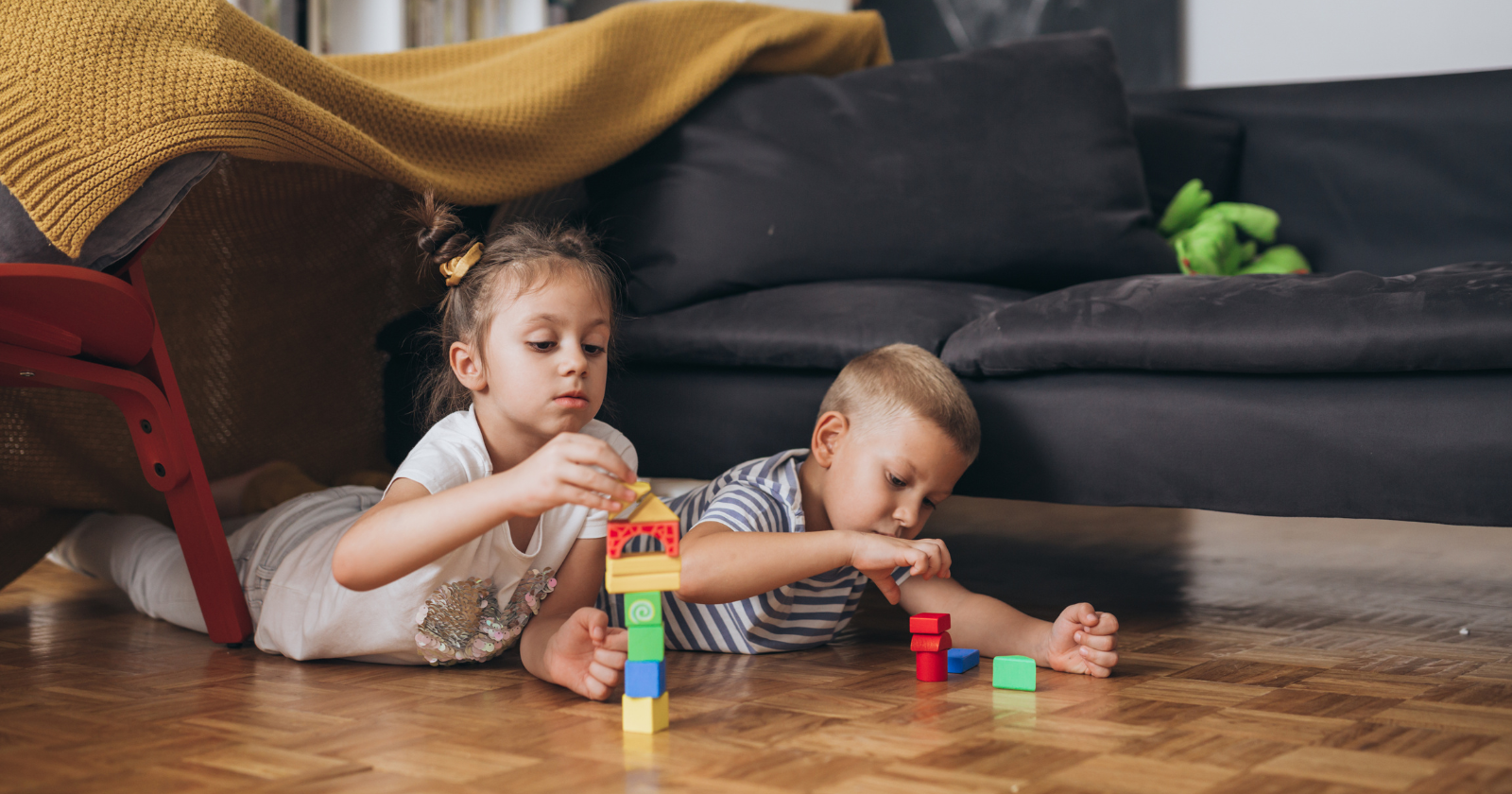
Just yesterday, I found Milo’s breakfast cereal scattered across the living room floor like confetti, mixed with the autumn leaves my daughter had been sorting on our coffee table.
My first instinct was to grab the vacuum, but then I watched as my two-year-old carefully picked up each piece, making truck sounds as he “delivered” them back to his bowl.
That’s when it hit me—this mess wasn’t chaos.
It was childhood happening right before my eyes.
We live in a world that celebrates pristine playrooms and Instagram-worthy nurseries, but here’s what nobody talks about: your kids won’t remember the perfectly organized toy bins or the spotless countertops.
What sticks with them runs so much deeper than aesthetics.
The myth of the perfect family home
I used to think a good mother kept an immaculate house.
I’d apologize when friends came over, frantically shoving art supplies into drawers and wiping down surfaces that would be sticky again within the hour.
Then one day, a friend stopped me mid-apology and said something that changed everything: “Your house feels alive.”
She was right.
Our kitchen counter is perpetually covered in half-finished art projects.
Related Stories from The Artful Parent
- Children who grow up in homes where parents prioritized presence over presents often display these 9 traits as adults — and the fifth one explains why they parent so differently than their peers
- My mother cooked the same meal every Sunday for 30 years and I thought it was boring — now I’d give anything to sit at that table one more time and I make the same meal for my kids and I finally understand it was never about the food
- My mother used to sit in the car for 10 minutes after pulling into the driveway and I thought she was on the phone — I’m 35 now and I sit in the same car in the same driveway and I finally know what she was doing
There’s usually a “collage table” somewhere with magazine clippings, pressed flowers, and glue sticks that everyone in the family contributes to throughout the week.
The living room? We deliberately keep minimal furniture there, leaving tons of floor space for fort-building and dance parties.
Carl Pickhardt Ph.D., a psychologist, puts it perfectly: “The messy room represents ‘personal freedom’ to live on his or her own terms.”
While he’s talking about teenagers, I think this applies to younger kids too.
When we let go of perfection, we’re telling our children that their freedom to explore, create, and just be matters more than maintaining appearances.
What children actually remember
Think back to your own childhood home.
- My parents hated each other for forty-three years but never divorced, and I spent my entire adult life choosing partners I had nothing in common with because I thought love was supposed to feel like obligation - Global English Editing
- Research suggests people who had tough childhoods don’t just develop trust issues — they develop a hyper-awareness of other people’s emotional states that most securely-raised adults will never possess - Global English Editing
- I worked overtime for thirty-five years, saved meticulously, and retired at 62 with financial security — but I still check my bank account every single morning because the poverty I grew up in trained my nervous system to expect disaster even when logic says I’m safe - Global English Editing
Can you recall whether the baseboards were dust-free?
Did you notice if the throw pillows matched the curtains?
Probably not.
What you likely remember are feelings.
The warmth of the kitchen while your parent cooked dinner.
The corner where you built elaborate block towers.
The couch cushions you were allowed to pull off for fort construction.
Studies suggest that the emotional and spiritual tone of a home significantly influences children’s sense of safety, identity, and belonging, with children often recalling how they felt in their environment rather than its cleanliness or decor, according to research from John15Academy.
This research validates what I see daily.
My kids light up when they spot their artwork displayed on our walls—crooked tape and all.
They beam when they show visitors the “treasure shelf” where we keep interesting rocks, shells, and that random button they found at the park.
These aren’t designer touches, but they communicate something vital: you belong here, your discoveries matter, your creativity has value.
Creating space for real childhood
So what does this look like practically?
In our house, it means accepting that the kitchen will rarely be spotless because it’s where we do everything—homework, art projects, science experiments, and yes, actual cooking.
It’s the heart of our home, and hearts aren’t meant to be sterile.
It means having designated “yes” spaces where kids can be loud and physical.
We’ve removed most of our living room furniture specifically for this.
Sure, it doesn’t look like a magazine spread, but watching my kids turn that open space into a pirate ship or a veterinary clinic is worth more than any compliment about decor.
It also means reframing how I view mess.
Those blocks scattered across the floor? Evidence of imagination at work.
The dress-up clothes spilling out of their basket? Signs of storytelling and role-play.
The muddy footprints by the door? Proof that my kids spent the morning exploring rather than staring at screens.
Finding your own balance
Now, I’m not suggesting we all live in complete chaos.
Some structure helps everyone feel secure, and there’s nothing wrong with teaching kids to care for their belongings and shared spaces.
But there’s a huge difference between maintaining basic functionality and obsessing over perfection.
Start small.
Maybe designate one room where messes are totally okay, no questions asked.
Or try leaving an art project out for a week so everyone can add to it when inspiration strikes.
Consider displaying kids’ creations prominently, even if they clash with your aesthetic vision.
Ask yourself: what message am I sending when I immediately clean up after my child’s creative explosion?
Am I teaching them that their joy is less important than a tidy space?
The memories we’re really making
Recently, my five-year-old was helping me sort through old photos.
She pointed to one where our coffee table was covered in paint, paper scraps, and what looked like every crayon we owned.
“Remember when we made that huge rainbow for grandma?” she asked, eyes sparkling.
She didn’t notice the chaos.
She remembered the creating, the togetherness, the pride in what she’d made.
This is what I want my children to carry forward—not memories of a showroom house where they had to tiptoe around, but a home where they could sprawl out with their projects, where their artwork became our decor, where spills were met with “let’s clean it up together” rather than frustration.
Our house is lived-in, not magazine-ready, and I’ve finally made peace with that.
The kitchen table has paint stains.
The walls have mysterious smudges at toddler height.
The couch cushions are permanently askew from fort construction.
But when my kids are grown, I hope they’ll remember this: home was where they could be completely, messily, loudly themselves.
What really matters in the end
Your children won’t recall whether you vacuumed daily or if your home looked Pinterest-perfect.
They’ll remember whether they felt free to explore, create, and express themselves.
They’ll remember if home felt like a place where their presence was celebrated, messes and all.
So maybe it’s time we all gave ourselves permission to let go a little.
To choose connection over perfection.
To recognize that a home filled with evidence of childhood—the art supplies, the Lego creations, the dress-up clothes strewn about—is a home where children know they’re valued for who they are, not for how quietly they can exist.
The next time you’re tempted to apologize for the state of your home, remember that those scattered toys and craft supplies aren’t signs of failure.
They’re evidence of a childhood being fully lived, of a home that prioritizes presence over perfection.
And that’s exactly the kind of home our kids need us to create.
