
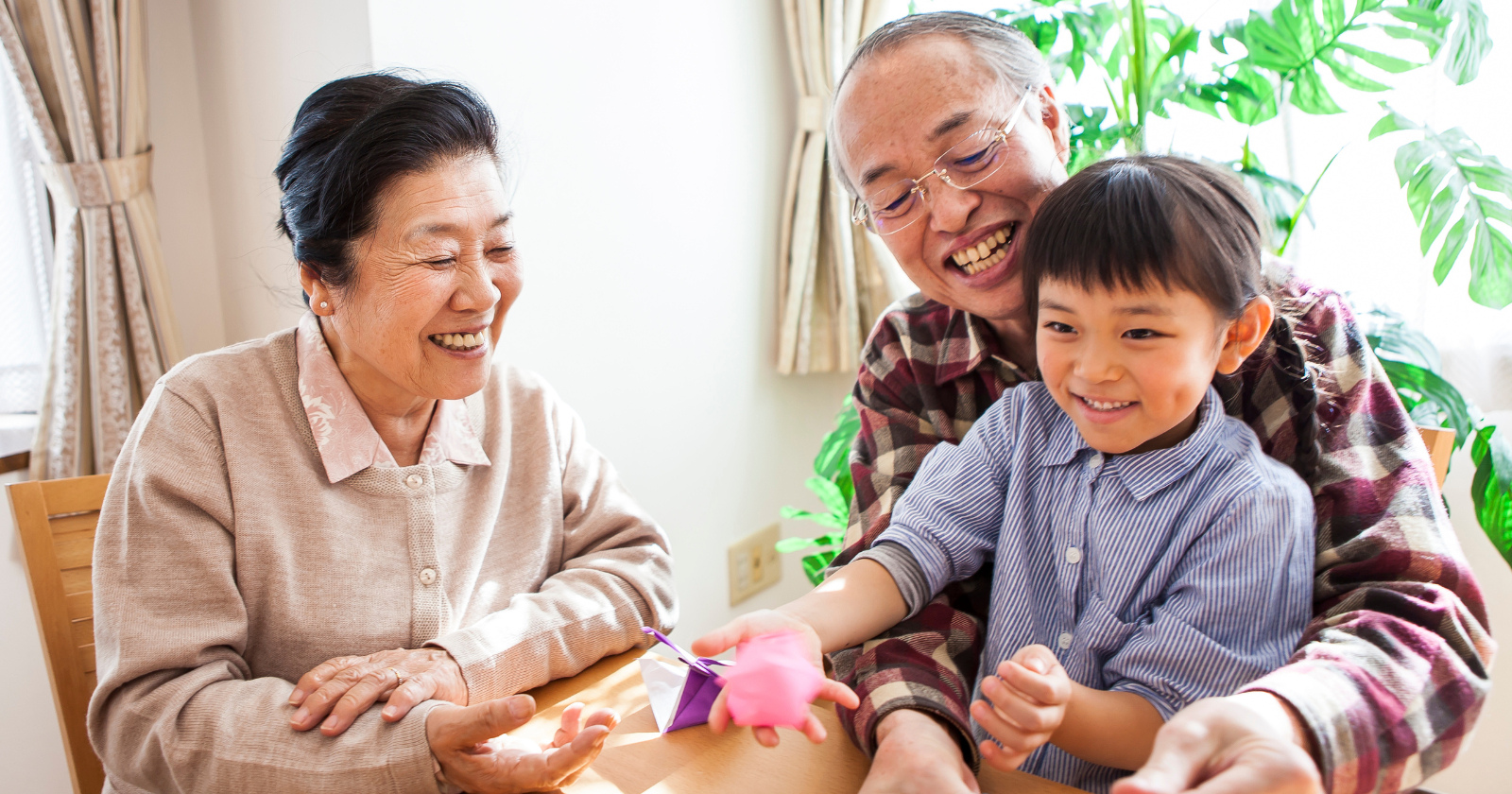
Remember when I was teaching kindergarten, before my little ones came along? I watched countless grandparents at pickup time, their pockets full of treats and promises of toy store trips.
But you know what really stuck with me? The kids whose faces lit up brightest weren’t necessarily the ones getting the most stuff.
They were the ones whose grandparents knelt down to their level, really listened to their stories, and remembered details from last week’s adventures.
Now that I’m watching my own parents navigate grandparenthood with my two kids, I’ve been thinking a lot about this whole “spoiling” thing.
My parents were initially skeptical of our low-screen, nature-focused lifestyle (they called it my “hippie parenting” phase), but they’ve slowly come around to understanding that the best gifts aren’t always wrapped in shiny paper.
Here’s what I’ve discovered: The art of spoiling wisely has almost nothing to do with money and everything to do with presence, patience, and purpose. Let me share what truly enriches our children’s lives when grandparents get it right.
1) Undivided attention in a distracted world
Last week, my dad spent an entire afternoon helping my daughter build a fairy house from sticks and moss we’d collected. No phone in sight, no rushing to the next thing.
Just pure, focused attention on her elaborate explanations about which fairy would live where.
Can you remember the last time someone gave you their complete attention for hours? In our multitasking world, this kind of presence is becoming rare.
Grandparents who put down their devices and truly engage are giving something money literally cannot buy: The message that their grandchild is worth their full focus.
When kids get this kind of attention, they develop stronger self-worth and better communication skills. They learn that their thoughts matter, their stories are interesting, and they’re worth listening to.
Related Stories from The Artful Parent
- Psychology says the thing children need most from their parents costs nothing and takes almost no time — it’s the 8-second pause between when a child starts talking and when the parent actually listens instead of preparing a response
- Psychology says the emotional distance many fathers maintain isn’t a personality trait — it’s a learned survival strategy passed down through generations of men who were taught that closeness was weakness, and their children pay the inheritance tax
- The loneliness many boomers feel isn’t a personal failure — it’s the predictable result of a culture that valued them for their productivity and caregiving, then offered no roadmap for building an identity or community once those roles ended
2) Permission to move at a slower pace
My mom takes my son on what she calls “wonder walks.” They might only make it halfway down the block in an hour because they stop to examine every ant, stick, and interesting rock. There’s no destination, no timeline, just exploration at toddler speed.
As parents, we’re often rushing. Getting to school, making dinner, squeezing in bath time before bed. But grandparents? They can afford to move at kid pace.
They can spend 20 minutes watching a caterpillar cross the sidewalk without checking their watch.
This slower pace teaches children to observe, to wonder, to ask questions. It shows them that not everything in life needs to be efficient or productive. Sometimes the journey really is more important than the destination.
3) Stories that connect generations
“When your mom was little…” These four words work like magic in our house. My kids will sit transfixed while their grandparents tell stories about my childhood mishaps, adventures, and everyday moments.
These stories do something powerful. They help children understand that their parents were once kids too, that their grandparents were once parents figuring things out, that everyone has been scared or silly or brave.
- I’m 73, my daughter is 44, and if you asked us both to describe our family we’d tell you two completely different stories — in hers I was controlling and unavailable, in mine I was holding everything together with both hands — and the distance between those two versions is the exact space where most parent-child relationships go to die - Global English Editing
- Most people don’t realize that meditation doesn’t teach you who you are – it teaches you who you’re not, and the terrifying freedom that comes from realizing you’ve been defending an identity you never chose - Global English Editing
- I worked full-time while raising a one-year-old and maintaining a marriage and by month ten I was overwhelmed in the supermarket aisle because I realized I had optimized my entire life for efficiency but forgotten to leave space for joy - Global English Editing
Family stories create a sense of belonging and continuity that no store-bought gift could ever match.
Plus, hearing about the time I got my head stuck between porch railings or tried to adopt every stray cat in the neighborhood? Pure gold for my five-year-old who thinks I have eyes in the back of my head.
4) A different kind of yes
Here’s something interesting I’ve noticed: Grandparents often say yes to different things than parents do. Not yes to more screen time or junk food, but yes to building a massive blanket fort that takes over the living room.
Yes to baking cookies from scratch even though it’ll destroy the kitchen. Yes to reading one more story, even though bedtime was 30 minutes ago.
These aren’t the kind of “yeses” that undermine parenting rules. They’re the kind that say: Your joy is more important than a perfectly clean house. Your curiosity is worth the mess. Your request for connection matters more than the schedule.
5) Validation without fixing
When my daughter comes to me upset about a friend problem, my instinct is to solve it. Call the other parent, talk to the teacher, fix it somehow.
But when she tells her grandmother the same story? My mom just listens, validates her feelings, and shares a similar experience from her own childhood.
Grandparents who’ve raised their own kids often have this wisdom: Not everything needs to be fixed. Sometimes kids just need someone to say, “That sounds really hard” or “I understand why you’re upset.”
This emotional validation without immediate problem-solving teaches kids to sit with their feelings and work through them naturally.
6)Traditions that cost nothing but mean everything
Every Sunday morning, my dad makes pancakes with the kids. Not fancy pancakes, not organic anything special, just regular pancakes.
But it’s their thing. They know the routine, they have their special jobs (my daughter cracks eggs, my son stirs), and they look forward to it all week.
These simple traditions become the backbone of childhood memories. The special handshake, the silly song, the way grandma always keeps art supplies in the same drawer. These rituals create security and anticipation that expensive gifts could never replicate.
7) Space to be imperfect
At grandma’s house, spilling your juice isn’t a big deal. Crying because your tower fell down is met with understanding, not frustration. There’s something about the grandparent relationship that often allows more room for mistakes and big emotions.
This isn’t about lack of discipline or boundaries. It’s about having already raised kids and knowing that most things aren’t actually emergencies.
This perspective gives children a safe space to be human, to mess up, to have bad days without feeling like they’re disappointing anyone.
8) Interest in the small stuff
My mom will listen to my daughter describe every single detail of her leaf collection. Every. Single. Leaf. And she’ll ask questions about them, remember which ones were found where, and check on their progress when they’re pressed in books.
Grandparents who show genuine interest in the minutiae of kid life are teaching something profound: Your interests matter.
Your observations are valuable. The things you care about are worth caring about. This validation of their small worlds helps children develop confidence in their own perspectives and passions.
Final thoughts
Watching my parents with my kids has taught me something important about the art of spoiling. The grandparents who leave the biggest impact aren’t necessarily the ones with the biggest budgets.
They’re the ones who understand that what children really crave is connection, attention, and the feeling of being truly seen and valued.
These eight gifts don’t require a credit card, but they do require something perhaps even more valuable: Time, presence, and the wisdom to know that the best things we can give the next generation have nothing to do with what we can buy them and everything to do with how we show up for them.
So here’s to all the grandparents who get it, who understand that spoiling wisely means filling hearts, not toy boxes.
Your grandchildren might not remember every toy you gave them, but they’ll never forget how you made them feel. And that’s the kind of spoiling that actually matters.