

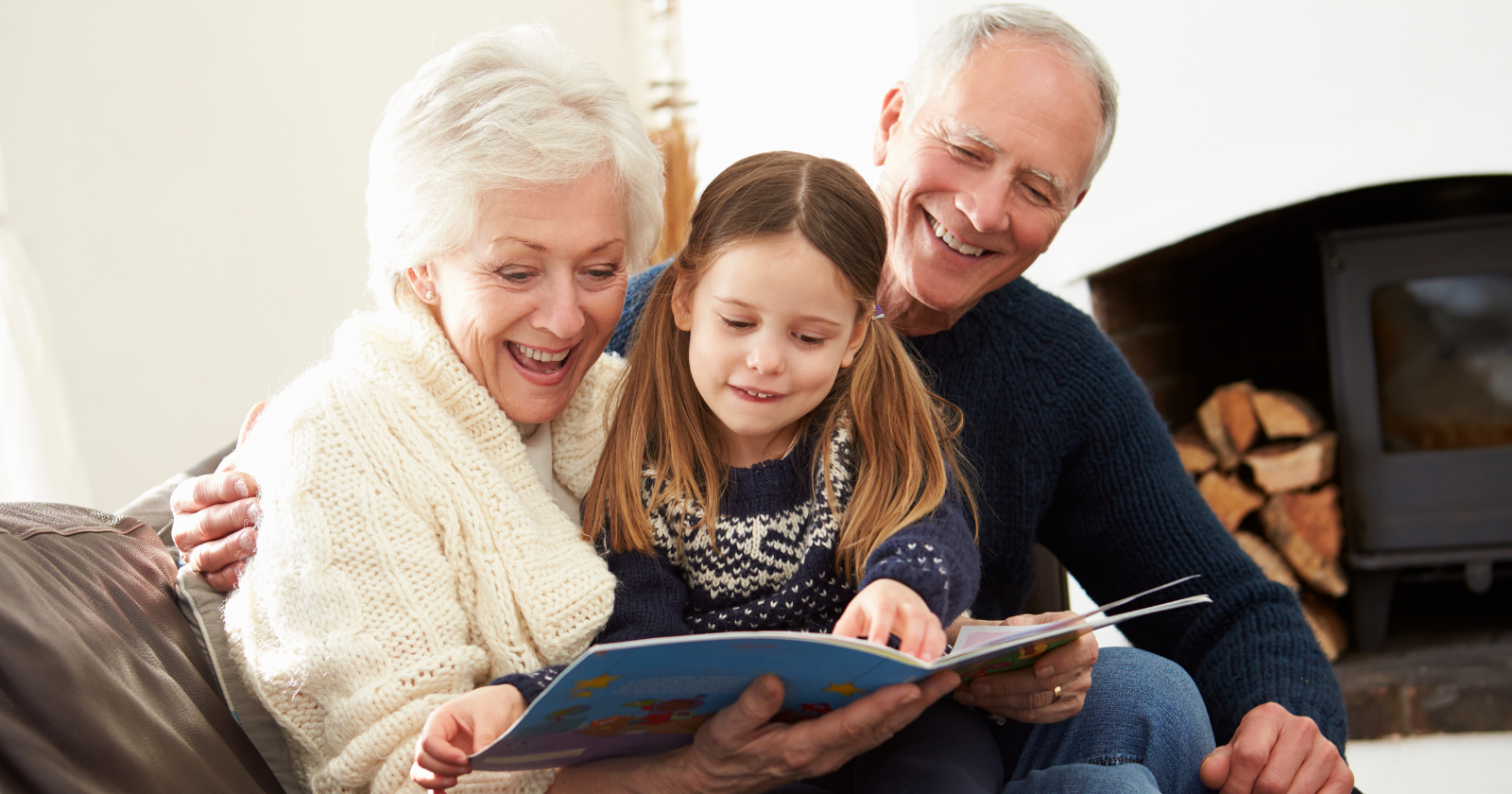
Ever since my parents started spending more time with my kids, I’ve noticed something fascinating.
Last week, Ellie came to me with tears streaming down her face because she’d accidentally broken her favorite crayon.
Before I could even respond, she took a deep breath and said, “Grandma says when we’re sad, we should feel it all the way through, then look for the rainbow.”
I stood there, amazed. My mother, who raised me with “stop crying or I’ll give you something to cry about,” was teaching my daughter emotional wisdom I never expected.
That moment made me realize just how much grandparents shape our children’s inner worlds in ways we might not anticipate.
Sure, we expect them to spoil the kids with extra cookies and late bedtimes. But their influence runs so much deeper than that.
1. They offer emotional safety without the pressure of discipline
Have you ever noticed how differently your kids behave with their grandparents? There’s a reason for that.
Grandparents don’t carry the daily burden of making sure homework gets done or vegetables get eaten.
This freedom creates a unique emotional space where children can express feelings they might hide from us.
My daughter recently told her grandmother she was scared of starting kindergarten, something she’d been insisting she was “super excited” about with me.
Without the pressure to be the disciplinarian, grandparents become these magical safe harbors where kids can drop their guard completely.
Related Stories from The Artful Parent
- I’m 65 and I stopped arguing politics with my daughter three years ago — not because I gave up on her, but because I finally understood that protecting our relationship mattered more than being right about things neither of us can control
- Psychology says the hardest part of watching your parents age isn’t the physical decline – it’s the moment you realize they’ve started performing competence the same way you performed adulthood when you first moved out, and you’re both pretending not to notice the act
- Psychology says people others describe as ‘easy to talk to’ aren’t being casual — they’re performing one of the hardest social skills that exists
This doesn’t mean we’re doing something wrong as parents. We have to set boundaries and enforce rules.
ut knowing our children have this additional emotional outlet? That’s actually a gift.
2. They validate feelings parents might rush past
I’ll admit it: when my toddler melts down because his sock feels “wrong,” my first instinct is to quickly fix it and move on with our day.
But I’ve watched my dad sit right down on the floor and say, “Tell me about how that sock is bothering you.” He has nowhere else to be, no schedule to keep.
Grandparents have the luxury of time that we often don’t.
While we’re juggling breakfast, getting everyone dressed, and trying to remember if today is library day, they can pause and really listen to why that particular sock is causing such distress.
This patient validation teaches children that their feelings matter, even the seemingly small ones.
And honestly? Sometimes those “small” feelings are practice runs for processing bigger emotions later.
3. They share family stories that build emotional resilience
My mother has become the keeper of family stories, and I had no idea how powerful this would be.
She tells my kids about the time I failed my driving test three times, or when their dad got so nervous at his first school play that he forgot all his lines.
These aren’t just entertaining tales. They’re showing my children that everyone struggles, everyone fails, and everyone keeps going.
When Ellie hears that Mommy also cried on her first day of school, it normalizes her own fears and shows her she can overcome them too.
Stories from grandparents carry special weight.
They’re not just saying “you’ll be fine” – they’re providing living proof that the people children love most have faced challenges and survived them.
4. They model different emotional expressions
Growing up in the Midwest with traditional parents, emotions were things you dealt with privately and quickly.
But becoming a grandparent has softened my parents in unexpected ways.
I’ve seen my father cry happy tears when Milo hugged him, something I never witnessed in my entire childhood.
This gives our kids permission to experience a fuller range of emotions.
They learn that grown men can cry from joy, that grandmothers can admit when they’re frustrated, and that feelings don’t have to be hidden or rushed through.
What surprises me most? My parents seem more emotionally available to my children than they ever were to me.
Maybe it’s the absence of daily parenting stress, or maybe it’s wisdom that comes with age.
Either way, my kids are benefiting from emotional modeling I never expected.
5. They teach patience through their own pace
Everything moves slower with grandparents, and that’s actually beautiful.
While I’m constantly hurrying my kids along, my parents let them examine every interesting rock on our walks, answer their hundredth “why” question, and take forever to tie their shoes “all by myself.”
This slower pace does something profound for children’s emotional development.
It teaches them that not everything needs to be rushed, that curiosity is worth indulging, and that they’re worth someone’s undivided attention.
Watching my mother spend twenty minutes helping Ellie sort leaves by size and color, I realize she’s not just playing.
She’s teaching my daughter that her interests matter, that process can be more important than outcome, and that someone will sit with her in her fascinations.
6. They provide unconditional acceptance
Grandparents love with fewer conditions.
They don’t care if your child refuses to eat anything but crackers for a week or insists on wearing a superhero cape to the grocery store.
They just see their grandchild and think: perfect.
This unconditional acceptance creates a unique emotional foundation.
Children learn they’re lovable not because of what they achieve or how they behave, but simply because they exist.
While we parents are busy shaping and guiding, grandparents are busy accepting and adoring.
Does this mean they never correct behavior? Of course not.
But corrections from grandparents often feel different – gentler, less loaded with long-term concerns about who this child will become.
7. They bridge emotional generations
Perhaps most surprisingly, grandparents help our children understand us better.
When my mother mentions how hard I worked to become a teacher, or how I always wanted to be a mother, my daughter looks at me differently.
I become more than just Mom – I become a person with dreams and struggles.
This generational bridge helps children develop empathy and emotional complexity.
They begin to understand that parents are people too, with our own feelings and histories.
That’s a sophisticated emotional concept, delivered through simple grandparent stories.
Finding the balance
Recognizing grandparents’ emotional influence doesn’t diminish our role as parents.
We’re still the primary architects of our children’s emotional worlds.
But understanding this additional layer of influence helps us appreciate the village it truly takes to raise emotionally healthy children.
Sometimes grandparents’ approaches might clash with ours. My parents were skeptical of what they called my “hippie parenting” at first.
But watching them adapt and find their own ways to support my children’s emotional growth has been beautiful.
They might not understand why I validate every feeling, but they’ve found their own paths to emotional connection with my kids.
The truth is, our children need both: parents who guide and shape, and grandparents who accept and indulge.
Together, we create a rich emotional ecosystem where children learn not just to feel, but to understand and express those feelings in healthy ways.
