
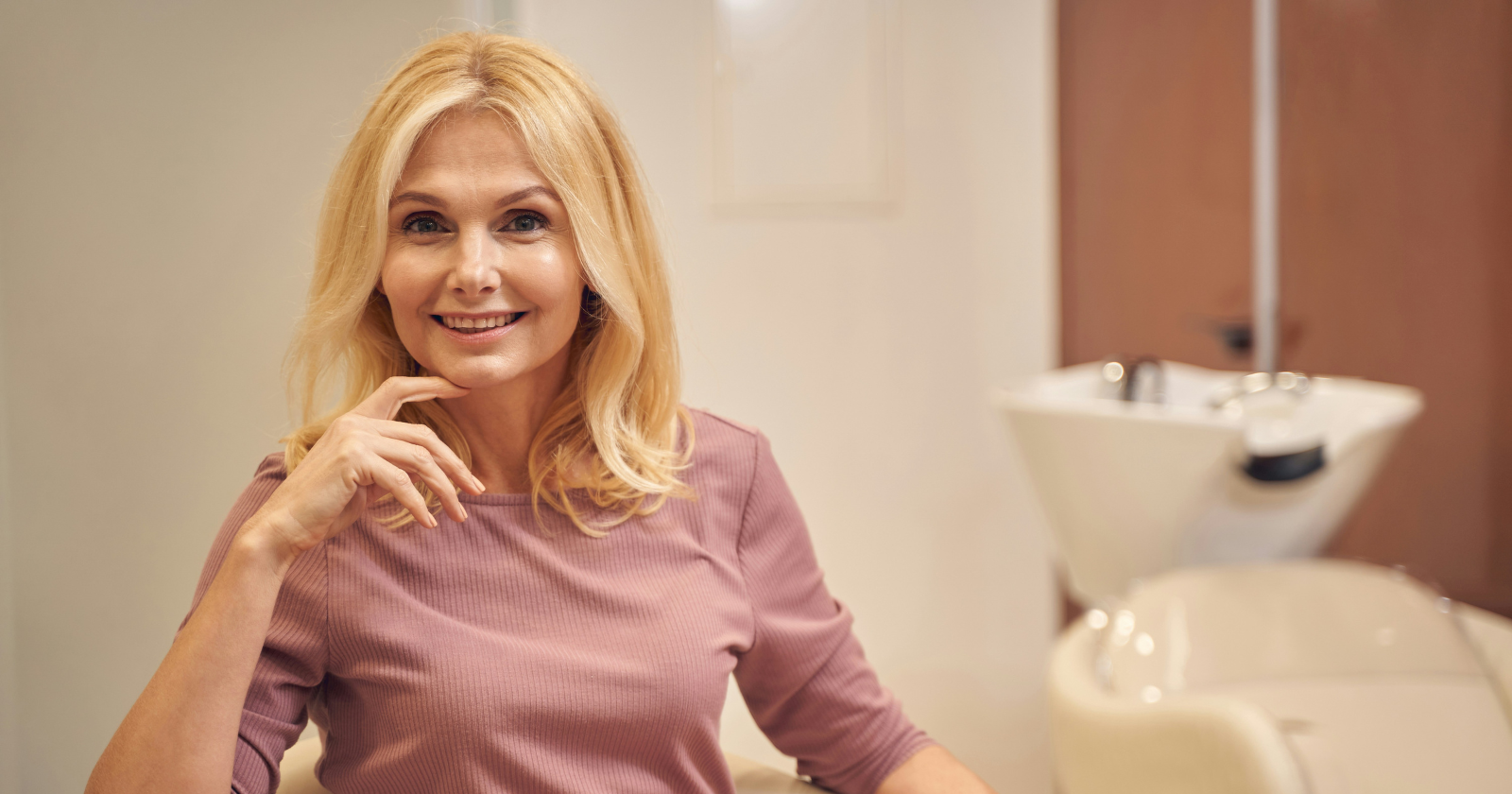
Last Saturday, while Ellie was sorting through a basket of cherry tomatoes and Milo was doing his level best to charm free samples out of the honey vendor, I got chatting with a woman a few stalls down. She was vibrant, sharp, laughing easily. I assumed she was maybe late forties.
She was seventy-two.
I told her she looked incredible (because she did), and she waved it off with this little shrug and said, “I just stopped carrying everything.” That line stuck with me the whole drive home. Not a cream. Not a supplement. Not some high-tech routine. She stopped carrying everything.
It got me thinking about something I’ve been quietly noticing for a while now — the people I know who seem to age the slowest aren’t necessarily the ones with the best genes or the fanciest skincare. They’re the ones who’ve figured out how to move stress through their bodies instead of storing it there. And honestly? That distinction matters more than most of us realize.
So here are eight traits I keep seeing in people who look significantly younger than their years — and every single one comes back to how they relate to stress.
They actually feel their feelings instead of stuffing them down
This one hits close to home. After Milo was born, I went through a stretch of postpartum anxiety that I tried really hard to white-knuckle my way through. I smiled. I kept the house running. I told everyone I was fine. And I looked terrible — gray, drawn, like I’d aged five years in five months.
It wasn’t until I started therapy and let myself actually sit with the fear and sadness that things began to shift. Not just emotionally, but physically. My skin cleared. The dark circles softened. I started sleeping again.
Turns out there’s solid science behind this. Dr. Daniel Siegel, the clinical professor of psychiatry at UCLA, talks about how “naming it to tame it” — the act of identifying and expressing an emotion — actually calms the amygdala and reduces the body’s stress response. People who let emotions move through them rather than locking them away aren’t just healthier mentally. They’re aging more slowly at a cellular level.
The folks I know who look youngest in their sixties and seventies? They cry when something’s sad. They say when they’re frustrated. They don’t perform calm — they process their way there.
They’ve built some kind of stillness practice into their days
It doesn’t have to be meditation on a mountaintop. For me, it’s those ten minutes before the kids wake up — just sitting with my coffee, setting a small intention for the day, watching the light shift through the kitchen window. Nothing fancy. But it’s mine, and it resets something inside me.
The people I’ve met who wear their age lightest all seem to have some version of this. A morning walk. A few minutes of prayer. Journaling. Breathwork. One of my neighbors does tai chi in her backyard at dawn and I swear she hasn’t changed since I moved in six years ago.
Related Stories from The Artful Parent
- Psychology says people who are genuinely good aren’t the ones constantly proclaiming their values — they’re the ones who do the right thing when nobody’s watching and never mention it afterward
- I’m 35 and I can count my Instagram followers in the thousands but I couldn’t name a single person I’d trust with my deepest fear — and I finally understand that I confused being well-liked with being truly known
- I’m 35 and I’ve started caring less about being liked and more about being honest — and the social life that has resulted is smaller and more specific and the best one I have ever had
What matters isn’t the method — it’s the consistency. A daily pocket of quiet tells your nervous system that it’s safe. And a nervous system that feels safe doesn’t flood your body with cortisol all day long.
They keep showing up for real connection
Have you ever noticed how loneliness seems to age people faster than almost anything else?
I think about this a lot, especially since becoming a parent shifted so many of my friendships. Some faded when I chose a different parenting path. But the ones that stayed — the coffee-date check-ins, the babysitting co-op families, the other moms at our monthly craft playdates — those connections are a lifeline. Not just for my sanity, but for my health.
People who look younger than their age tend to invest in relationships that feel nourishing, not draining. They’re not trying to maintain a hundred surface-level friendships. They have a handful of people they’re genuinely honest with. They laugh a lot. They ask real questions and give real answers.
That kind of connection isn’t just nice to have. It’s protective. It buffers stress in a way that no supplement ever could.
They move their bodies — but not to punish themselves
This is a big distinction. The people I’m talking about aren’t grinding out brutal gym sessions fueled by guilt. They’re walking. Gardening. Dancing in the kitchen. Stretching on the living room floor while their grandkids climb on them.
I’ve been thinking about this more since I started doing gentle yoga stretches in the evenings after the kids go down. It’s not intense. It’s maybe fifteen minutes. But the difference in how I feel — in my body and on my face when I look in the mirror the next morning — is real.
Movement that feels good signals safety to your body. Movement driven by self-punishment signals threat. Same muscles, very different hormonal outcomes. The younger-looking people in their sixties and seventies almost always move from a place of enjoyment, not obligation.
They spend serious time outside
I’m biased here, I’ll admit it. Our family practically lives outside — the garden, the park, wandering around looking at bugs with Ellie, letting Milo dig holes in the sandbox until bath time.
But it’s not just my preference talking. As Dr. Elissa Epel, the UCSF health psychologist and author of The Stress Prescription, has noted, chronic psychological stress accelerates biological aging at the cellular level — and nature exposure is one of the most effective buffers against that process.
The people who look youngest aren’t just fit or well-rested. They’re outside. They have sun on their skin (with reasonable protection). They breathe fresh air. They walk on uneven ground. They notice seasons changing. And all of that seems to slow something down inside them — something deeper than skin.
They’ve made peace with imperfection
This is the one I’m still working on, honestly. I’m a recovering perfectionist, and some days I still catch myself trying to get everything exactly right — the meals, the routines, the parenting, the house. And every time I spiral into that, I can feel the tension settle into my shoulders and jaw like concrete.
The people who age most gracefully seem to have let go of the idea that everything needs to be flawless. Their homes are lived-in. Their schedules have breathing room. They laugh at their own mistakes instead of replaying them at 2 AM.
As Brené Brown has said, “Perfectionism is not the same thing as striving to be your best. Perfectionism is the belief that if we live perfect, look perfect, and act perfect, we can minimize or avoid the pain of blame, judgment, and shame.” That resonated with me deeply the first time I read it. Because the stress of perfectionism doesn’t just steal your peace. Over decades, it steals your vitality.
My own little mantra — progress not perfection — has become a daily lifeline. And I genuinely believe that releasing the grip on “perfect” is one of the most anti-aging things a person can do.
They protect their rest without apology
Can I be honest? I used to wear exhaustion like a badge. Like being tired proved I was doing enough. It took a while — and some honest conversations with Matt during our evening check-ins — to realize that running on empty wasn’t noble. It was just depleting.
The people who look ten or twenty years younger than their age tend to take sleep and rest seriously. Not in a rigid, anxious way, but in a “this is non-negotiable” way. They go to bed when they’re tired. They nap without guilt. They cancel plans when their body says no.
Rest isn’t laziness. It’s when your body repairs, when cortisol levels drop, when your skin regenerates, when your brain files away the day’s stress. Chronically shorting yourself on rest is like asking your body to run a marathon every single day without recovery. Eventually, it shows — in your face, your posture, your eyes.
They have something that gives them meaning beyond themselves
This is the one that ties it all together, I think.
Every person I’ve met who seems to defy their age has something they care about deeply — a garden, a craft, a community project, grandchildren, a cause. Something that pulls them forward with purpose rather than pushing them through the day with obligation.
For me right now, that meaning comes from raising Ellie and Milo with intention, from writing honestly about the mess and beauty of this season, from the small workshops I lead on non-toxic living. None of it is glamorous. But all of it fills me up in a way that running on autopilot never did.
Purpose doesn’t eliminate stress. But it changes how stress lands. When you know why you’re doing what you’re doing, the hard parts feel less corrosive. They become part of something instead of just wearing you down.
What it really comes down to
I’m not in my sixties or seventies yet — not even close. But I’ve already felt the difference between seasons where stress lived in my body and seasons where I let it move through. The postpartum fog versus the slow return to myself through therapy, breathwork, time outside, and people who actually asked how I was doing. It showed up everywhere — my energy, my patience, and yes, even how I looked.
The woman at the farmers’ market wasn’t wrong. She stopped carrying everything. Not because life got easier, but because she learned to set it down.
I think that’s the real secret. Not avoiding stress — none of us can do that. But choosing, day after day, to process it instead of store it. To feel it, move it, share it, breathe through it, and rest after it.
Your body is always keeping score. And the people who look youngest at seventy aren’t the ones who had the least stress. They’re the ones who refused to let it accumulate.
That feels like something worth practicing now — even if it’s messy, even if it’s imperfect, even if some days “processing stress” just means crying in the bathroom while your toddler bangs on the door.
It all counts. And it all adds up.