
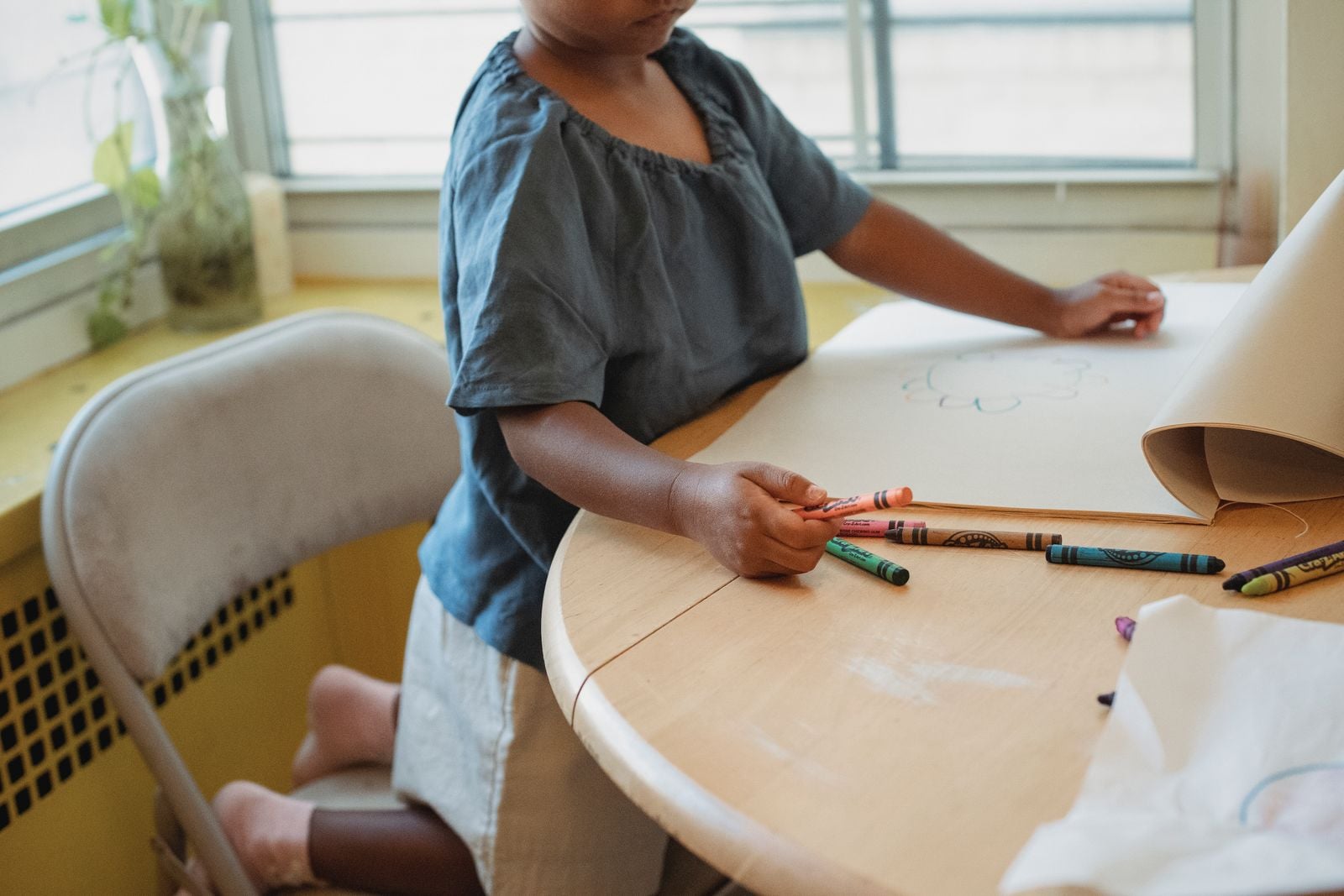
The plan starts strong. We are going to do art every day after school. It runs for four days, then a late pickup and a bad evening take out the fifth, and the sixth quietly never happens. Within two weeks the paints are back in the cupboard, and the story we tell ourselves is that we are just not consistent people. The plan did not fail because anyone lacked discipline. It failed because it had no give in it.
The idea that consistency comes from rigid, unbroken routines is intuitive and mostly wrong. What tends to survive contact with a real family week is a routine built loose on purpose.
What the habit research actually found
The most quoted study here is worth reading more carefully than the headline. In 2010, Phillippa Lally and colleagues published a study titled How are habits formed in the European Journal of Social Psychology. They followed people adopting a simple daily behavior, like eating a piece of fruit with lunch or taking a short walk, and tracked how automatic it came to feel.
The Artful Age
A weekly letter on aging well, family across generations, and the creative life after the kids leave home.
Two findings matter for anyone trying to keep a creative habit going with kids. The first is that habits took a long and variable time to set, a median of about 66 days among those who got there, with a range stretching from 18 days to 254. The tidy “21 days to a habit” rule is not in the data. The second, and more useful, is that missing a single day barely mattered. One skipped opportunity reduced how automatic the behavior felt by less than half a point on their scale, and the numbers recovered quickly afterward.
This is one study, not settled consensus, and it has real limits. It was small, the behaviors were simple, and it measured how automatic something felt rather than watching people directly. But the shape of the result lines up with what most experienced parents eventually learn. A habit is not a chain that shatters the first time a link is missing. It is closer to a path that stays walkable even if you skip a day of walking it.
Flexibility is not the enemy of consistency
If missing a day does little harm, then the all-or-nothing rule is not protecting your routine. It is endangering it, because it turns one ordinary lapse into a reason to quit.
There is also research on what does help follow-through, and it points toward flexible structure rather than rigid scheduling. Across a large body of work summarized by Peter Gollwitzer and Paschal Sheeran in a 2006 meta-analysis of 94 tests and more than 8,000 people, people who made a specific if-then plan, deciding in advance when and where they would act, were substantially more likely to actually do the thing than people who simply intended to. The effect was medium to large. The plan works not by forcing a fixed time but by attaching the behavior to a cue that can move around your week.
That distinction is the whole game. “We do art every day at four” is rigid, and one disrupted afternoon breaks it. “When the after-dinner plates are cleared, the crayons come out” is flexible, because dinner happens most days no matter how chaotic the afternoon was.
What a flexible making routine looks like
The practical version of this is less about willpower and more about lowering the bar and loosening the timing.
Make the smallest version count. If the plan is only worth doing when you have an hour and a clean table, it will rarely happen. Ten minutes with a single marker and a scrap of paper is a real instance of the habit, not a lesser one. On the days that is all you have, that is the win.
Tie it to a cue that flexes rather than a clock. After lunch, after bath, while dinner cooks, in the car with a clipboard. A cue that already recurs in your day carries the habit for you, and it does not care whether it is Tuesday or Saturday.
Keep the materials reachable. A tray left out on the counter removes the ten minutes of setup that quietly kills most good intentions. Flexibility is partly logistical.
Count weeks, not days. “Some making most weeks” is a target a real family can hit for years. “Every single day” is a target most families fail within a fortnight, and the failing is the part that does the damage.
After a missed stretch
The harder skill is what you do after a gap, because gaps are certain. A week goes by with nothing made, and the pull is to decide the whole thing has collapsed.
The research is quietly encouraging here. A lapse is not a reset to zero. What you built does not vanish because you stopped for a bit, and picking the habit back up is not starting from scratch. The move is simply to do the next small instance, at the next cue, without holding a tribunal about the days you missed.
None of this guarantees a child will want to make something on any given day, and flexibility is not a trick for producing more output. It is a way of keeping the door open. A rigid routine asks a family to be a version of itself that does not exist, tidy and predictable and never derailed. A flexible one is built for the family you actually have, the one with late pickups and bad evenings and the occasional gloriously unplanned afternoon covered in paint.
The paints going back in the cupboard for a few days is not the end of anything. It only becomes the end if a missed day is allowed to mean more than it does.