
There’s a moment that happens in most households with young kids. You’ve spent thirty minutes preparing something reasonably nutritious, you place it in front of your child with quiet hope, and they look at it like you’ve just served them a plate of garden mulch. It’s demoralizing. And if you’re anything like me, you’ve wondered more than once if you’re doing something fundamentally wrong.
Here’s what I’ve learned after years of feeding a preschooler and now a toddler who’s just entering the wild world of solid foods: the kids who grow up to be healthy, adventurous eaters usually come from families who’ve built certain habits around mealtimes.
Not perfect habits. Not Instagram-worthy habits. Just consistent, low-pressure practices that make food feel like connection rather than conflict. These eight habits have made a real difference in our house, and the research backs them up.
1) They eat together as a family, even when it’s messy
I know. You’ve heard this one before. But stick with me, because the why matters more than the what.
When kids eat alongside adults, they’re not just consuming calories. They’re watching. They’re learning what foods look like on a grown-up’s plate, how people chew, how conversation flows between bites. It’s modeling in its most organic form.
As noted by the American Academy of Pediatrics, regular family meals are associated with better nutrition outcomes, including higher intake of fruits and vegetables and lower rates of disordered eating as kids grow.
In our house, family dinner doesn’t always look like everyone seated at the same time with cloth napkins. Sometimes Julien is in the high chair flinging peas while Elise narrates her entire day in excruciating detail. But we’re together. That’s the part that counts. Even if the meal itself is chaotic, the ritual of gathering sends a message: food is something we share.
2) They serve meals family-style
This one changed everything for us. Instead of plating each person’s food in the kitchen, we put serving dishes on the table and let everyone, including the kids, serve themselves.
Why does this matter? Because it gives children agency. When a four-year-old can decide how much rice goes on her plate, she feels ownership over the meal. She’s more likely to eat what she chose. And when she sees you reaching for the roasted broccoli, she might just do the same.
Family-style serving also removes the pressure of the “clean plate club” mentality. There’s no predetermined portion that a child has to finish. They take what they want, eat what they want, and learn to tune into their own hunger cues. Elise sometimes takes one green bean. That’s fine. The exposure still counts.
Over time, one green bean becomes two, then a small pile. Progress happens slowly, but it happens.
Related Stories from The Artful Parent
- 8 signs you’re raising an emotionally secure child even when it doesn’t feel like you know what you’re doing
- 9 things creative kids do that look like misbehavior but are actually signs their mind is working overtime
- The 8 messiest childhood activities are actually the ones building your child’s brain in ways screens never will
3) They keep mealtimes pressure-free
This is the hardest one for most parents, myself included. When your kid refuses to eat something you know is good for them, every instinct screams to negotiate, bribe, or plead. Just one bite. You liked this last week. No dessert until you try it.
But pressure backfires. Research from Penn State’s Center for Childhood Obesity Research has shown that pressuring children to eat certain foods can actually decrease their preference for those foods over time. Kids dig in their heels. Food becomes a power struggle instead of nourishment.
The alternative is what feeding experts call the “division of responsibility.” Parents decide what’s served, when it’s served, and where. Kids decide whether to eat and how much. It sounds simple, but letting go of control at the table requires real trust.
Trust that your child won’t starve. Trust that their appetite will regulate. Trust that exposure, not force, is what builds healthy eaters.
4) They offer new foods without fanfare
When Elise was two, I made the mistake of introducing a new vegetable with way too much enthusiasm. “Look! It’s purple cauliflower! Isn’t that so cool? Want to try it? It’s yummy!” She looked at me like I’d lost my mind and refused to touch it for six months.
Kids are perceptive. When we make a big deal about a new food, they sense that something is up. They get suspicious. The better approach is to simply include new foods alongside familiar ones, without commentary. No pressure, no performance. Just quiet presence on the plate.
- I’m 37 and I’ve noticed that whenever there’s a crisis everyone turns to me like I have answers – and the hardest part isn’t solving the problem, it’s that nobody ever asks if I’m okay because they need me to be the steady one and I’ve forgotten how to be anything else - Global English Editing
- I’m 73 and I keep the television on from six in the morning until I fall asleep — not because I’m watching it, but because the sound of other people talking fills the exact shape of the silence my family left when they stopped needing this house, and some mornings a commercial says “good morning” before anyone real does - Global English Editing
- Do Branded Promotional Products Still Work? What Bloggers Should Know Before Investing - The Blog Herald
This is especially true for foods that have been rejected before. Keep offering them, but casually. It can take ten, fifteen, even twenty exposures before a child accepts a new food. That’s not failure. That’s the normal timeline of developing taste. Our job is to keep showing up with the broccoli, not to force a relationship with it.
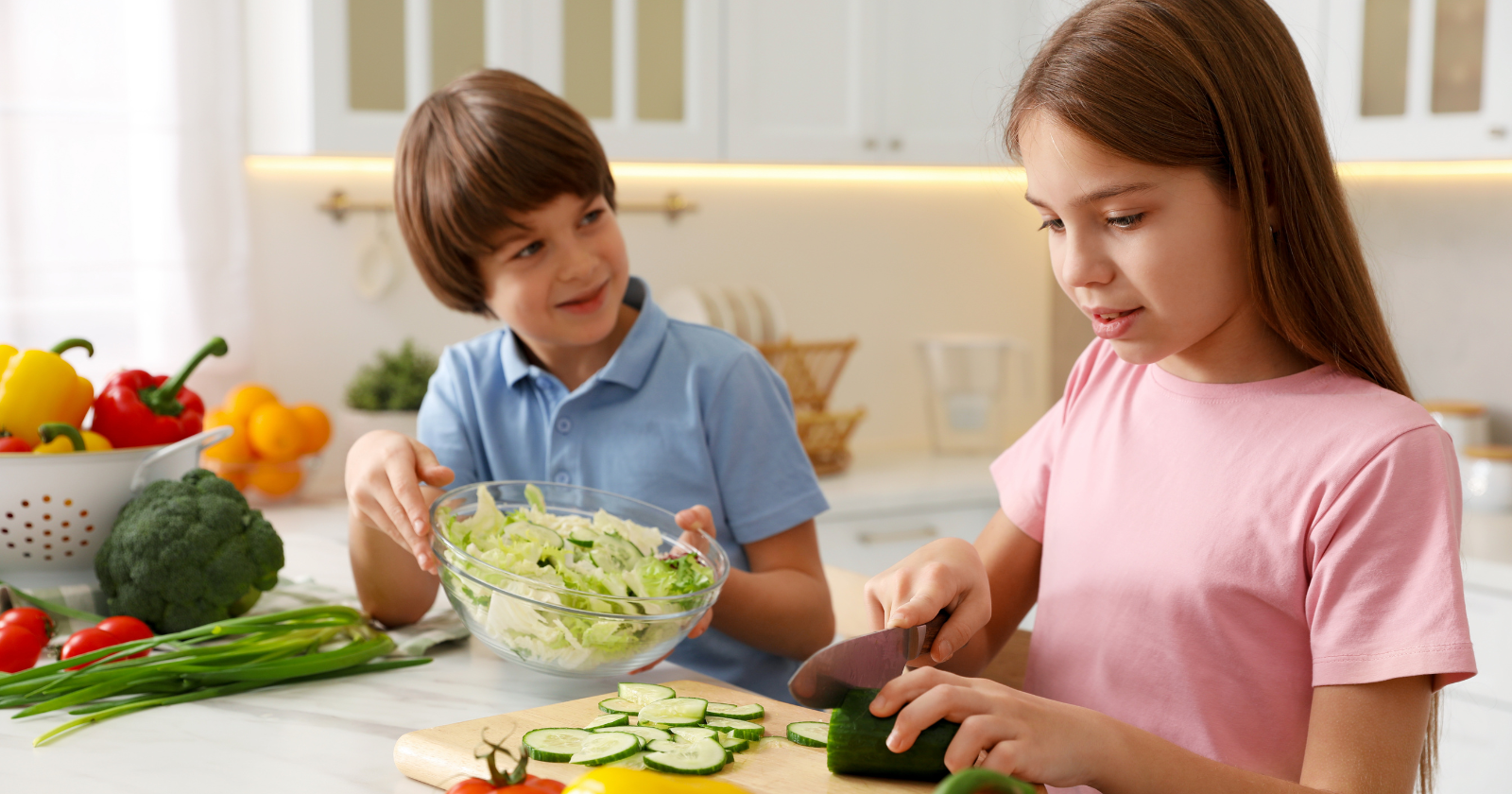
5) They involve kids in food preparation
Elise has a small stool that lives in our kitchen. She uses it to wash vegetables, stir batters, and occasionally sneak tastes of whatever we’re making. Is it slower than cooking alone? Absolutely. Is it messier? Without question. But the payoff is worth it.
When children participate in preparing food, they develop curiosity about ingredients. They’re more invested in the final product. A kid who helped tear lettuce for the salad is more likely to eat that salad. A kid who stirred the soup wants to taste their creation.
This doesn’t have to be elaborate. Even toddlers can help wash fruit or hand you items from the fridge. The goal is connection and exposure, not culinary perfection.
Some of our best conversations happen while Elise and I are standing at the counter together, her little hands busy with some task I’ve assigned. Food becomes something we make together, not just something that appears on a plate.
6) They don’t use food as reward or punishment
“If you finish your vegetables, you can have dessert.” It’s a sentence most of us have said or heard. And I get the logic. It seems like a reasonable trade. But here’s the problem: it teaches kids that vegetables are the obstacle and dessert is the prize. It elevates sweets and diminishes everything else.
As feeding therapist and dietitian Ellyn Satter has noted, using food as reward or punishment distorts children’s relationship with eating. It creates categories of “good” and “bad” foods, which can lead to guilt, sneaking, and an unhealthy fixation on restricted items.
In our house, we’ve tried to neutralize dessert. When we have it, it’s served alongside the meal or offered afterward without conditions. Elise doesn’t have to earn it.
This felt counterintuitive at first, but over time, dessert has lost its magical power. It’s just another food. Some nights she eats it first, some nights she ignores it entirely. The drama is gone.
7) They model the eating habits they want to see
Kids are watching us constantly. They notice when we skip breakfast, when we eat standing over the sink, when we make faces at foods we don’t like. They absorb our attitudes toward eating long before they can articulate what they’ve learned.
This means that one of the most powerful things we can do is eat well ourselves. Not performatively, but genuinely.
If you want your child to eat vegetables, eat vegetables. If you want them to try new things, let them see you trying new things. If you want them to listen to their hunger cues, show them what that looks like by not always finishing your plate when you’re full.
I’ll be honest: this one has made me more mindful of my own habits. I used to inhale lunch at my desk without thinking. Now I try to sit down, even briefly, and eat with some intention. Partly for my own wellbeing, but also because I know two small people are taking notes.
8) They keep screens off the table
This is a boundary Camille and I agreed on early, and it’s one of the few we’ve held firm. No tablets, no phones, no TV during meals. It wasn’t easy to enforce, especially during the toddler years when a screen felt like the only way to get food into a tiny human. But we stuck with it.
Here’s why it matters: screens distract from hunger and fullness signals. Kids who eat while watching something tend to eat mindlessly, missing the cues that tell them they’re satisfied. They also miss the social aspect of the meal, the conversation, the connection, the modeling that happens when everyone is present.
Meals without screens are sometimes louder and more chaotic. There’s no digital pacifier keeping everyone calm. But there’s also more talking, more laughing, more of the stuff that makes family meals meaningful in the first place. Elise tells us about her imaginary friends. Julien bangs his spoon and grins. It’s not peaceful, but it’s ours.
Closing thoughts
None of these habits require special equipment or gourmet cooking skills. They don’t demand perfection. What they ask for is consistency and a willingness to let go of control in places where we’ve been taught to grip tightly.
Raising healthy eaters is a long game. There will be phases of food refusal, weeks where your kid eats nothing but bread, moments when you question everything. That’s normal. What matters is the overall pattern, the culture you’re building around your table over months and years.
So if dinner tonight is a struggle, take a breath. Serve the food, sit together, and trust the process. The habits you’re building now are seeds. You might not see the harvest for a while, but it’s coming.