

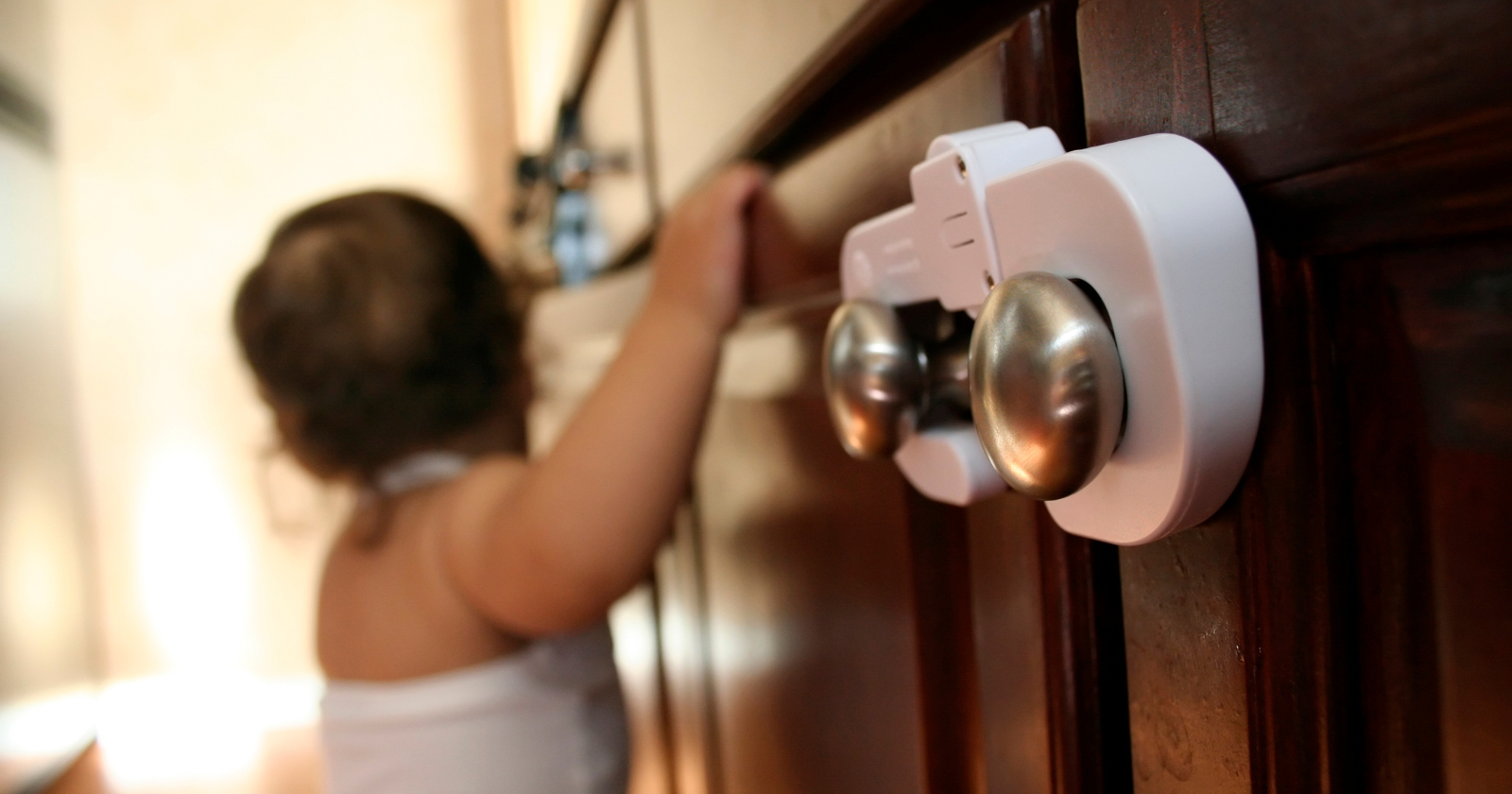
Before Ellie was born, I remember walking through our house with fresh eyes, suddenly noticing every sharp corner and dangling cord.
We installed outlet covers, anchored the bookshelf, and felt pretty confident we had covered our bases. Then she started moving. And reaching. And putting absolutely everything in her mouth.
That’s when I realized how many hazards I had completely missed. Some were obvious once I got down on her level. Others I only learned about after a near-miss or a conversation with our pediatrician.
The truth is, baby-proofing isn’t a one-time checklist. It evolves as your little one grows and discovers new ways to explore. Here are ten commonly overlooked hazards that deserve a second look in your home.
1) Button batteries hiding in everyday items
These tiny, shiny discs power everything from remote controls to musical greeting cards, and they’re incredibly dangerous if swallowed.
According to the Center for Injury Research and Policy at Nationwide Children’s Hospital, emergency room visits for button battery ingestion have increased significantly over the past two decades, with the most serious injuries occurring in children under age 5.
What makes them so dangerous? When lodged in the esophagus, a button battery can cause severe burns within just two hours. The electrical current creates a chemical reaction that damages tissue quickly and seriously.
Walk through your home and think about where these batteries might be hiding. Remote controls, key fobs, flameless candles, bathroom scales, hearing aids, thermometers, and even some toys.
Make sure battery compartments are screwed shut securely, and store loose batteries well out of reach. If you suspect your child has swallowed one, seek emergency care immediately.
2) Blind cords and window covering strings
I’ll admit this one didn’t fully register for me until Milo started pulling himself up on everything near windows. Those looped cords hanging from blinds? They’re a serious strangulation risk for curious babies and toddlers who grab, pull, and get tangled before you even realize what’s happening.
The good news is that awareness around this hazard has grown, and many newer window coverings are designed to be cordless. If you have older blinds with cords, you can retrofit them with cord cleats that keep strings wrapped up high, or consider replacing them altogether with cordless options.
Related Stories from The Artful Parent
- 8 signs you’re raising an emotionally secure child even when it doesn’t feel like you know what you’re doing
- 9 things creative kids do that look like misbehavior but are actually signs their mind is working overtime
- The 8 messiest childhood activities are actually the ones building your child’s brain in ways screens never will
It’s also worth checking any curtain tiebacks or decorative cords near windows. Anything looped and within reach poses a risk. A quick audit of your window treatments can make a real difference in keeping your little one safe.
3) Furniture that hasn’t been anchored
Dressers, bookshelves, TV stands, and even smaller pieces like nightstands can tip over when a climbing toddler uses drawers as a ladder. This happens faster than most parents expect, and the consequences can be devastating.
The U.S. Consumer Product Safety Commission has been vocal about this issue for years, urging families to anchor all top-heavy furniture to the wall. It takes just a few minutes with an anti-tip kit, and most hardware stores carry inexpensive options that work with various wall types.
Don’t forget about less obvious pieces either. That cute vintage dresser in the nursery, the changing table, or even a heavy floor lamp. If it could topple, secure it. And as your baby grows into a toddler who loves to climb, revisit this regularly.
What felt stable when they were six months old might become a target once they’re mobile and curious.
4) Medications and vitamins within reach
It’s easy to think of prescription bottles as the main concern, but everyday items like iron supplements, pain relievers, and even prenatal vitamins can be toxic to small children. Those childproof caps? They slow kids down, but they don’t stop determined little hands entirely.
- I’m 37 and I’ve noticed that whenever there’s a crisis everyone turns to me like I have answers – and the hardest part isn’t solving the problem, it’s that nobody ever asks if I’m okay because they need me to be the steady one and I’ve forgotten how to be anything else - Global English Editing
- I’m 73 and I keep the television on from six in the morning until I fall asleep — not because I’m watching it, but because the sound of other people talking fills the exact shape of the silence my family left when they stopped needing this house, and some mornings a commercial says “good morning” before anyone real does - Global English Editing
- Do Branded Promotional Products Still Work? What Bloggers Should Know Before Investing - The Blog Herald
I’ve learned to keep all medications, including the natural remedies and supplements I reach for daily, in a high cabinet with a childproof latch. Purses and diaper bags are another sneaky spot where pills end up loose at the bottom, so I try to be mindful about where I set mine down when we have little ones around.
If you have overnight guests, especially grandparents who may travel with medications in weekly pill organizers, gently remind them to keep those containers up high and out of sight. A quick conversation can prevent a scary situation.
5) Houseplants that are toxic if ingested
I love having greenery in our home. There’s something grounding about caring for plants alongside caring for little ones. But not all houseplants are safe for curious babies who grab leaves and immediately bring them to their mouths.
Common plants like pothos, philodendron, peace lilies, and dieffenbachia can cause irritation, swelling, or more serious reactions if chewed or swallowed. Before bringing a new plant home, I always do a quick search to check its safety profile.
If you already have plants that aren’t baby-friendly, consider moving them to high shelves, hanging planters, or rooms that stay gated off. You don’t have to give up your indoor jungle, just rearrange it thoughtfully.
And if you’re looking for safer alternatives, spider plants, Boston ferns, and prayer plants are generally considered non-toxic options.
6) Pet food and water bowls left on the floor
This one catches so many new parents off guard.
Your baby starts crawling, and suddenly the dog’s water bowl becomes the most fascinating thing in the house. Beyond the obvious choking hazard of dry kibble, there’s also a drowning risk with large water bowls and potential bacteria exposure from bowls that aren’t cleaned regularly.
We eventually moved our dog’s food and water to a gated area of the laundry room during the baby and toddler years. It took some adjusting for everyone, but it gave me peace of mind knowing Milo wasn’t splashing in the water dish or sampling the dog food when I turned my back for a moment.
If relocating bowls isn’t an option, try feeding your pet at specific times rather than leaving food out all day, and use a smaller water dish that you refill frequently. It’s a simple shift that reduces risk without disrupting your pet’s routine too much.
7) Gaps in stair railings and balcony bars
Most parents think about baby gates at the top and bottom of stairs, but the railings themselves can be a hazard. If the gaps between balusters are wide enough for a small head to fit through, there’s a risk of entrapment or falling.
The general guideline is that gaps should be less than four inches wide. You can test this with a soda can. If the can fits through, so might your baby’s head. Older homes and outdoor decks often have wider spacing that doesn’t meet current safety standards.
If you find gaps that are too wide, there are clear plastic shields and mesh barriers designed to cover railings without ruining the look of your staircase or balcony. It’s a relatively easy fix that addresses a hazard many families don’t think about until their little one starts exploring vertical spaces.
8) Unsecured toilet lids
Toilets are genuinely fascinating to toddlers. The swirling water, the handle that makes things disappear, the splashing possibilities. But for a baby or young toddler, an open toilet poses a real drowning risk.
Their top-heavy proportions make it easy to tumble in headfirst and difficult to push themselves back out.
Toilet lid locks are inexpensive and simple to install. They take a little getting used to for adults, but they’re effective at keeping curious hands out of the bowl. I also make a habit of keeping bathroom doors closed, though I know that’s easier said than done with older kids coming and going.
It’s one of those hazards that feels almost silly to mention until you catch your toddler elbow-deep in the toilet water, and then suddenly it feels very real. A small precaution can prevent a scary moment.
9) Heavy or sharp objects on low surfaces
Once babies start pulling up and cruising along furniture, everything at their level becomes fair game. That decorative bowl on the coffee table, the picture frame on the bottom shelf, the scissors you set down for just a second. If it’s within reach, it’s going in their hands and probably their mouth.
I found it helpful to do a crawl-through of each room, literally getting down on my hands and knees to see what Ellie and later Milo could access. It’s amazing what you notice from that perspective. Heavy bookends, glass vases, remotes with button batteries, coins in a dish.
The goal isn’t to strip your home of all personality, just to temporarily relocate anything that could hurt a small person. As they grow and learn boundaries, you can gradually bring things back down. But during those early mobile months, less is definitely more when it comes to low surfaces.
10) Cords from lamps, chargers, and small appliances
Electrical cords are everywhere in modern homes, and babies find them irresistible. They pull, chew, and yank, which can lead to strangulation, electrical shock, or heavy objects crashing down on them.
As noted by the American Academy of Pediatrics, keeping cords out of reach and using cord covers or cord shorteners can significantly reduce these risks. I’ve become a fan of cord management boxes that hide power strips and excess cable length, keeping everything tidy and inaccessible.
Pay special attention to cords attached to things that could fall, like table lamps, baby monitors on dressers, or small kitchen appliances near counter edges. A curious tug on a dangling cord can bring something heavy down fast.
Securing cords and moving items back from edges takes just a few minutes but makes your space much safer.
Closing thoughts
Baby-proofing isn’t about creating a sterile, bubble-wrapped environment. It’s about thoughtfully reducing risks so your little one can explore freely while you breathe a little easier. Some hazards are obvious, but many hide in plain sight until you know to look for them.
What’s helped me most is accepting that this is an ongoing process. As babies grow, their abilities change, and new dangers emerge. The outlet covers that worked at six months might need reinforcement when you have a determined two-year-old.
The coffee table that seemed fine becomes a head-bonking hazard once they’re walking.
Trust your instincts, get down on their level regularly, and don’t be too hard on yourself when you discover something you missed. We’re all learning as we go, adjusting and adapting alongside these tiny humans who keep us on our toes.
A safe home is a gift you give your child and yourself, one small fix at a time.
