

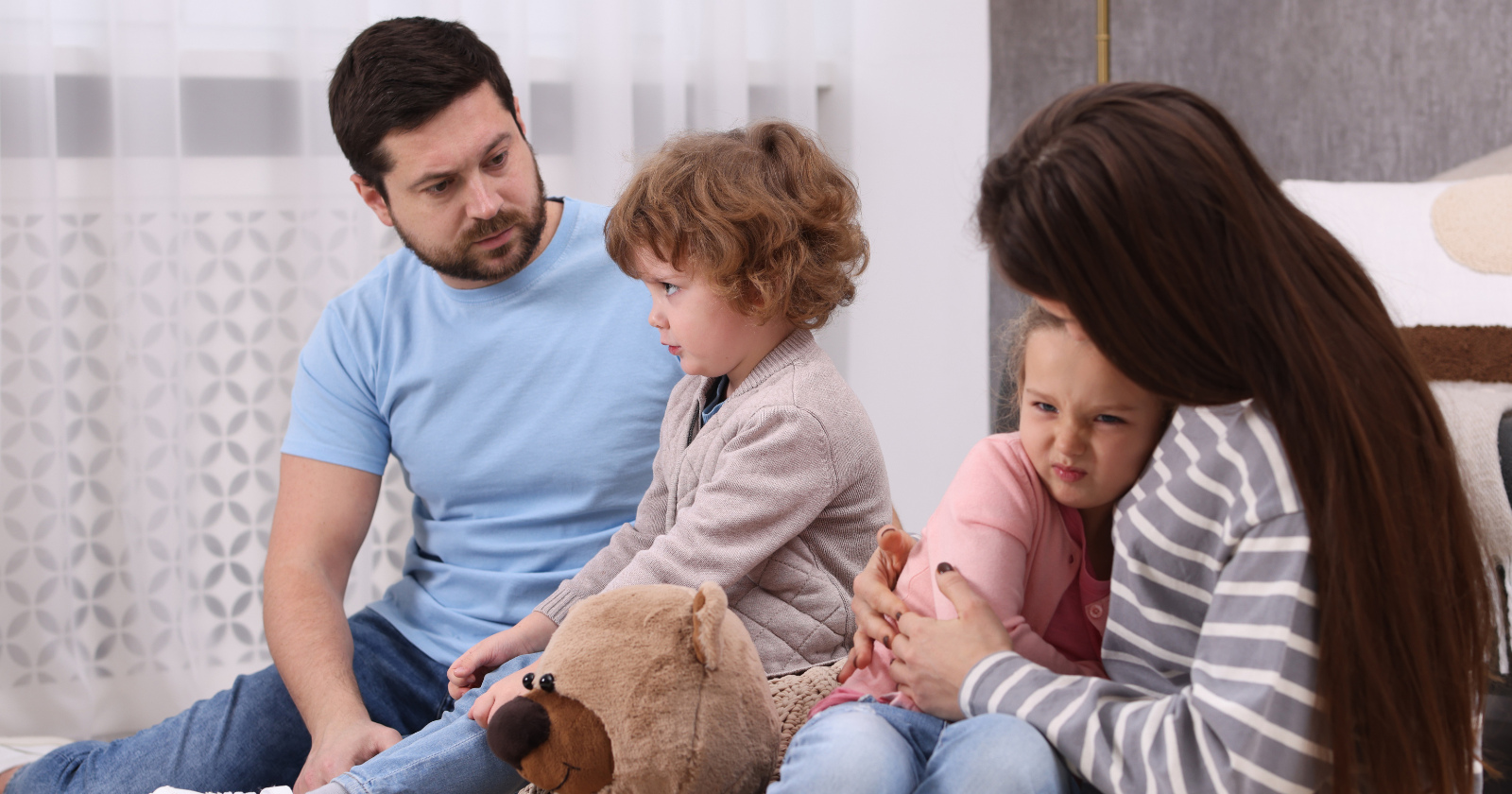
There was a moment last spring when I caught myself mid-yell, voice raised at Ellie over something I can barely remember now. Probably shoes left in the doorway or a request ignored for the fourth time. What I do remember is her face. The way her shoulders crept up toward her ears. The way she looked smaller somehow.
That moment stayed with me. It nudged me toward a quieter approach, not because yelling makes me a bad mom, but because I wanted to see what might shift if I stopped. What I discovered surprised me. The changes weren’t just in my kids.
They were in me, in my marriage, in the entire rhythm of our home. If you’ve been curious about what happens when you commit to lowering your voice, here’s what the research and my own experience have shown me.
1) Children begin to actually hear you
It sounds counterintuitive, doesn’t it? We raise our voices because we want to be heard. But yelling often has the opposite effect. When we shout, kids tend to tune out or focus on our tone rather than our words. Their little nervous systems go into protection mode, and the message gets lost.
When I started speaking more quietly, I noticed Milo and Ellie leaning in. They made eye contact. They asked questions. As noted by Dr. Laura Markham, clinical psychologist and author of Aha! Parenting, “When we yell, children go into fight, flight, or freeze. They literally can’t learn or cooperate from that state.” Our calm voice signals safety, and safety opens the door to listening.
I’ve found that getting down to their level and speaking softly, even when I’m frustrated, gets a better response than any amount of volume ever did. It takes practice, but the payoff is real.
2) Your stress levels drop significantly
Yelling is exhausting. Not just emotionally, but physically. Your heart rate spikes, your muscles tense, and cortisol floods your system. Do that multiple times a day, and you’re running on fumes by bedtime.
When I made a conscious effort to pause before reacting, I felt the difference in my body. My jaw unclenched. My breathing slowed. I wasn’t carrying that tight, wound-up feeling into every interaction.
Research published in the Journal of Family Psychology has shown that parents who use harsh verbal discipline report higher levels of stress and lower overall wellbeing. The yelling doesn’t release tension. It creates more of it.
Choosing a calmer response isn’t about being perfect. It’s about protecting your own nervous system so you have more to give throughout the day.
3) Sibling conflicts become easier to navigate
Before I changed my approach, I’d often swoop in during sibling squabbles with a sharp “Stop it!” or “That’s enough!” It worked momentarily, but the tension would resurface within minutes. The kids weren’t learning anything except that whoever yells loudest wins.
Related Stories from The Artful Parent
- 8 signs you’re raising an emotionally secure child even when it doesn’t feel like you know what you’re doing
- 9 things creative kids do that look like misbehavior but are actually signs their mind is working overtime
- The 8 messiest childhood activities are actually the ones building your child’s brain in ways screens never will
Now I try to narrate what I see and guide them toward solutions. “You both want the red truck. What could we do?” It takes longer in the moment, but over time, Ellie and Milo have started working things out on their own more often. They’ve heard me model calm problem-solving enough that they’re beginning to mirror it.
Kids absorb how we handle conflict. When we respond to their disagreements with patience, we’re teaching them that big feelings don’t require big explosions. That’s a skill that will serve them far beyond childhood.
4) Bedtime becomes less of a battle
Bedtime used to be our hardest hour. Everyone tired, patience thin, and the finish line so close yet so far. I’d find myself snapping over pajamas not being on fast enough or one more request for water. The evenings often ended with tears, sometimes mine included.
Shifting away from yelling transformed our nights. I started building in more buffer time, speaking slowly, and letting go of the need for everything to happen on my exact timeline. When I stopped rushing and raising my voice, the kids stopped resisting as hard. It was like they could finally relax into the routine instead of bracing against it.
Matt noticed it too. He mentioned one night that bedtime felt gentler, more like a winding down than a wrestling match. That observation meant more to me than he probably realized.
5) Your child’s self-esteem grows stronger
Children are always watching us, always absorbing messages about who they are based on how we respond to them. When we yell frequently, they can internalize the message that they’re a problem, that they cause frustration just by being themselves.
- The reason the kindest person you know is also the loneliest isn’t a paradox — it’s a transaction they set up in childhood where they traded being loved for being useful and now they’re fifty-seven and everyone around them adores what they do but nobody has any idea who they actually are - Global English Editing
- My husband and I have weekly date nights where we leave our daughter with the nanny and go out for dinner and drinks — and the number of people who’ve called that selfish taught me that most couples stop prioritizing their marriage the second they become parents, and then wonder why they feel like roommates - Global English Editing
- How solitude can make you a stronger and more self-aware creator - The Blog Herald
Dr. Shefali Tsabary, author of The Conscious Parent, has said, “When we react to our children from our own unresolved emotions, we project onto them a sense of inadequacy.” Choosing calm communication sends a different message: I see you, I’m here, and we can work through this together.
I’ve watched Ellie blossom in small ways since I’ve been more intentional. She speaks up more confidently, tries new things without as much fear of failure, and seems more settled in her own skin. These shifts didn’t happen overnight, but they’ve been steady and beautiful to witness.
6) Connection deepens in unexpected moments
When yelling was my default, there was always a low hum of tension in our house. Even during good moments, part of me was bracing for the next eruption. That undercurrent affected everything, making it harder to be fully present during play or cuddles or conversation.
Without that tension, I’ve found myself noticing more. The way Milo’s hand reaches for mine when we walk to the garden. The questions Ellie asks while we’re making dinner together. These moments were always there, but I was too wound up to fully receive them.
Connection doesn’t require grand gestures. It lives in the small, quiet spaces between us. When we’re not recovering from conflict or anticipating the next blowup, we have room to actually be together. That’s been one of the most unexpected gifts of this shift.
7) You model emotional regulation in real time
Our children learn how to handle big emotions by watching us handle ours. Every time we pause, take a breath, and choose a measured response, we’re showing them that feelings don’t have to control actions. That’s a powerful lesson, one that no amount of lecturing can teach.
I’m not always successful. There are still moments when my voice rises before I can catch it. But I’ve learned to repair those moments, to say, “I got too loud just now. I’m sorry. Let me try again.” That repair matters too. It shows my kids that mistakes happen and that we can come back from them with honesty and grace.
Emotional regulation isn’t about suppressing feelings. It’s about creating space between the feeling and the response. When we practice this in front of our children, we give them a roadmap for doing the same.
Closing thoughts
Letting go of yelling isn’t about becoming a perfect parent or never feeling frustrated. Frustration is part of the job. It’s about choosing, again and again, to respond in a way that keeps connection intact and teaches our kids that home is a safe place to make mistakes and grow.
The improvements I’ve seen in our family didn’t come from some dramatic overhaul. They came from small, consistent choices. A breath before speaking. A hand on a shoulder instead of a sharp word. A willingness to try again when I fall short.
If you’re curious about what might change in your home, I’d encourage you to start small. Pick one moment each day to pause before reacting. Notice what shifts. You might be surprised by how much quieter, and fuller, your home begins to feel.
