

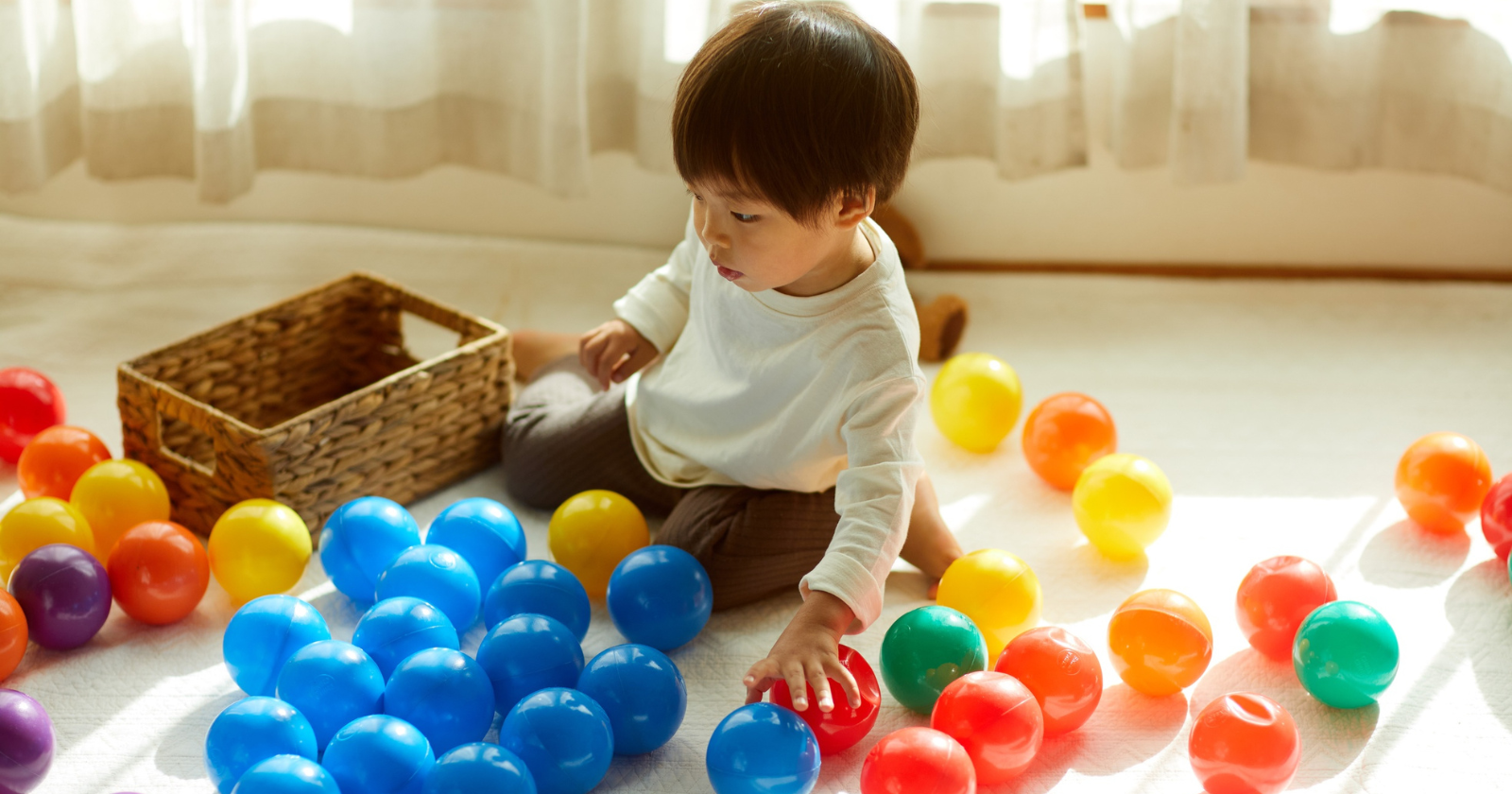
There’s something magical about watching a toddler discover how the world works. The way they study a ladybug crawling across a leaf, or the intense concentration on their face as they stack blocks only to knock them down again. These small moments are actually big learning happening in real time.
The truth is, toddlers don’t need fancy toys or structured curricula to thrive. Research from Harvard’s Center on the Developing Child shows that responsive, back-and-forth interactions with caregivers build the strongest foundation for learning.
What toddlers need most is engaged time with you, using simple materials you probably already have at home. Here are ten activities that tap into how toddlers naturally learn best.
1) Sorting games with household items
Toddlers are natural categorizers. Hand them a bowl of mixed items and watch their little brains light up. You can use mismatched socks, wooden spoons and plastic spoons, or different colored pasta shapes. The key is keeping it simple and letting them lead.
Start by modeling: “Look, I’m putting all the red ones here.” Then step back. Your toddler might sort by color, size, or some category that only makes sense to them. That’s perfect. They’re building pre-math skills like classification and comparison without even knowing it.
Milo went through a phase where he wanted to sort everything in our utensil drawer. It made emptying the dishwasher take three times as long, but I learned to see it as learning time rather than a delay. Sometimes the best activities are the ones they choose themselves.
2) Water play with cups and containers
If there’s one universal toddler truth, it’s that water is endlessly fascinating. Set up a simple station at the sink, in the bathtub, or outside with a plastic bin. Add cups of different sizes, a funnel, a turkey baster, maybe a few floating toys.
Water play teaches cause and effect, volume concepts, and fine motor control. When they pour from a big cup into a small one and it overflows, they’re learning about capacity. When they squeeze the turkey baster and water shoots out, they’re understanding pressure and force.
Keep a towel handy and let go of keeping things dry. The mess is part of the process. I’ve found that giving toddlers permission to splash within boundaries actually leads to less chaos than trying to keep everything contained.
3) Kitchen helper tasks
Toddlers desperately want to do what we’re doing. Instead of working around them in the kitchen, bring them in. Even very young toddlers can tear lettuce, wash vegetables, stir ingredients, or push buttons on the blender with help.
As noted by Dr. Maria Montessori, children learn best through purposeful work that contributes to real life. There’s a difference in how a toddler engages with a pretend kitchen versus actual meal preparation. They sense when their work matters.
Related Stories from The Artful Parent
- 8 signs you’re raising an emotionally secure child even when it doesn’t feel like you know what you’re doing
- 9 things creative kids do that look like misbehavior but are actually signs their mind is working overtime
- The 8 messiest childhood activities are actually the ones building your child’s brain in ways screens never will
Yes, it takes longer. Yes, there will be flour on the floor. But the payoff goes beyond learning. You’re building their confidence and sense of belonging in the family. Ellie started “helping” with dinner at two, and now at five, she can crack eggs and measure ingredients independently. Those early messy sessions laid the groundwork.
4) Reading the same books over and over
When your toddler brings you the same book for the fifteenth time today, take heart. Repetition is exactly how their brains consolidate learning. Each read-through, they’re catching new details, predicting what comes next, and strengthening neural pathways.
Make repeated readings more interactive by pausing before familiar words and letting them fill in the blank. Point to pictures and ask simple questions: “Where’s the dog? What color is the ball?” Let them turn the pages, even if they skip some.
Board books with real photographs, simple stories with rhythmic text, and books featuring everyday activities tend to hold toddler attention best. But honestly, the “best” book is whatever one your child wants to read right now. Follow their interest, even when you’re tired of reading about trucks.
5) Sensory bins with natural materials
A shallow container filled with interesting textures gives toddlers a contained space to explore with all their senses. Skip the dyed rice and glitter in favor of natural materials: dried beans, oats, sand, water beads made from tapioca, or soil from the garden.
Add scoops, small containers, toy animals, or smooth stones. Then let them dig in. Sensory play supports language development as you narrate what they’re experiencing: “That feels bumpy. The beans are making a sound when they fall.”
- The teen blogger whose “My Crappy Life” posts became a murder investigation - The Blog Herald
- When preaching civility gets you into a fight with the BBC - The Blog Herald
- Research suggests people who document their lives in writing — blogs, journals, essays — don’t just remember their experiences better, they understand them differently, because narration and comprehension use the same cognitive architecture - The Blog Herald
For toddlers who still mouth everything, stick with larger items or edible bases like cooked pasta or oatmeal. Safety first, but don’t let the fear of mess keep you from trying. Lay down an old sheet and embrace the exploration. The focused, calm play that sensory bins encourage is worth the cleanup.
6) Simple obstacle courses
Toddlers need to move. Their bodies are learning just as much as their minds, and physical challenges build problem-solving skills alongside coordination. Create a simple obstacle course using couch cushions to climb over, a tunnel made from a blanket draped over chairs, pillows to jump onto, and a line of tape to balance along.
Talk them through it: “First, climb over the mountain. Then crawl through the cave.” This builds sequencing skills and following directions while burning energy. Change up the course regularly to keep it interesting, or let your toddler help design it.
Zero to Three notes that physical activity in early childhood supports brain development, emotional regulation, and healthy sleep patterns. So when your toddler is climbing the furniture anyway, channeling that energy into an obstacle course is a win for everyone.
7) Playing with playdough or homemade dough
There’s a reason playdough has been a childhood staple for generations. Squishing, rolling, poking, and shaping builds hand strength essential for later writing skills. It’s also incredibly calming and can help toddlers regulate big emotions.
Homemade dough is simple: one cup flour, half cup salt, two tablespoons cream of tartar, one cup water, and a tablespoon of oil. Cook over medium heat until it forms a ball. Add natural food coloring if you want, or leave it plain. It lasts for months in an airtight container.
Offer simple tools like a wooden rolling pin, cookie cutters, or a garlic press for making “hair.”
But also let them just squeeze and poke with their hands. There’s no wrong way to play with dough, and that freedom is part of what makes it so valuable for toddlers who hear “no” and “not like that” so often throughout their day.
8) Nature walks with collection bags
Even a walk around the block becomes an adventure when your toddler has a bag for collecting treasures. Give them a small cloth bag or basket and let them gather leaves, sticks, rocks, seed pods, or fallen flowers. Their pace will be slow. That’s the point.
Toddlers notice things we walk right past. A crack in the sidewalk, an ant carrying a crumb, the way shadows move. When we slow down to their speed, we get to see the world through their eyes again. It’s a gift they give us.
Back home, spread out the treasures and talk about them. Sort them, count them, or use them for art projects. Press leaves between wax paper. Arrange rocks by size. The collection becomes material for more learning, extending one simple walk into days of exploration.
9) Matching games with everyday objects
Matching builds memory, visual discrimination, and concentration. You don’t need to buy special cards. Use pairs of socks, two of each type of fruit, matching lids to containers, or photos of family members printed twice.
Start with just a few pairs face up and help your toddler find the matches. As they get the hang of it, add more pairs or turn them face down for a memory challenge. Keep it playful and low-pressure. If they lose interest, that’s fine. Try again another day.
What I love about matching games is how they grow with your child. A young toddler might match identical pictures, while an older toddler can match related items like a shoe and a sock, or a cup and a plate. You can adjust the difficulty as their skills develop.
10) Singing songs with hand motions
Music and movement together create powerful learning experiences. Songs with hand motions like “Itsy Bitsy Spider,” “Wheels on the Bus,” or “Head, Shoulders, Knees and Toes” teach body awareness, coordination, and language all at once.
Don’t worry about your singing voice. Your toddler thinks you sound amazing. The repetition of familiar songs helps them learn new words and sentence patterns. The hand motions build fine and gross motor skills. And the connection of singing together strengthens your bond.
Make up your own songs about daily routines: a diaper changing song, a hand washing song, a getting dressed song. The National Association for the Education of Young Children highlights that music supports mathematical thinking through patterns and rhythm. So those silly songs are actually building your toddler’s brain in measurable ways.
Closing thoughts
The most important thing about all these activities is the connection happening while you do them. Toddlers learn through relationships. When you get down on the floor, follow their lead, and engage with genuine interest, you’re giving them exactly what their developing brains need most.
You don’t have to do all ten activities or turn every moment into a learning opportunity. Some days, survival mode is the only mode, and that’s okay. But when you do have a bit of energy and time, know that these simple, low-cost activities are just as valuable as any expensive toy or class.
Trust your toddler’s natural curiosity. Trust yourself as their guide. The learning will happen, one sorted sock and splashy cup of water at a time.
