
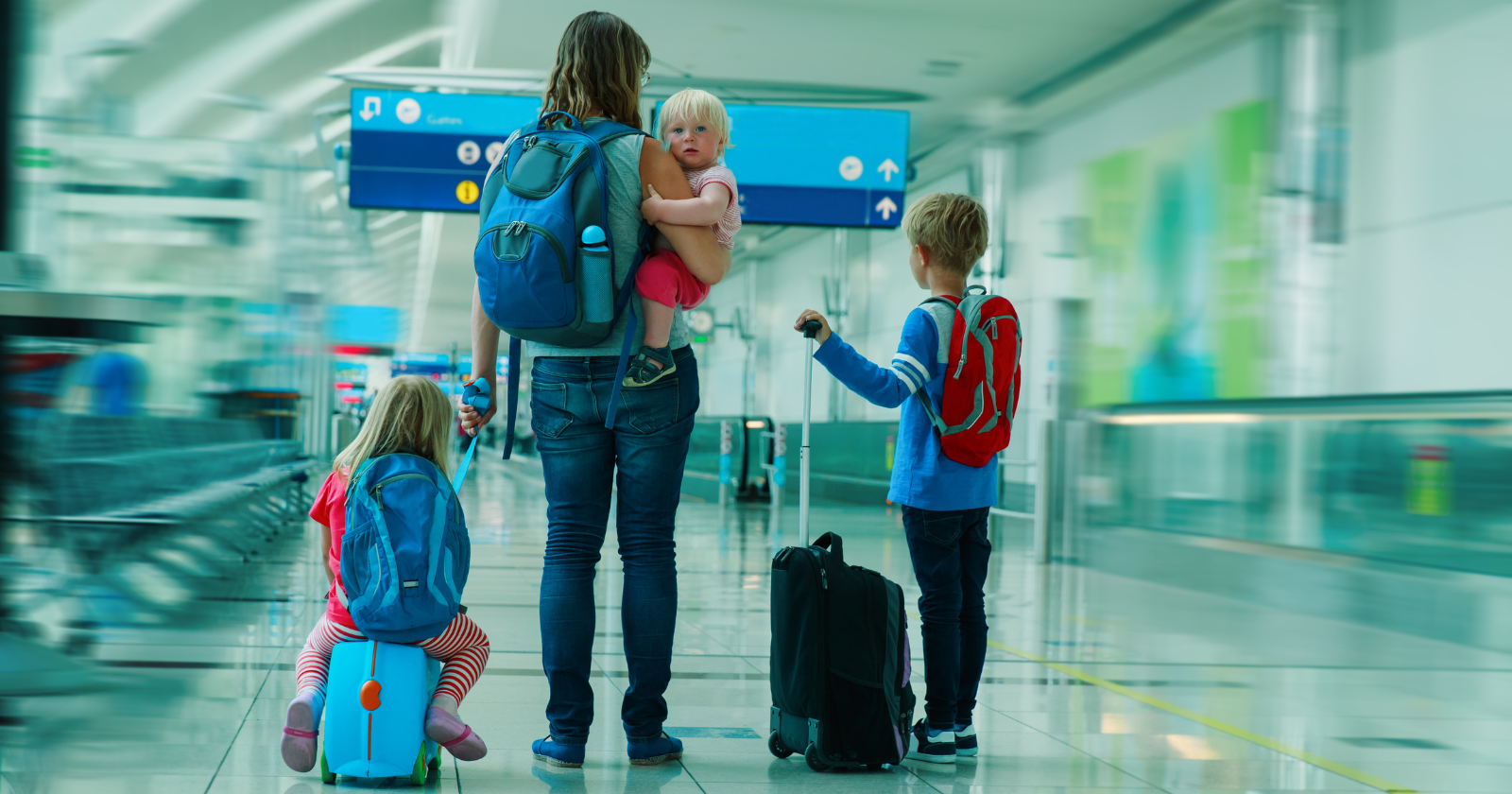
Last summer, Camille and I drove six hours to visit her parents with both kids in the backseat. Elise was four, Julien was barely walking, and I was convinced we’d nailed our preparation. We had snacks. We had tablets. We had a color-coded packing list I’d spent way too long perfecting.
Within forty-five minutes, Julien had a blowout, Elise announced she was “starving to actual death,” and I realized the diaper bag was buried under three suitcases in the trunk. Classic.
Here’s what I’ve learned since then: traveling with kids will never be effortless. But it can absolutely become manageable, even enjoyable, when you build the right systems ahead of time. These nine hacks have transformed our family trips from survival mode into something that actually resembles a vacation.
1) Pack a “first fifteen minutes” bag and keep it within arm’s reach
This single change has saved us more headaches than I can count. The idea is simple: pack a small bag with everything you might need in the first fifteen minutes of your trip, and keep it at your feet or in the seat pocket, not buried in luggage.
For us, this bag includes diapers, wipes, a change of clothes for the baby, snacks that won’t make a mess, a sippy cup, and one small toy or book for each kid. When Julien inevitably needs something the moment we pull out of the driveway, I’m not contorting myself to reach the trunk.
Think of it as your emergency kit for the transition period. Kids often have the hardest time right at the beginning of a trip, when routines are disrupted and excitement (or anxiety) is running high. Having immediate access to comfort items and necessities helps everyone settle in faster. Once we’re cruising and the kids are occupied, then I can relax about what’s packed where.
2) Let your kids help pack their own activity bags
I used to pack everything for Elise, assuming I knew best what she’d want during a long car ride or flight. Turns out, she has very strong opinions about which stuffed animal travels and which one stays home.
Now, the night before any trip, I give her a small backpack and a simple rule: you can bring whatever fits, but you have to carry it yourself. This gives her ownership over her entertainment and teaches her to make choices about what matters most. She usually picks a mix of books, a few small toys, and her beloved sketchpad.
Research from the Zero to Three organization suggests that giving young children age-appropriate choices helps build self-regulation skills. Packing their own bag is a low-stakes way to practice decision-making while also reducing the “I’m bored” complaints later. If she forgot something she wanted, that’s a learning moment for next time.
3) Embrace the power of novel snacks
I’m not above bribery when it comes to travel. And by bribery, I mean strategically deploying snacks my kids don’t normally get at home.
We keep our everyday snacks pretty simple: fruit, crackers, cheese sticks. But for travel days, I’ll pick up a few special items they rarely see. Maybe it’s a small bag of animal crackers, or those squeezable yogurt tubes, or a tiny box of raisins with cartoon characters on it. The novelty factor buys us significant chunks of peaceful time.
Related Stories from The Artful Parent
- 8 signs you’re raising an emotionally secure child even when it doesn’t feel like you know what you’re doing
- 9 things creative kids do that look like misbehavior but are actually signs their mind is working overtime
- The 8 messiest childhood activities are actually the ones building your child’s brain in ways screens never will
Space these out strategically. Don’t dump everything on their laps at once. I usually introduce a new snack every hour or so, treating it like a little event. “Oh, look what I found in my bag!” Elise falls for it every time.
The key is keeping a few surprises in reserve for when things start to unravel. That emergency lollipop has gotten us through more traffic jams than I’d like to admit.
4) Download everything before you leave
Nothing derails a peaceful drive faster than the dreaded buffering wheel. Whether you’re relying on tablets, phones, or a portable DVD player, assume you’ll have zero internet access and prepare accordingly.
The night before we travel, I download episodes of Elise’s favorite shows, a few new games, and audiobooks for the whole family. We’ve gotten really into story podcasts lately, and they’re fantastic for longer stretches because everyone can listen together. It feels less like screen time and more like shared entertainment.
Don’t forget music. I have a playlist specifically for car trips that includes songs both kids love and songs Camille and I can tolerate hearing forty times. A good sing-along can shift the energy in the car when everyone’s getting restless.
Pro tip: download a few new songs they haven’t heard before. Novelty works for entertainment just like it works for snacks.
5) Build in way more buffer time than you think you need
Before kids, I could pack in twenty minutes and be out the door.
Now? I start our departure countdown at least two hours before we actually need to leave. It sounds excessive until you factor in the last-minute diaper change, the missing shoe, the sudden need for a snack, and the inevitable “I have to go potty” announcement right as you’re buckling car seats.
As parenting educator Janet Lansbury has noted, rushing children creates stress for everyone and often backfires. When I’m not stressed about time, I’m more patient with the chaos. And when I’m more patient, the kids are calmer. It’s a feedback loop that starts with simply giving ourselves margin.
This applies to connections too. If we’re flying, I book flights with longer layovers than strictly necessary. Yes, it means more time in airports. But it also means we can take bathroom breaks, grab food, and walk around without sprinting through terminals with a stroller and two carry-ons.
6) Create a visual countdown for younger kids
“Are we there yet?” is a cliché for a reason. Young kids have no concept of time, so telling them “three more hours” means absolutely nothing. What helps is making the journey visual and concrete.
For road trips, I’ll sometimes draw a simple map with landmarks along the way. “When we pass the big bridge, we’ll be halfway there.” Or I’ll use a paper chain where Elise can tear off one link every thirty minutes. It gives her something to anticipate and a tangible sense of progress.
For flights, I break it into phases: getting to the airport, waiting at the gate, taking off, flying, landing, and getting our bags. We talk through each phase beforehand so she knows what to expect. Predictability is calming for kids, especially in unfamiliar environments. The more she understands the sequence, the less anxious she feels about the unknown.
7) Pack one outfit per kid in your carry-on, always
I learned this one the hard way when our checked luggage got delayed on a trip to visit my brother. We arrived at midnight with two exhausted kids and nothing but the clothes on their backs. Never again.
Now, no matter how we’re traveling, I keep a full change of clothes for each kid in whatever bag stays with us. For flights, that’s the carry-on. For road trips, it’s the first fifteen minutes bag I mentioned earlier. This includes underwear, socks, and something to sleep in if we’re arriving late.
This also covers the inevitable spills and accidents that happen in transit. Julien once dumped an entire sippy cup down his front twenty minutes into a flight. Having a backup outfit meant we weren’t sitting in wet clothes for three hours. It takes up minimal space and provides maximum peace of mind.
8) Prepare kids for what’s different, not just what’s fun
We tend to hype up trips by talking about all the exciting parts: the beach, the grandparents, the hotel pool. But kids also need to know what will be different from their normal routine, especially the parts that might be challenging.
Before our last trip, I sat down with Elise and explained that we’d be sleeping in a different bed, eating meals at different times, and that her bedtime routine might look a little different. We talked about how it’s okay to feel a little weird in new places and that those feelings usually pass once you settle in.
According to the American Academy of Pediatrics, preparing children for transitions helps reduce anxiety and behavioral challenges. A few honest conversations before departure can prevent meltdowns later. Kids handle change better when they’re not blindsided by it.
9) Lower your expectations and protect your sense of humor
Here’s the truth: something will go wrong. Someone will have a meltdown in the airport. Someone will refuse to nap in the hotel. Someone (probably me) will forget something important. This is the nature of traveling with small humans.
The families who seem to travel well aren’t the ones with perfect kids or flawless logistics. They’re the ones who’ve made peace with imperfection. They laugh when the toddler throws crackers everywhere. They shrug when the flight gets delayed. They know that the mess is part of the memory.
Camille and I have a running joke now: if a trip goes too smoothly, we get suspicious. The chaos is baked in. Our job isn’t to eliminate it but to roll with it. When I approach travel with that mindset, I actually enjoy it more. The bar is lower, and the surprises feel less like failures and more like stories we’ll tell later.
Closing thoughts
Traveling with kids requires a different kind of preparation than traveling alone or as a couple. It’s less about efficiency and more about flexibility. Less about sticking to a plan and more about having backup plans for your backup plans.
These hacks won’t make every trip magical. But they’ll make most trips manageable, and some trips genuinely fun. The goal isn’t a Pinterest-perfect family vacation. It’s arriving at your destination with everyone relatively intact, maybe even smiling.
Start with one or two of these strategies on your next trip. See what works for your family. Adjust as needed. And when things inevitably go sideways, take a breath, dig out that emergency lollipop, and remember: you’re doing great.
The fact that you’re traveling with your kids at all means you’re giving them experiences and memories that matter. The rest is just logistics.