

Parents of young children often feel caught between two pressures. One says to step back and let children do things for themselves. The other says to protect them, help them and make sure they succeed. The idea of guided independence sits between the two: letting a child take the lead on a task while an adult stays close enough to support them when it matters.
Research on how parents help young children through challenges suggests this middle path is more than a compromise. The way an adult supports a toddler working on something slightly too hard for them has been linked to the security of the child’s relationship with that parent, and a wider body of work connects this kind of parenting to children’s developing self-control.
What guided independence looks like
Psychologists have long described the idea of scaffolding, a term introduced in the 1970s by researchers including Jerome Bruner. Like scaffolding on a building, the adult’s support is there to help a child reach a little higher than they could on their own, and is gradually removed as the child becomes more capable.
The Artful Parent
Family-life ideas and sharp reads, in your inbox.
Researchers in self-determination theory use a related term, autonomy support. In a 2011 study published in Social Development, Whipple, Bernier and Mageau, working in Canada, defined it as parenting aimed at supporting a child’s own goals, interests, choices and sense of acting by their own will. They were careful to distinguish it from simply pushing a child to be independent.
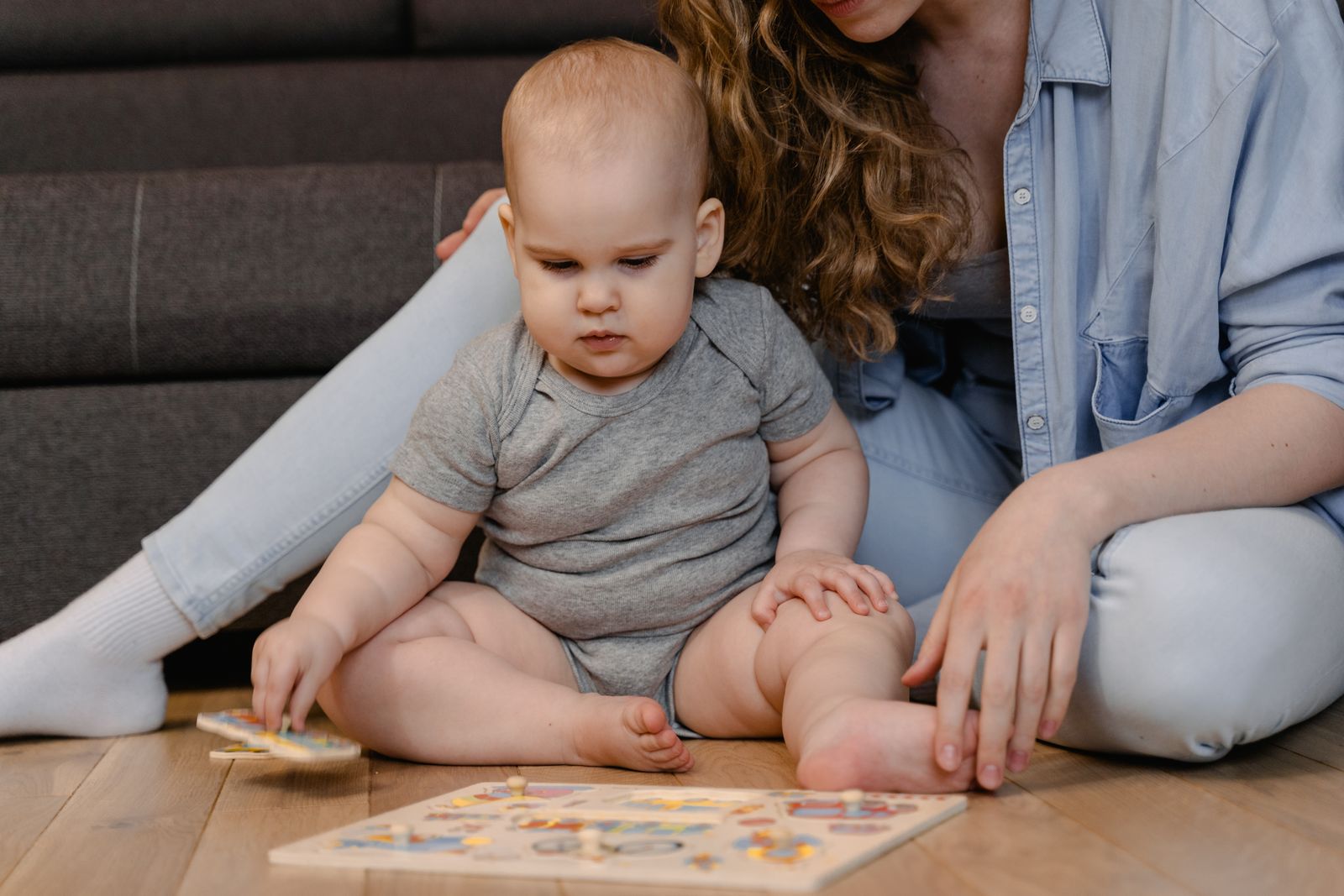
To measure it, the researchers watched mothers and their 15-month-old toddlers work on a puzzle that was deliberately a little too hard for the child. According to the published study, observers rated whether each mother stepped in according to what her child actually needed, encouraged the child and offered hints, saw the task from the child’s point of view, followed the child’s pace and gave the child chances to make choices.
In practice, that might mean letting a toddler try a piece in the wrong place before suggesting another spot, or asking “Where do you think this one goes?” rather than doing it for them. The support is real, but the child stays in charge of the task.
A link with secure attachment
The researchers studied 71 mothers and their babies from a large Canadian city. They also measured how sensitive each mother was to her baby at 12 months, something long linked to secure attachment, and assessed the security of each child’s attachment at 15 months.
Both maternal sensitivity and autonomy support were linked to more secure attachment. Interestingly, the two were not closely related to each other, which the authors took as evidence that they are different aspects of parenting. Autonomy support added to the prediction of attachment security beyond sensitivity alone.
Secure attachment matters because children who feel confident that a caregiver will be there when needed tend to feel freer to explore. The study suggests that the way a parent supports exploration, not only how warm and responsive they are, may be part of building that confidence.
The authors were clear about the study’s limits. The sample was small and mostly upper middle class, autonomy support and attachment were measured at the same age, so the direction of the link is uncertain, and the effects were modest. They called for replication.
The bigger picture on independence
Guided independence in toddlerhood is part of a larger conversation about how much freedom children have as they grow. In a 2023 commentary in the Journal of Pediatrics, psychologist Peter Gray and colleagues David Lancy and David Bjorklund argued that children today have far fewer opportunities than earlier generations to play, explore and take on responsibility without adults directing them.
According to the published commentary, the authors pointed to studies linking free play and autonomy-supportive parenting to better executive functioning, the mental skills involved in planning and controlling impulses, as well as to self-regulation and a stronger sense of control over one’s own life. They proposed that the decline in children’s independent activity may be a major cause of rising anxiety and depression among young people.
The authors were careful to note that most of the evidence is correlational. “Correlation, of course, does not prove causation,” they wrote. They also acknowledged that other social changes may contribute, and Gray disclosed a board role with Let Grow, an organization that promotes childhood independence. Their recommendation for parents was to address safety concerns by teaching children safety skills rather than by restricting what children are allowed to do.
Bringing it into everyday life
For parents of young children, the research points to a style of support rather than a set of rules. Offering a hint rather than a solution. Waiting a moment longer before stepping in. Giving a choice between two options. Following a child’s lead on how fast to go. Each of these keeps the adult involved while leaving the child in charge of the effort.
Art and play offer natural opportunities. A child building with blocks, mixing paint colors or trying to cut along a line can be supported with encouragement and the occasional suggestion, without the adult taking over. The aim is not a perfect result but a child who feels capable.
What the research cannot say
The Canadian study was small and measured mothers only, and its design could not show that autonomy support causes secure attachment. The Journal of Pediatrics piece was a commentary drawing together evidence of varying quality rather than a new study. Neither tells parents exactly how much independence suits a particular child at a particular age, which depends on the child, the setting and safety.
Still, the research suggests that guided independence is a skill worth developing. Children seem to benefit when adults stay close and supportive while letting them try, struggle a little and succeed in their own way.
Photo: MART PRODUCTION / Pexels