
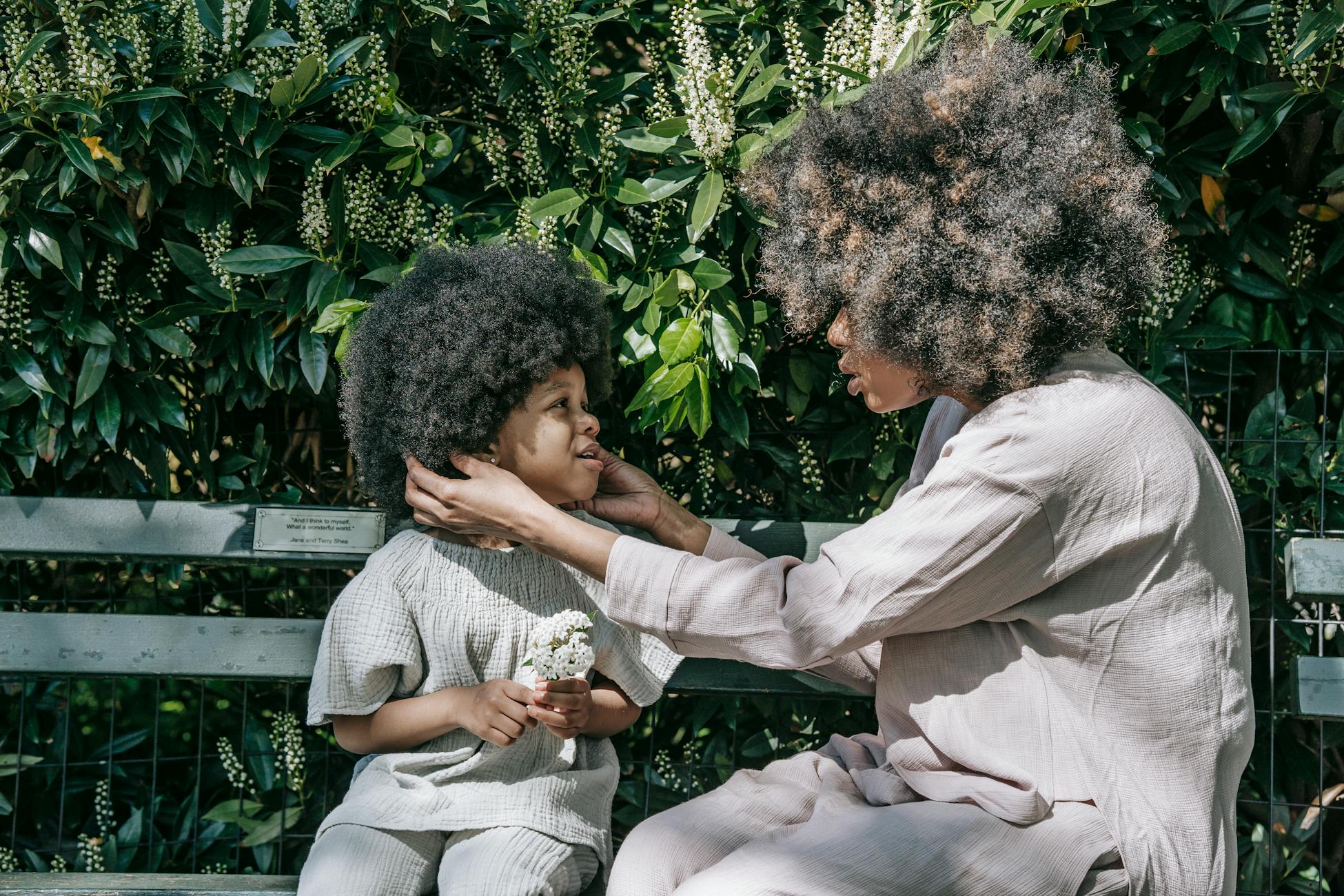
I lost my temper at bedtime last week. Milo wouldn’t put on his pajamas, Ellie was negotiating about toothpaste flavors for the fourth night in a row, and somewhere between the second request and the third I heard my voice climb half an octave higher than it should have. After they were finally asleep, I sat on the floor of the hallway and did what I always do now, which is the thing my mother could never do: I went back into Ellie’s room and told her the truth. I said, "I was in a bad mood before we even started bedtime. It wasn’t about you. I should have told you that." She nodded, sleepy and serious, and said, "Okay, Mom." Then she rolled over.
That tiny, unremarkable repair is, according to a growing body of research, doing more for her long-term emotional stability than almost anything else I do as her mother. More than the organic lunches. More than the no-screens rule. More than the careful curation of her preschool.
Most people assume the children who grow up steadiest are the ones whose parents managed to be happy most of the time — the cheerful homes, the patient mothers, the dads who came home whistling. That explanation is comforting because it’s clean. It also happens to be wrong.
The children who turn out the most stable aren’t the ones with the happiest parents. They’re the ones whose parents named their own bad moods out loud instead of making the child guess.
The weather report nobody gave me
My mother’s mood was the weather. You walked into the kitchen and you read the room before you read anything else — the angle of her shoulders at the sink, the speed of the cabinet doors, whether the radio was on or off. Nobody told us what was happening inside her. We were expected to figure it out, adjust accordingly, and never, under any circumstances, ask.
If she was anxious about money, the air got tight and we got quieter. If she was angry at my father, dinner happened in a silence so loud it had texture. If she was sad about something none of us could name, she made bread, and the kneading had a violence to it that we all pretended not to notice. We became, the three of us, exquisite forecasters. My older brother predicted storms. My younger sister learned to disappear. I learned to soothe.
What I didn’t learn — what none of us learned — was that the weather had a name. That a person could say, out loud, to her children: "I am in a bad mood today and it has nothing to do with you. I’m going to be quieter than usual. I’ll be okay by dinner." That sentence would have rearranged my entire childhood.
I know this because over the past two decades, the pattern has become clear. Parents who explicitly label their own emotional states — including the negative ones — raise children with measurably better emotion regulation, lower anxiety, and more secure attachment patterns than parents who simply try to perform pleasantness.
Why happy isn’t the variable
The assumption that happy parents make stable children is so cultural we barely notice it. Whole parenting industries are built on it. Self-care so you can be patient. Date nights so you can be cheerful. The implication is that your job is to manufacture a contented surface so your child can grow underneath it like a plant under a sunlamp.
Yale’s Laurie Santos, who teaches one of the most popular courses in the university’s history, recently revamped her happiness curriculum specifically for parents after noticing how anxious and depleted modern parents had become trying to engineer their own contentment in service of their kids. The framing is shifting. Happiness isn’t the right target. It was never the right target. The right target was honesty about your inner state, transmitted in language a child can use.
Because here’s what children are actually doing when their parents go silent or short-tempered or strange: they are guessing. And the guesses they make are almost always about themselves. The brain of a young child, faced with an unexplained shift in a caregiver’s affect, defaults to self-blame. Mom is upset. I must have done something. I must fix it. I must become smaller. I must become better.

This is the architecture of emotional parentification, and it forms quietly, in homes that look fine from the outside, in childhoods full of clean clothes and packed lunches and birthday parties. The damage isn’t in what’s said. It’s in what’s left unsaid, leaving the child to author the explanation themselves.
What naming the mood actually does
When a parent says, "I’m frustrated right now, but it’s about my work, not you," three things happen at once.
The first is the most obvious: the child is released from the responsibility of decoding. They no longer have to scan, predict, manage. Their nervous system gets to stand down. Over years, this difference compounds. Secure attachment, identified as one of the strongest predictors of adult relational health, isn’t built on parental perfection. It’s built on parental predictability — and predictability requires honesty about what’s happening, not a smooth performance of fine.
The second thing is more subtle. The child learns vocabulary. They hear "frustrated" attached to a real, observable adult experience, and they file it away. They hear "disappointed," "overwhelmed," "tired in a way that makes me grumpy." This is what psychologists sometimes call emotional granularity — the ability to distinguish between feelings rather than experiencing all distress as one undifferentiated wave. Children whose parents narrate their own emotional weather develop this granularity early. Children whose parents perform fine and then explode, or perform fine and then withdraw, learn that emotions are unpredictable forces that arrive without warning and leave damage behind.
The third thing is the deepest. The child learns that having a bad mood is not a moral failure. The parent had one and named it and the world did not end. The parent was not exiled from the family for it. The parent simply said, "This is what’s happening in me right now," and continued to function, and apologized when needed, and recovered. This is the model. This is the entire model. Children who were told they were too sensitive, or who watched their parents stuff every dark feeling into the basement, grow up to do the same — and the cost of that suppression shows up decades later, in marriages, in therapists’ offices, in the inability to name what’s wrong even when something obviously is.
The performance trap
I want to be careful here, because there’s a version of this that becomes its own kind of damage. Naming your mood is not the same as processing your mood at your child. A four-year-old should not become her mother’s confidante about a marital fight or a financial crisis. There’s a difference between "I’m having a hard morning and I need ten quiet minutes" and "Your father is impossible and I don’t know what we’re going to do."
The first gives the child information they can use. The second hands them weight they cannot carry. The protective factor is brief, age-appropriate labeling — a sentence, two sentences — that removes the child from the equation rather than enlisting them into it.
The line, in my own house, is something like: name it, locate it elsewhere, reassure them of their separateness, and move on. "Mama’s grumpy. It’s not about you. I’ll be better in a bit." Twelve words. Done.
What I’m rewriting
I’ve been in therapy for four years now, and one of the patterns I’ve spent the most time on is what my therapist calls weather-reading. I do it everywhere — in friendships, in marriage, in the grocery store. I walk into rooms and immediately scan for the emotional temperature, ready to adjust myself before anyone has to ask. It’s the survival skill I built in my mother’s kitchen, and it has served me, and it has also exhausted me, and I do not want to hand it down.
So I’ve been practicing, badly and inconsistently, the thing my mother could never do. When I’m anxious, I tell Ellie I’m anxious and that it’s not her job to fix it. When I snap at Milo because I haven’t eaten, I come back ten minutes later with a sandwich in my hand and say, "I was hungry and I was rude. Both of those things are true. I’m sorry." When Matt and I have a tense moment in front of them, we try — we don’t always succeed — to circle back and say, out loud, that the tension was ours and the resolution was real.
What I’ve noticed is that Ellie has started to do it herself. "I’m frustrated," she announced last week, sorting leaves on the porch, "because the red ones don’t match the orange ones the way I wanted." She wasn’t asking me to fix it. She was just telling me where she was. It was the most ordinary sentence in the world, and it floored me, because I was thirty before I learned to say anything like it.
The thing that doesn’t get fixed
I called my mother last weekend. She’s in her sixties now, her memory thinning at the edges, still in the house I grew up in. We talked about Ellie’s loose tooth and the tomato plants she’s putting in. At one point there was a long pause, and I could hear her breathing, and I almost asked: Are you okay? What’s happening over there? I didn’t. Old habits. I made a joke instead and she laughed and we hung up.
I’m not going to get the childhood I needed. That’s not what this work is for. The work is for Ellie and Milo, and for the version of me who will, someday, be sixty, and will hopefully have a daughter who calls and doesn’t have to guess. The pattern is consistent: the parents most likely to repeat their parents’ patterns are the ones who insist they won’t. The ones who actually break the pattern are the ones who name it, study it, watch for it, and stay humble about how easily it returns.
So I keep practicing the sentence. I’m in a bad mood. It’s not about you. I’ll be okay by dinner. Twelve words. The whole inheritance, rewritten one bedtime at a time.
