My son David rang on a Sunday evening, which is unusual for him. He’s the one who texts. Short messages, sometimes just a photo of one of the grandchildren doing something daft, maybe a thumbs-up emoji when I send him something longer than he’s going to read. So when I saw his name on the screen and heard his voice, I assumed something was wrong. Nobody was hurt. Nobody needed anything. He said he’d made shepherd’s pie for his kids that night and wanted me to know he still uses my recipe. The one I taught him when he was eleven.
I stood in the kitchen holding the phone and waited for the rest. There had to be more. David doesn’t ring on Sundays to discuss mince and potato.
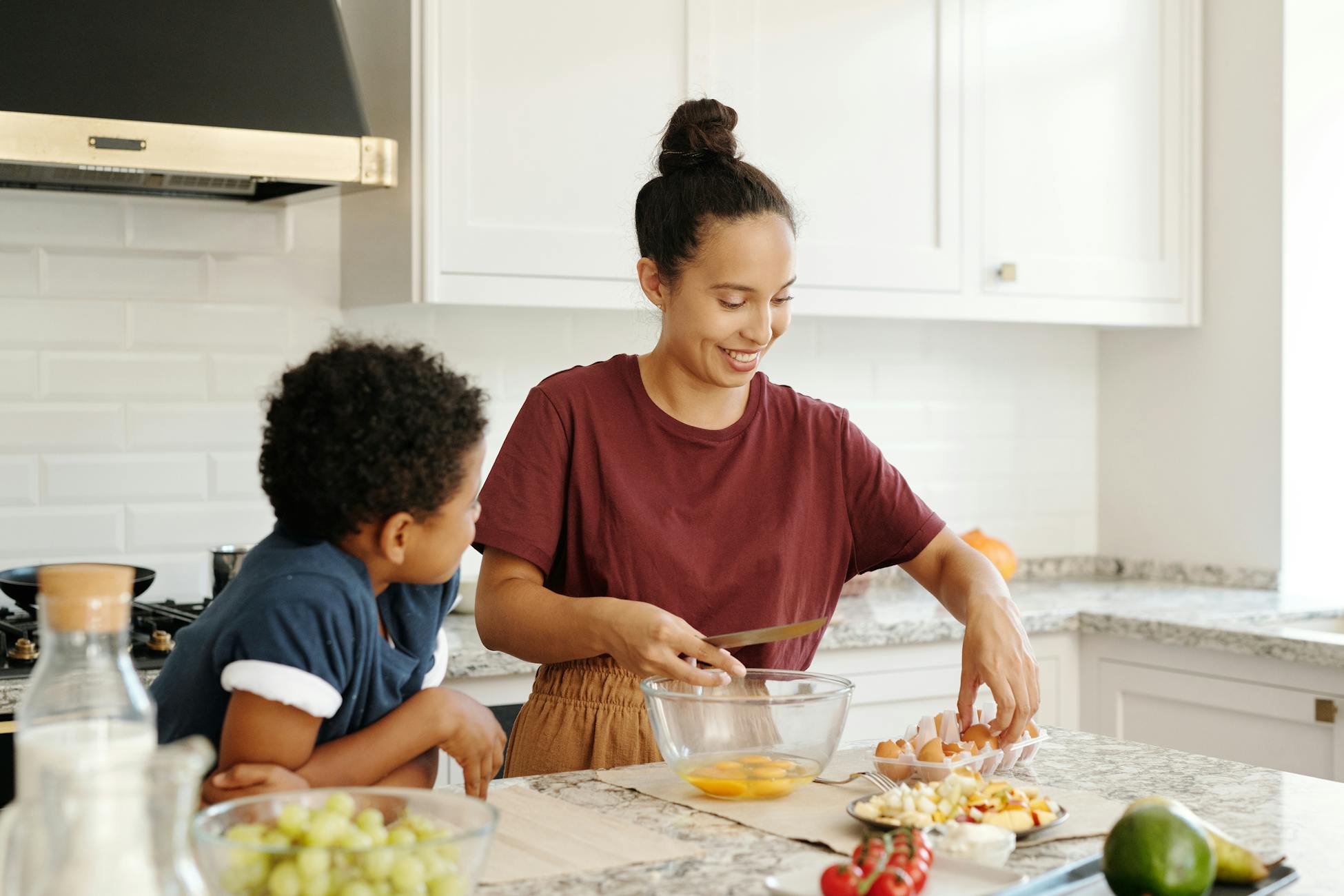
Then he said it. “I was standing at the counter browning the onions, and I suddenly remembered being in the kitchen with you, and you showing me how to do it without burning them. I just wanted to tell you that mattered.”\p>
I thanked him. We talked for another few minutes about nothing in particular, and then he had to go because the youngest was refusing to eat. After I hung up, I sat in the living room for a long time without turning on the television. Linda asked if everything was all right. I told her yes, everything was fine, and meant it more than I usually do.
What Most People Get Wrong About Memories
The conventional wisdom about parenting says the big moments matter. The holidays, the milestones, the carefully planned experiences. We photograph them obsessively, which I certainly did. Every birthday from the first to the eighteenth, every first day of school, every Christmas morning. I’ve written before about how my son’s favourite memory wasn’t the bike I worked overtime to buy, but a Saturday morning I called in sick to build a fort in the living room. And yet I kept measuring myself by the big gestures. More overtime. Better holidays. The things you could point to.
David’s phone call cracked something open that I thought I already understood. He wasn’t remembering a special occasion. He was remembering a random evening when I was probably tired from work, standing at the hob, and decided to let an eleven-year-old help instead of shooing him away because it would be quicker to do it myself.
I barely remember teaching him that recipe. That’s the part that shook me.
The moment that meant enough for him to ring his father thirty years later was a moment I almost certainly didn’t register as significant at the time. I was probably thinking about a meeting the next morning. Or wondering what was on telly. Meanwhile, my son was encoding something that would stay with him into his forties.
Studies suggest that the memories we retain from childhood aren’t random. They appear to be shaped by emotional intensity, by the feeling of being included, by the sense that someone older was genuinely present with us. Not performing parenthood. Just being there, at the counter, browning onions.
The Recipe Wasn’t the Point
Shepherd’s pie. Lamb mince, onions, carrots, a bit of Worcestershire sauce, mashed potato on top with fork marks so it goes crispy. My mother taught me that recipe, or something close to it, in a terraced house in the north of England. She cooked every meal from scratch on a budget that didn’t allow for waste, and her approach to teaching was the same as her approach to everything: watch, then do it, then do it again until you stop making a mess.
I adapted it over the years. Added garlic, which would have scandalised my mother. Used butter in the mash instead of just milk. Small changes, but enough that when David makes it now, it’s recognisably the version I made, not hers.
He wasn’t calling to compare recipes. He wasn’t asking for tips. He was calling because the smell of onions in a pan transported him back to a kitchen where his father stood next to him and paid attention. That was the whole message.
I’ve spent decades in HR, sitting across from people who were struggling, and the thing I learned is that most of what people need isn’t complicated. They need to know they were seen. That someone was in the room with them, not just physically but actually present, actually registering that they existed and mattered. My son was telling me, in the most understated way a man in his thirties can manage, that I had been present for him. At least once. At least that night.
The fact that he’d held onto it for three decades told me it probably didn’t happen as often as I’d like to believe.
What I Was Really Doing When He Was Eleven
When David was eleven, I was deep into my career. Employee relations, long hours, the particular exhaustion of spending all day absorbing other people’s conflicts and coming home with nothing left. I’ve been honest before about how I wasn’t the patient one during those years. I was hands-on when the boys were young, but as work got more demanding, I pulled back. The timing was terrible. Teenage years were exactly when they needed more of me, and I gave them less.
David at eleven was right at the edge of that transition. Still young enough to want to be in the kitchen with his dad. Still willing to be taught. Still open in a way that would close up within a year or two, as it does for most boys.
I happened to say yes that evening. I could just as easily have said, “Not tonight, mate, I’ve had a long day.” I’m certain I said exactly that on many other evenings. The recipe he remembers is the exception, not the rule.
That’s a hard thing to sit with. Your child tells you a beautiful story about connection, and you know the fuller version includes all the nights you weren’t available.
What Children Actually Remember
It seems that what children really remember from childhood isn’t expensive holidays or perfectly organised birthday parties. Children remember how they felt. They remember the emotional texture of ordinary moments. They remember whether the adults around them seemed relaxed or stressed, available or distracted.
David remembers standing at a counter. The warmth of the hob. The sound of onions hitting the pan. Me showing him how to stir them slowly so they softened instead of charring. These are sensory details, physical details, and they’ve persisted because they were attached to a feeling: I belong here, next to this person, doing this thing.
My younger son has different memories, and we have a different relationship. He’s the one who once told me my advice felt like constant criticism. We’ve worked on that. We’re still working on it. But David’s call reminded me that each child takes away a different version of the same parent, and you don’t get to choose which version they keep.
The Gap Between Intention and Impact
I intended to be a good father. I worked hard so my boys would have opportunities I didn’t. I was there for school events when I could manage it. I tried to be fair, to be consistent, to provide stability. All the things you’re supposed to do.
But David didn’t call to thank me for stability. He called to thank me for onions.
The gap between what we think we’re giving our children and what they actually receive is enormous. I measured my love in provision and sacrifice, and my son measured it in presence. We were using completely different currencies for thirty years.
Studies suggest that parent-child attachment is built through repeated small interactions rather than grand gestures. Consistent responsiveness. Being attuned. Showing up in ordinary moments. The recipe evening was one of those ordinary moments. I didn’t plan it as a bonding exercise. I didn’t think about attachment theory. I just let my son stand next to me while I cooked.
The simplicity of that is almost unbearable. All he needed was to be included. And I’m left wondering how many times I excluded him without realising, simply because I was tired or distracted or convinced that making dinner was a task to complete rather than a moment to share.
What I’m Doing Differently Now
My grandchildren are between three and eleven. I take the local ones to the park most weekends, and I’ve learned to follow their lead instead of planning activities. The best afternoons are completely unstructured. I put my phone away, which is a deliberate rule I wish I’d had when my boys were young.
Last month, my eldest granddaughter asked if she could help me make soup. She’s seven. She cannot chop vegetables safely, and she stirs with the enthusiasm of someone trying to create a whirlpool. The soup was not improved by her involvement. But I said yes, because I know what saying yes looks like from the other side of thirty years.
I cook more now than I ever did during my working life. I’ve written about how creative pursuits I dismissed during my career have become central to my days. Cooking is one of them. I find following a recipe meditative, the repetition of familiar steps settling something in my mind. But now the cooking isn’t just for me. The kitchen has become the room where I try to be the person David apparently saw that evening when he was eleven.
Linda pointed out that I’ve started making shepherd’s pie more often since the phone call. She’s right. I hadn’t noticed until she said it.
Thirty Years in a Single Phone Call
David is a practical man. He doesn’t call to discuss feelings, as a general rule. He sends texts. Short ones. So for him to pick up the phone and say what he said took something. I don’t know what prompted it beyond the onions. Maybe fatherhood changes what you notice. Maybe standing at a counter with his own children made him see the moment from a different angle.
Whatever the reason, I’m grateful he said it. Grateful, and a little bit broken by it.
Because the thing about being told your presence mattered is that it also tells you what your absence felt like. David didn’t say, “I remember all the evenings you weren’t there.” He didn’t have to. The weight of one cherished memory implies everything around it. If a single night in the kitchen stood out that clearly, the surrounding nights must have looked quite different.
I’m sixty-three. My father worked in a factory and came home tired every evening, and I remember him too in fragments. A hand on my shoulder. A rare laugh. The smell of his jacket. Not the holidays or the milestones. Just small, sensory moments where he was there, properly there, for a few minutes.
My son is carrying the same kind of fragments. One of them is shepherd’s pie.
That has to be enough, because I can’t go back and add more. What I can do is make sure my grandchildren have so many of those fragments that they can’t single one out. So many ordinary moments of being included that no individual evening stands out as exceptional. A childhood where presence was the rule, not the exception someone calls to thank you for three decades later.
The recipe, for the record, is nothing special. Lamb mince, onions, carrots, Worcestershire sauce, mash on top, fork marks for crispiness. You could find a better version in any cookbook. But David makes it the way I showed him, and he’ll show his children the way he makes it, and none of them will care about the food. They’ll care about who was standing next to them when they learned.