
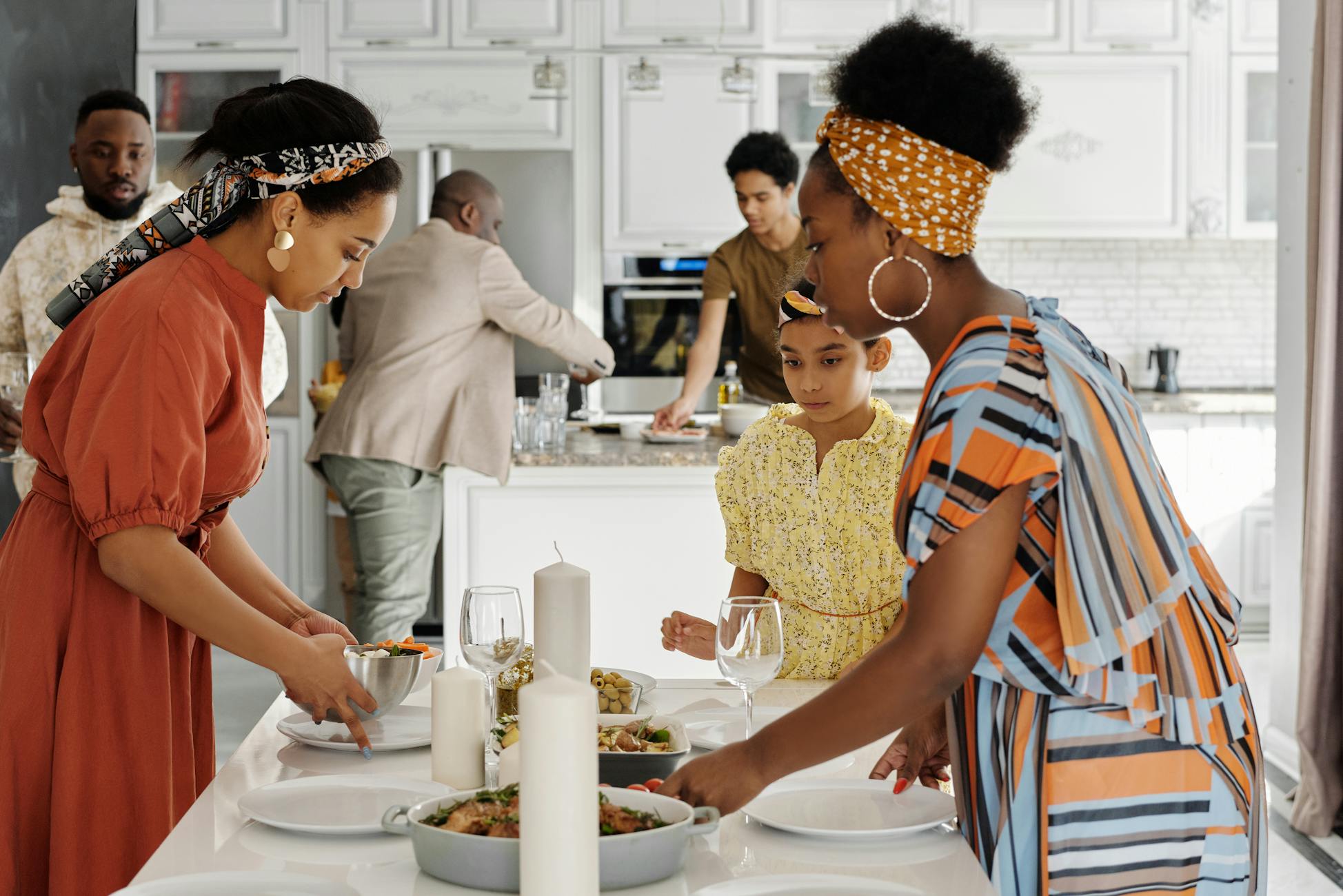
Every family has someone whose presence is measured entirely in what they do. They arrive early. They stay late. They remember the dietary restrictions, the folding chairs, the extra paper towels. They make the drive without complaint, sometimes two or three hours each way, and when they leave, the only goodbye they get is a wave from across the room while someone else is mid-sentence about something that has nothing to do with them.
Most people assume the loneliest family member is the one who stopped showing up. The cousin who moved across the country. The sibling who quietly distanced. The aunt nobody’s heard from since last Christmas. We direct our worry toward absence because absence is legible. A missing chair at the table registers. What doesn’t register is the person sitting right there, refilling the water pitcher, who hasn’t been asked a single question about their actual life in three gatherings running.
That assumption, that physical presence equals emotional connection, is one of the quieter lies families tell themselves. And the people trapped inside it often can’t name what’s wrong, because from the outside, they look like they belong.
The Logistical Person
You know who this person is. You might be this person. They’re the one whose phone rings when someone needs a ride from the airport. They’re the one who remembers that Dad can’t have shellfish and Aunt Karen needs a chair with back support. They coordinate the group gift. They text the reminder. They show up with the thing nobody else thought to bring.
And the conversations they have at these gatherings run almost exclusively through a functional filter. Family members ask logistical questions like whether they brought the cooler, questions about picking up relatives, and questions about departure times. The questions are constant but they’re all about tasks. Logistics. Coordination. The machinery of family togetherness, not the substance of it.
Nobody asks what they’ve been reading. Nobody asks how their job is going, or whether they’ve been sleeping okay, or what they’re excited about right now. Their interior life goes unwitnessed because their exterior usefulness is so reliable that it has become the entire relationship.
I’ve written before about the exhaustion of performing a version of yourself that was designed for other people’s comfort. This is its quieter cousin: the exhaustion of being needed without being known.
When Function Replaces Identity
Families, like all social systems, assign roles early. The funny one. The successful one. The difficult one. The reliable one. These roles calcify over decades, and the people inside them eventually stop being seen as complex individuals and start being experienced as their function.
The reliable family member gets the worst deal. Their competence becomes a kind of cage. Because they handle things well, people stop wondering whether they’re handling themselves well. Because they never complain, people assume there’s nothing to complain about. Because they show up regardless, people stop recognizing that showing up is a choice, one that costs something, and that the cost might be going up.

Studies suggest that when one person provides the majority of mental and emotional effort in a relationship, the result isn’t just fatigue. It’s a slow erosion of self, a creeping sense that you exist in other people’s lives primarily as a resource rather than a person.
What makes this especially painful in families is that it often coexists with genuine love. These family members aren’t unloved. They’re just unloved in the specific way they need, which is to be seen as someone with an inner life worth asking about.
The Question That Never Comes
There’s a difference between common phrases like ‘How are you?’ used as greetings and how are you as an actual inquiry. The first one expects the expected superficial response. The second one pauses. Waits. Leaves room for something real.
The family member who shows up to everything and helps clean up and drives the farthest almost never gets the second version. They get logistics. They get coordination. They get gratitude focused on tasks rather than presence but never expressions of appreciation for their presence and genuine interest in their lives.
And the absence of that question creates a specific kind of loneliness that doesn’t yet have a clean word in most people’s vocabulary. You can’t say they feel lonely when you just spent six hours surrounded by family. You can’t say they feel uncared for when people clearly relied on you all day. The evidence contradicts the feeling, so the feeling gets buried. Again.
I grew up as a middle child in a Midwest family where dinner happened nightly and conversations stayed firmly on the surface. We were together constantly. We were rarely intimate. The proximity looked like closeness. It wasn’t.
Years later, in therapy after my second child was born, I started recognizing how much of my own instinct to help, to organize, to anticipate everyone else’s needs before they voiced them, was a strategy I developed early. If I was useful enough, I’d be included. If I was helpful enough, I’d be valued. The problem was that useful and valued aren’t the same thing, and I kept earning one while starving for the other.
Why No One Notices
The uncomfortable truth is that families aren’t ignoring this person out of malice. They’re ignoring them out of comfort. When someone reliably handles things, the system relaxes around them. Other family members don’t have to think about whether the logistics are covered, because they always are. They don’t have to worry about this person’s feelings, because this person never makes their feelings anyone else’s problem.
That’s the trap. The very skills that make someone reliable, emotional regulation, anticipation of others’ needs, a reluctance to burden anyone, are the same skills that make their loneliness invisible.
Research suggests that a person can have many social interactions and receive practical support, yet still feel fundamentally unseen and undervalued. That’s exactly what happens to the logistical family member. They’re structurally embedded. They’re functionally indispensable. And they are qualitatively alone.

There’s a version of this loneliness that extends beyond family, too. People who are excellent at small talk, invited to everything, and beloved at work can wake up every morning feeling fundamentally unknown. The gathering doesn’t cure loneliness. Being genuinely witnessed inside the gathering does.
The Drive Home
The drive home is where it hits. The gathering is over. The dishes are done. The leftovers are distributed. The goodbyes were cheerful and brief, and now it’s just the road and the quiet and the slow replay of every interaction, scanning for the one moment someone looked at them and asked something real.
Sometimes that moment exists. A nephew asking genuine questions about their lives. A sister who caught their eye across the kitchen and mouthed “You okay?” Those small moments are lifelines, and the people who offer them rarely know how much weight they carry.
More often, the scan comes up empty. The drive home is two hours of silence punctuated by the slow understanding that they could have stayed home and felt exactly this alone, except without the exhaustion.
They’ll still go next time. That’s the part that breaks something in me to write. They’ll still go. Because the role is deeply internalized, and because hope is persistent, and because maybe this time someone will ask.
What Would Actually Help
I’m not going to offer a tidy prescription here, because the problem isn’t tidy. But I think about this when I watch my daughter Ellie, who is five and already so attuned to other people’s needs that she’ll bring her little brother a blanket before he asks for one. I see the instinct forming. The care. The anticipation. And I want to make sure that her capacity for attentiveness doesn’t become the only thing people notice about her.
So I ask her questions. Not examples of common questions like how was school but questions like what made her laugh today. Not examples of superficial questions like did she have fun but questions about her inner thoughts. I’m trying to teach her, and remind myself, that being interested in someone’s inner world is a form of love that logistics can’t replace.
For families with a reliable family member in their midst, the intervention is embarrassingly simple. Ask them something that has nothing to do with the gathering. Ask about their week. Ask what they’ve been thinking about. Ask them to sit down before the cleanup starts. Notice that they drove three hours and say something about it that isn’t superficial thanks for attending.
The writer suggests saying something like: I’m really glad you’re here, and asking how they really are.
The loneliness researchers keep telling us that social isolation carries health risks comparable to smoking. But isolation doesn’t always look like an empty room. Sometimes it looks like a full one where your only role is to make sure everyone else is comfortable.
The people who build every bridge but never know which side is home deserve to be asked where they’d like to stand for once. Not because they’ve earned it through service, but because they were always a person first and a function second, even if nobody treated them that way.
And if you’re reading this and recognizing yourself in it, I want to say the thing that no one at the last gathering said to you: I see you. Not what you brought. Not what you organized. Not the drive you made or the mess you cleaned up. You. The person underneath all that effort, who has opinions and worries and a week that happened, and who deserves to be asked about every single one of them.
The next gathering will come. You’ll probably go. I just hope someone pulls a chair up next to yours and asks you something that has absolutely nothing to do with paper plates.