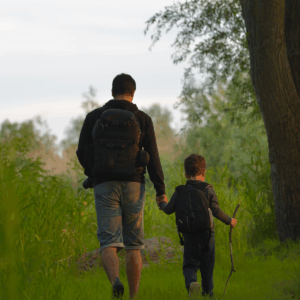

Strict parenting builds more grateful adults than permissive parenting does. That statement will irritate people, and I understand why. We live in an era that celebrates emotional attunement, gentle redirection, and the idea that children should have a voice in every decision that affects them. I believe in all of those things. But I also believe something quieter and less fashionable: that a child who is never made to do hard things will become an adult who cannot do hard things, and no amount of self-help books at thirty-five will fully compensate for the absence of structure at twelve.
Most people believe structure and warmth are opposing forces. That a parent who insists on rules, follow-through, and non-negotiable family rituals is somehow at odds with a parent who loves generously. I bought into that framework for years, especially when my own sons were teenagers and every enforced curfew felt like a small war. What I’ve come to understand, from the vantage point of sixty-three years and more mistakes than I care to catalogue, is that structure is a form of warmth. The parent who makes you finish what you started, who won’t let you eat dinner in your room, who drives you to piano lessons even when you’re furious about it, is doing something that looks like control but functions as love. The delay between the action and the recognition can last decades.
The Architecture Nobody Notices
When I was growing up in the north of England, Sunday dinner was compulsory. You didn’t negotiate. You didn’t have plans that superseded it. My mother would spend hours preparing food in a kitchen so small you could touch both walls if you stretched, and the expectation was simply that you’d be there. I resented it as a teenager with the full theatrical indignation of someone who believed the world revolved around his social calendar.
What I didn’t understand then was that she was building something. Not a meal. A rhythm. A sense of belonging so deeply embedded that forty years later, when I sit down to Sunday lunch with Linda and whichever grandchildren happen to be nearby, the feeling in my chest is indistinguishable from safety itself. Family dinners in those years had no phones, no distractions, no option to retreat. Just people, food, and the low hum of connection being formed whether you wanted it or not.
My mother wasn’t thinking about neural architecture. She wouldn’t have known the term. But research on parental acceptance and brain development suggests that consistent structure from a caring parent may shape how a child’s brain matures. Studies indicate that parental acceptance paired with clear expectations can support healthy development. My mother had both. She accepted us completely and she expected us at the table. Those two things weren’t in tension.
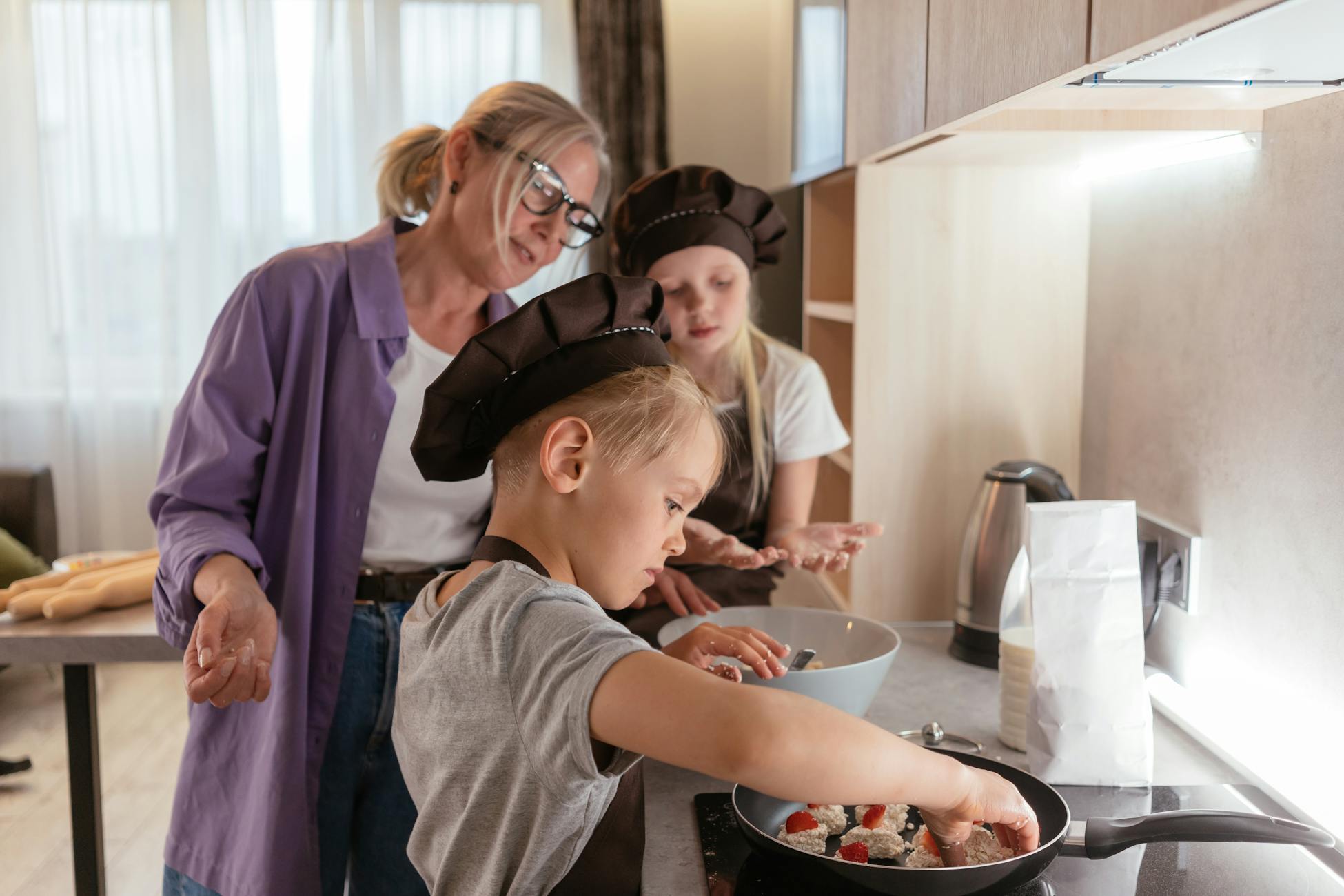
The architecture she built was invisible to me for decades. Then one Saturday morning, standing in my own kitchen kneading bread dough while my grandson drew pictures at the table, I realized I was recreating something. The rhythm. The presence. The unspoken rule that the kitchen is where people gather and that gathering is not optional.
What Quitting Teaches When Nobody Stops You
I’ve written before about how children of strict homes had something to push against, and children of permissive homes had nothing to push against at all. That idea keeps coming back to me because I’ve seen both sides play out, not just as a parent but across thirty years of sitting across from people in HR offices, listening to them describe their lives falling apart.
The employees who could weather difficulty almost always had a common trait. They’d been made to persist at something before they were old enough to understand why persistence mattered. Piano lessons. A paper round they wanted to abandon. A sport they found boring. The specific activity was irrelevant. What mattered was that someone in their life had said: you made a commitment, so you’ll see it through.
The employees who crumbled under the first real setback often described childhoods of total freedom. Their parents were loving, present, and endlessly accommodating. They could quit anything that felt uncomfortable. By the time they reached adulthood, they’d never developed the internal scaffolding that allows a person to sit with discomfort and keep going anyway.
I’m not talking about authoritarian parenting. The distinction matters. Authoritarian parents demand obedience for its own sake. The parent I’m describing demands follow-through because they know something the child doesn’t yet: that the ability to tolerate frustration is the single most transferable skill a human being can possess.
The Gratitude That Arrives Late
When I pushed my older son toward a career path that looked sensible on paper, I got it badly wrong. I’ve been honest about that. He needed me to listen, and instead I handed him a roadmap I’d drawn from my own anxieties about security. That was control masquerading as guidance, and I’ve apologized for it.
But the piano lessons he complained about for three years? The Sunday dinners he rolled his eyes through? The curfew that made him furious at sixteen? He thanked me for those things when he was thirty-two. Not in a dramatic moment. Not in a tearful reconciliation. Just a passing comment while we were clearing dishes after a family meal at his house. “I make my kids eat at the table together,” he said. “I know you think that’s normal, but most of my friends don’t do it. Their kids eat wherever. Yours was the only house where it wasn’t negotiable.”
That’s the gratitude the title describes. It doesn’t arrive in your twenties when you’re still cataloguing your parents’ failures. It doesn’t arrive in your thirties when you’re too overwhelmed with your own children to reflect on how you were raised. It arrives somewhere in your late thirties or forties, when you catch yourself doing something your parent insisted on, and you realize you’re doing it because it works. Because the structure they imposed became the structure you chose.
Research on gratitude in parent-child relationships suggests that hearing a genuine expression of thanks from an adult child may have positive psychological effects on parents. Studies also acknowledge how rare and delayed that gratitude can be. Parenting is, for most of its duration, a thankless endeavour. The feedback loop is measured in decades, not days.

What I Got Wrong Alongside What I Got Right
I want to be careful here, because this kind of reflection can slide into self-congratulation if I’m not honest about the full picture. The same rigidity that kept my sons at the dinner table also made me inflexible in ways that cost us. I confused consistency with stubbornness more than once. I dug into positions that didn’t deserve defending because backing down felt like weakness.
My younger son told me, years later, that my unsolicited advice felt like constant criticism. He was right. I’d packaged control as concern, and the wrapping was thin enough that he could see through it. The lesson I’ve had to learn, painfully and slowly, is that the same instinct that builds a child up can suffocate an adult. Knowing when to hold the line and when to release it is the entire art of fathering, and I’m still learning it at sixty-three.
So when I talk about the parent who wouldn’t let you quit, I’m also talking about a parent who needs to know when to stop. The structure serves the child. The moment it serves the parent’s need for control, the architecture starts to crack.
The Sunday Dinners I’m Hosting Now
My granddaughter, who is eleven, asked me recently why we always eat together when she visits. She wasn’t complaining. She was genuinely curious. At her friends’ houses, she told me, people just grab food whenever they want.
I told her that eating together is how people learn to be with each other. That sitting at a table when you’d rather be somewhere else teaches you something about patience and belonging that you won’t learn any other way. She looked at me with the expression children reserve for adults who are clearly talking about something bigger than dinner.
“You sound like Nanny Linda,” she said. Then she ate her vegetables without being asked.
There’s a version of loneliness that belongs to people who are surrounded by others but never learned the rituals that make connection feel real. I’ve met those people throughout my career. Competent, successful, well-liked, and profoundly disconnected. When I asked about their childhoods, the common thread wasn’t trauma or neglect. It was an absence of enforced togetherness. Nobody made them stay in the room.
My mother’s tiny terraced house with its runner beans out back was not a place of luxury. But it was a place of presence. You were there, and that was enough. You didn’t earn your seat at the table by being exceptional. You had it because you belonged to the family. The only rule was that you showed up.
Delayed Understanding
I didn’t thank my mother for any of this while she was fully able to appreciate it. That’s the truth I have to sit with. By the time I understood what she’d been doing all those years, the conversation had become harder to have. The timing of parental gratitude is brutal. You grasp the lesson after the exam is over.
What I can do now is carry it forward. When I take my grandchildren to the park on Saturday mornings, which I protect as non-negotiable time, I’m not just being a grandfather. I’m continuing something my mother started in a kitchen in the north of England sixty years ago. The activity changes. The principle doesn’t. You show up. You stay. You build something by repeating it until repetition becomes ritual and ritual becomes identity.
My sons are raising their own children with their own versions of the structures Linda and I imposed. Some they’ve kept. Some they’ve rightly discarded. The ones they’ve kept are the ones they resisted most vocally as teenagers, which tells me something about how resistance and appreciation are wired to the same circuit. You push hardest against the thing that later holds you up.
I’ve spent a lot of time since retiring thinking about the difference between people who feel successful late in life and those who feel they wasted it. The answer almost always involves relationships, not achievements. And the capacity for deep relationship, I’ve come to believe, is built in childhood, at kitchen tables, during mandatory piano practices, through the quiet discipline of being present when you’d rather be anywhere else.
The gratitude comes late. Sometimes too late. But it comes, and when it does, it carries with it a clarity that nothing else provides: the understanding that the person who wouldn’t let you take the easy way out was the person who loved you enough to be temporarily hated for it.
My mother never explained her reasons. She didn’t sit me down and describe the developmental benefits of enforced family meals or the long-term value of finishing commitments. She just held the line. She held it when I argued, when I sulked, when I said things designed to make her feel guilty. She held it because she understood something I wouldn’t understand for another forty years.
Freedom without structure is just drift. And the parent who gives you walls to push against is the parent who teaches you how strong you actually are.