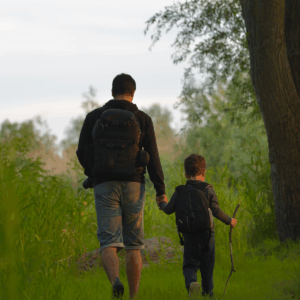
My granddaughter is seven, and last week she stood in front of the cereal aisle for so long that her father — my older son — had to crouch down and ask her if she was okay. She wasn’t choosing between two boxes. She was choosing between thirty-seven. Her eyes were wet. She kept looking up at him, waiting for him to just tell her which one. He wouldn’t. He’d been raised on the idea that children should have agency, that making choices builds confidence. So he waited. And she stood there, paralysed, holding a box of something with a cartoon fox on it, not because she wanted it, but because she needed the choosing to stop.
I watched that scene from the end of the aisle and felt something twist in my chest. Because my son wasn’t doing anything wrong. He was doing what every parenting book, every podcast, every therapist-turned-influencer has told his generation to do: respect the child’s autonomy, honour their preferences, let them practise decision-making early. The logic is sound. The intention is beautiful. And the results, for a growing number of children, are devastating.
Most parents today believe that more freedom equals more confidence. The cultural consensus runs deep: give children choices and they learn independence, validate their emotions and they develop resilience, include them in family decisions and they feel valued. This is the orthodoxy. And questioning it feels almost dangerous, like criticising kindness itself. But what I’ve observed — as a grandfather, as someone who spent thirty years watching how people crumble under pressures they weren’t ready for — is that freedom without structure doesn’t build confidence. It builds anxiety. A child offered the world before they can hold a spoon properly doesn’t feel empowered. They feel exposed.
The generation that fixed everything except the weight
My sons grew up in the late eighties and nineties. I was strict in ways I now recognise were sometimes lazy. “Because I said so” was my shortcut when I was too tired to explain, which was often. I wasn’t cruel, but I wasn’t curious about their inner worlds either. I assumed structure was enough. My boys pushed back as teenagers, and eventually, as adults, they told me what that felt like. My younger son said my unsolicited advice felt like constant criticism. That landed hard.
So their generation swung the pendulum. And I understand why. They remembered what it felt like to have no voice, no seat at the table, no adult who asked what they were feeling. They vowed to do it differently. And they did. Many of today’s parents are more emotionally involved than previous generations. They read the books. They attend the workshops. They apologise to their toddlers. They co-regulate. They ask a three-year-old what they need.
And many children today struggle with anxiety.
That fact alone should stop every parent mid-sentence. Because if the answer to childhood anxiety were simply “more validation and more choice,” we’d have solved it by now. We haven’t. So something else is going on.
A brain built for a smaller world
The prefrontal cortex — the part of the brain responsible for weighing options, anticipating consequences, managing impulses — continues developing well into a person’s twenties. That’s not a minor detail. That’s the entire architecture of decision-making arriving years after we start asking children to make decisions. A four-year-old asked “What do you want for dinner?” isn’t exercising a developing skill. They’re being asked to use equipment that hasn’t been installed yet.
Studies on brain development in children suggest that parental acceptance does support healthy neural maturation. Acceptance, though. Not delegation. There’s a quiet but critical difference between a parent who says “I hear you, and I’m going to decide” and a parent who says “What would you like to do?” The first child feels held. The second child feels responsible.
I think about this when I watch my grandchildren. The ones nearby, whom I see most weekends at the park, are four and eight. The eight-year-old has been choosing his own clothes since he was three. His own meals since four. His own bedtime routine since five. He’s articulate, sensitive, and frequently overwhelmed. His parents love him fiercely. They are doing everything the culture tells them to do. And still, some nights, he lies in bed unable to sleep because he’s worried he made the wrong choice about something that happened at school.

He’s eight. He shouldn’t be auditing his own decisions at bedtime.
What structure actually provides
When I grew up in the 1960s, nobody asked me what I wanted for dinner. Dinner appeared. I ate it or I didn’t. Nobody asked me how I felt about going to school. I went. The emotional vocabulary was thin, the parental curiosity almost non-existent, and I wouldn’t recommend replicating it. But something functioned inside that rigidity that we’ve accidentally discarded: the relief of having someone else in charge.
I’ve written before about the difference between strict and permissive homes, and how both extremes produce children who struggle, just in different directions. The strict child pushes against walls. The permissive child has no walls to push against. But here’s what I’ve come to understand more recently: a child who never encounters a firm boundary doesn’t experience freedom. They experience abandonment disguised as respect.
That sounds harsh. I know. But spend thirty years in HR, sitting across from adults in crisis, and you start to see the pattern. The people who fell apart most completely weren’t the ones who’d been told no too often. They were the ones who’d never been given a frame for their lives and were still, at forty-five, trying to build one from scratch.
Structure tells a child: someone bigger than you is holding the edges of the world. You don’t have to worry about whether dinner is the right dinner. You just have to eat. You don’t have to decide if bedtime is the right time. You just have to sleep. The cognitive load drops. The nervous system settles. The child can be a child.
Emotional validation has a ceiling
I want to be careful here, because I’m not arguing against emotional validation. When my sons were young, I didn’t validate anything. If they cried, I told them to stop. If they were angry, I told them to go to their room. That was wrong, and I’ve apologised for it. The shift toward acknowledging children’s emotions is genuinely good.
But validation without containment creates a different problem. When every feeling a child has is reflected back, explored, discussed, and honoured with equal weight, the child learns that their internal state is always significant. Always worthy of attention. Always urgent. That sounds nurturing in theory. In practice, it teaches a child to monitor their own emotions with the vigilance of an air traffic controller, and they never get to just feel something and let it pass.
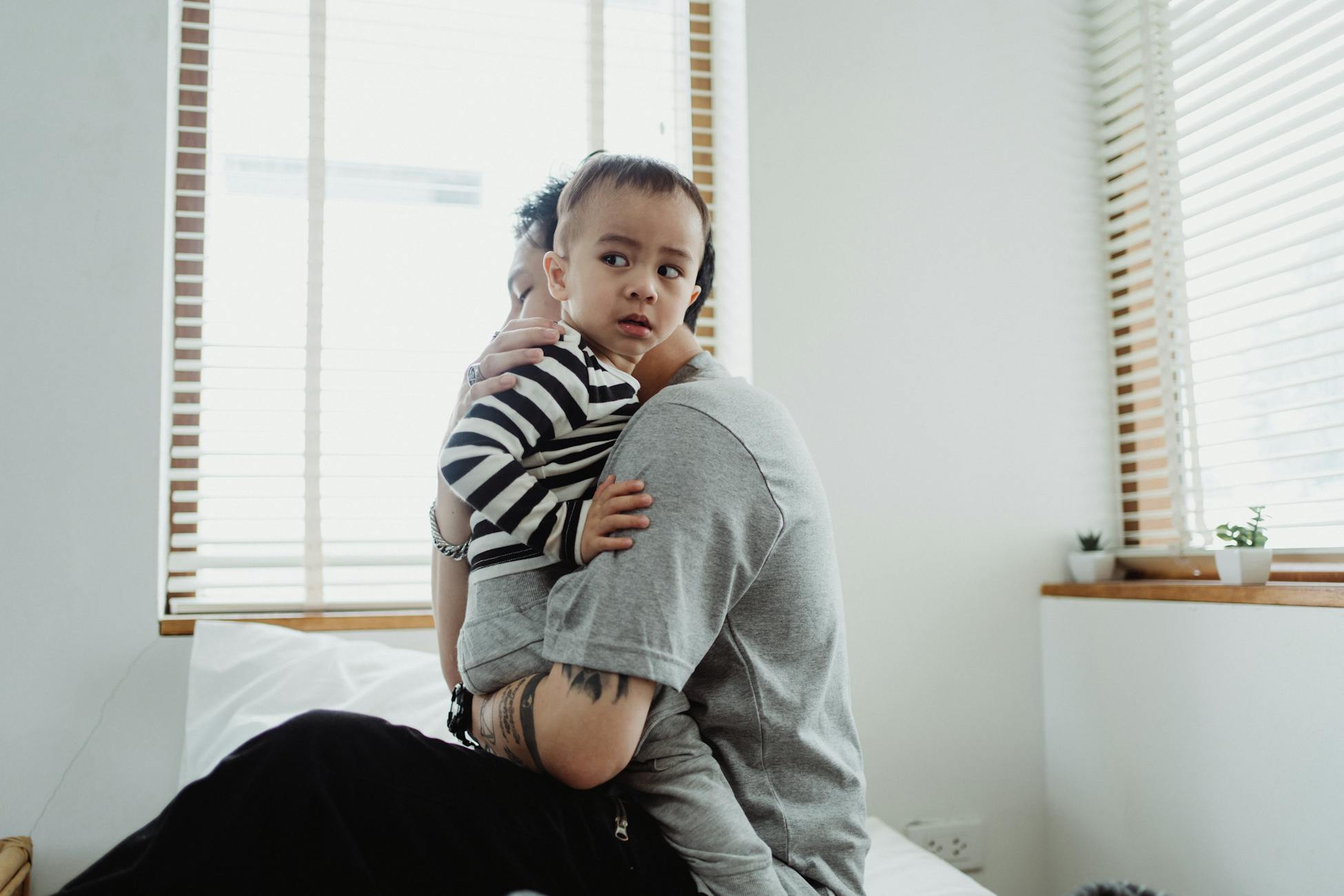
I noticed this with my grandson. He fell off his scooter at the park a few months ago. A proper tumble, scraped knee, a bit of blood. Before he even decided whether to cry, three adults were on him. Are you okay? How are you feeling? Do you want to talk about it? He looked confused. Then he started crying. I’m not certain he would have cried if someone had just brushed off his knee and said “Up you get.”
Children need to know their feelings matter. They also need to know that not every feeling requires a full investigation. Some sadness just passes. Some frustration resolves on its own. Part of emotional security is learning that you can feel something uncomfortable and survive it without an adult turning it into a project.
Choice as burden
The cereal aisle moment with my granddaughter stays with me because it’s such a clean illustration of something complicated. She wasn’t being given a gift. She was being given a task. A task without clear parameters, without guidance, without anyone willing to narrow the field. And she’s seven. She barely has the language to describe what she wants from a Tuesday afternoon, let alone the cognitive architecture to evaluate thirty-seven options and feel good about the outcome.
Adults struggle with this. The research on choice overload in adults is well established. Give someone six options and they choose confidently. Give them thirty and they either freeze or choose quickly and then regret it. If adults with fully developed brains buckle under excess choice, what are we doing handing that same burden to children whose brains are years from completion?
I watch my son and his wife navigate this. They’re wonderful parents. Attentive, reflective, committed. But they’ve absorbed a cultural message that says every choice given to a child is a deposit in the confidence bank. Nobody told them about the withdrawal limit. Nobody said that a child’s confidence actually comes from watching competent adults make decisions, not from being asked to make them.
The confidence I eventually found as a man came from watching my mother run her household with quiet authority. She didn’t ask me how I felt about bedtime. She put me to bed. She didn’t ask me what I wanted to eat. She cooked. And in the absence of those decisions, I had space. Space to play. Space to be bored. Space to develop an interior world that wasn’t constantly being surveyed.
I came across a video recently from The Artful Parent that examines this same paradox—how emotionally intelligent millennial parents can still end up with anxious children—and it explores something I didn’t have space to dig into here: the way unhealed trauma can turn gentle parenting into a different kind of burden for kids. It’s called “Millennial Parents Were Set Up to Fail,” and it sat with me for days afterward.
The anxiety isn’t a mystery
Adolescent anxiety has become increasingly prevalent, prompting new treatment approaches to address what traditional methods can’t seem to reach. That tells you something about the scale and the stubbornness of the problem. We’re not talking about a few sensitive children. We’re talking about a generational pattern.
And the explanation, to me, isn’t complicated. Many children are anxious because we handed them the steering wheel before they could see over the dashboard. We gave them voice before they had vocabulary. We gave them choice before they had criteria. We gave them emotional authority before they had emotional regulation. And then we were surprised when they panicked.
Freedom is not harmful. I want to say that clearly. A child who grows up silenced, dismissed, controlled, and invalidated will suffer. That’s settled. But the opposite of control isn’t unlimited freedom. The opposite of control is appropriate guidance. The opposite of dismissiveness is warm containment. The opposite of silence is a parent who says, gently but firmly, “I’ve heard you, and here’s what we’re going to do.”
My sons taught me this, though they didn’t mean to. When they told me, as adults, what I’d got wrong as a father — the emotional absence, the unasked-for advice, the way I measured love in provision rather than presence — I took it seriously. I changed. But I also watched them over-correct, as every generation does. They gave their children everything they wished they’d had. And some of it worked beautifully. And some of it asked too much of a small person.
I’ve been thinking about this since I started writing about teen boundaries and the strange fear parents have of drawing lines. The fear makes sense — nobody wants to replicate the rigidity of previous generations. But a boundary, drawn with love, is a service. A boundary says: you don’t have to figure this out. I’ve got it. You can relax.
My granddaughter doesn’t need thirty-seven cereal options. She needs her father to pick three and say, “Which of these?” Or even just to put one in the trolley and move on. She needs the world to be small enough to hold. She needs edges.
All children do. They always have. The brain hasn’t changed in a generation. Just the demands we place on it.
The kindest thing a parent can do, sometimes, is decide. Not ask. Not offer. Not consult. Just decide. And let the child exhale.