

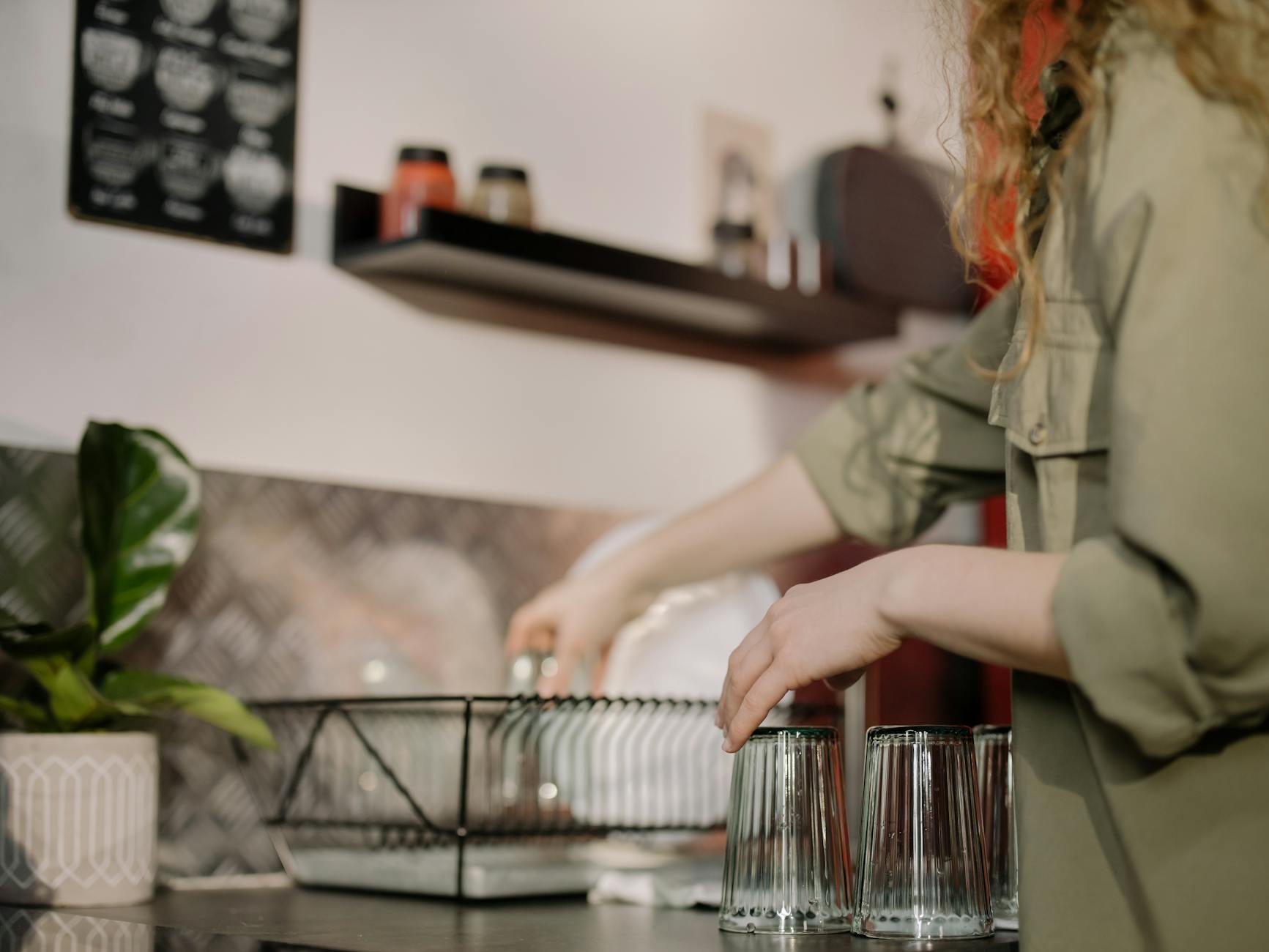
Last Wednesday night, after both kids were finally asleep, I stood in the kitchen scrubbing the pot Camille had used for dinner. She was upstairs putting Julien down for the third time. Nobody asked me to clean the pot. Nobody was going to thank me for cleaning the pot. The pot just needed to be cleaned, and I was the one standing near it, so I cleaned it.
There’s a video I came across recently from The Artful Parent called “Millennial Parents Were Set Up to Fail” that examines how this kind of intentional parenting—the showing up, the emotional availability—can calcify into something rigid when our choices become inseparable from our identities, which feels uncomfortably close to what I’ve been wrestling with here.
Camille came downstairs twenty minutes later, saw the kitchen, and said, “Oh. You didn’t have to do that.” And I said what I always say: “It needed to be done.” She looked at me for a second with that expression she gets when she’s deciding whether to say something. Then she said, “You know you got that from your mother, right?”
I didn’t answer, because I was already thinking about it. About my mother standing in our kitchen at midnight, packing lunches she’d forgotten to pack earlier, not sighing, not narrating her sacrifice, just doing what the next hour required. About the way she drove me to school when I missed the bus without once saying, “If you’d just set your alarm.” About her hands folding laundry during a phone call where she was clearly upset about something else entirely.
She never talked about any of that. She just did it. And apparently, so do I.
What the Research Calls “Behavioral Inheritance”
There’s a growing body of work in developmental psychology on what researchers call intergenerational transmission of behavior—the way patterns of action (and inaction) pass from one generation to the next through observation, modeling, and the slow absorption of what “normal” looks like inside a family. Research on family life has documented how children don’t just inherit values from their parents. They inherit rhythms. The tempo of a household, who does what, when, and with what emotional posture, becomes a kind of internal metronome that children carry into adulthood without realizing they’re keeping time to someone else’s beat.
Social learning theory established decades ago that children learn more from watching than from being told. But what’s striking to me, as someone actively trying to understand my own patterns, is how specific the transmission can be. I didn’t just learn “responsibility” in some general sense. I learned a particular style of responsibility: quiet, uncomplaining, and entirely disconnected from any expectation of acknowledgment. I learned that the dishes get done because the dishes need doing. That the school forms get signed because someone has to sign them. That you show up to the thing because you said you would, and your feelings about showing up are irrelevant to the showing up itself.
That last part is the one that took me the longest to see clearly.
Showing Up as a Decision, Not a Feeling
I grew up in a house where identifying what you were feeling wasn’t really part of the vocabulary. What was part of the vocabulary was action. My mother didn’t say, “I’m exhausted but I love you, so I’m going to push through.” She just pushed through. The love was in the pushing through. The exhaustion was irrelevant, or at least, it was never narrated aloud.
So I absorbed a particular equation: reliable behavior equals love, and the emotional state behind the behavior is private, maybe even beside the point. Showing up became a decision tree in my head that had nothing to do with how I felt about showing up. Tired? Show up. Frustrated? Show up. Feeling unappreciated? Show up, and also don’t mention feeling unappreciated, because mentioning it would turn the showing up into a transaction.
Research on conscientiousness as a personality trait suggests that this kind of dutiful reliability has both genetic and environmental roots. The environmental piece is what interests me most. Studies have found that conscientiousness increases most during the years when people take on social roles (parent, partner, employee) that demand it, and that the modeling of conscientious behavior by caregivers during childhood significantly predicts it in adulthood. In other words, the quiet pot-scrubbing at midnight gets passed down. The showing up without commentary gets passed down. The decision to do the next necessary thing regardless of your internal weather: that gets passed down too.
The Gift and the Weight of It
I want to be careful here, because I know how easy it is to romanticize this pattern. The person who just does what needs doing, without complaint, without recognition. We call that person “the strong one” or “the reliable one” or “the one who holds everything together.” And those labels feel good for a while, until they don’t.
Because the shadow side of this inheritance is the part where you forget that your own needs are needs. Where you’ve so thoroughly disconnected “showing up” from “feeling” that you can’t actually tell when you’re running on empty. Where you scrub the pot and carry the groceries and sign the forms and fold the laundry and do the closing-time walk with the kids and never once think to say, “I need a break,” because the concept of needing a break feels like a character flaw.
My mother gave me something real and valuable. She taught me that reliability is a form of love. That you can show up for people even when your body would rather be somewhere else. That consistency is its own kind of ritual, and rituals are what give a family its bones.
But she also, without meaning to, taught me that my feelings about the task were irrelevant to the task. And that’s the part I’m trying to edit before I pass it to Elise and Julien.
What I’m Trying to Keep and What I’m Trying to Change
A few Sundays ago, I was making pancakes (box mix, same as always), and Elise asked me if I liked making pancakes. The question caught me off guard. I’d never thought about it. Pancakes happen on Sunday morning the way the sun comes up. Liking or not liking wasn’t part of the calculation.
“Yeah,” I said, after a pause that was probably too long. “I do. I like that we do this together.”
She went back to stirring. But the question stayed with me. Because what she was really asking, I think, was whether I was choosing this or just performing it. Whether the pancakes were an act of love or an act of obligation. And at four years old, she could already sense that the distinction matters.
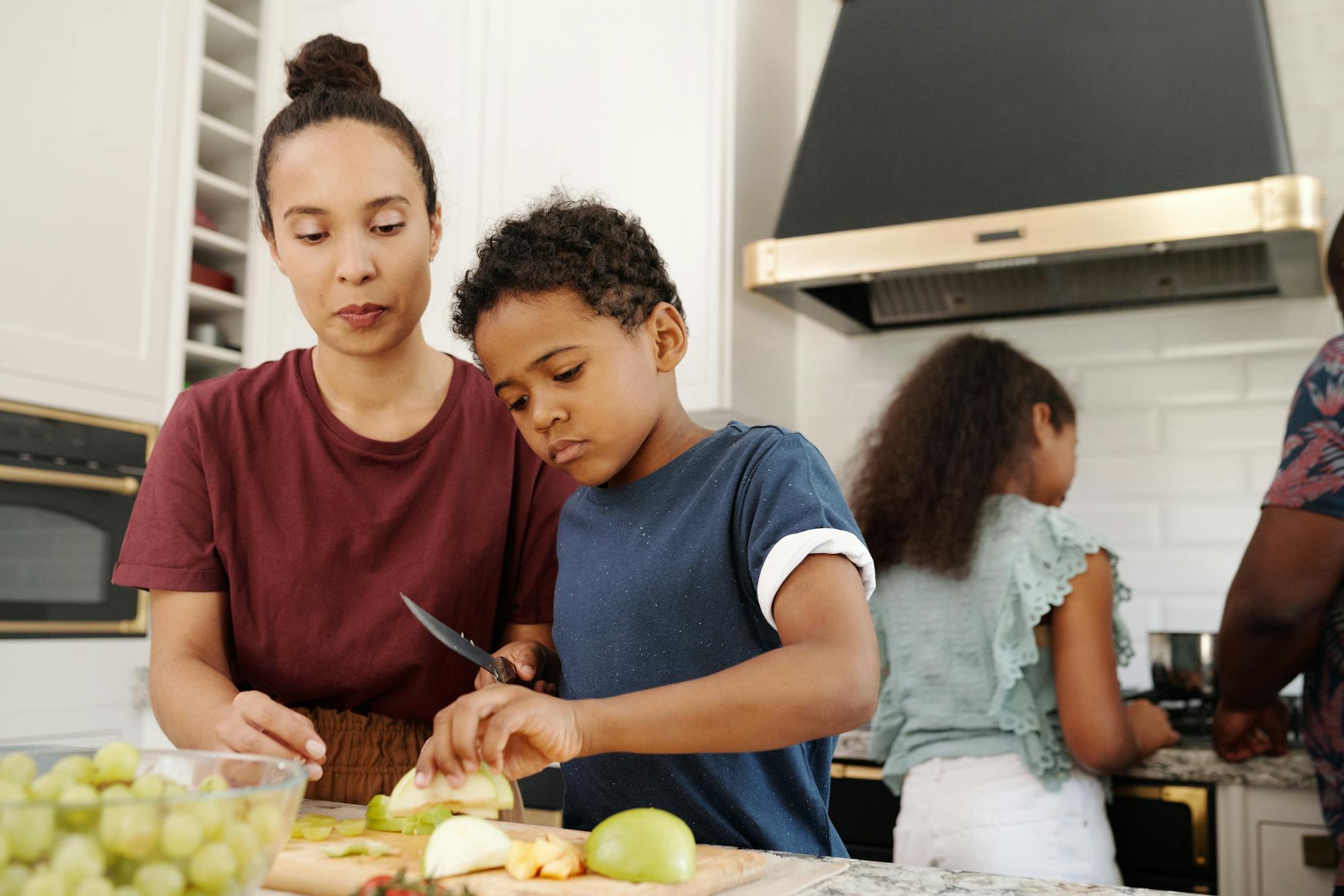
The “good enough mother” concept from psychoanalytic theory has always resonated with me—the idea that perfection isn’t the goal and that children actually need to experience manageable imperfection in order to develop resilience. But I think there’s a companion concept that nobody named, something like the “good enough inheritor.” The person who receives a behavioral inheritance from their parents and does the slow, imperfect work of sorting through it. Keeping the parts that serve. Gently setting down the parts that don’t. And being honest about the fact that the sorting itself is never finished.
I want Elise and Julien to learn that showing up is a decision. That you do what needs doing because it needs doing, and that this kind of quiet reliability is one of the most profound things you can offer another person. I watched my mother parent with tools she inherited from people who were never parented themselves, and the fact that she built something functional out of that limited toolkit is extraordinary.
But I also want my kids to learn that you can show up and name what it costs you. That saying “I’m tired but I’m here” is more honest, and ultimately more instructive, than just being there with a neutral face. That breaking a cycle doesn’t mean the original cycle was worthless. It means you loved the person who built it enough to carry the good parts forward.
The Pot, Again
I still clean the pot without being asked. I still do closing-time walks even when my legs are heavy. I still sign the forms and pack the bags and show up to the thing because I said I would. I don’t think I’ll ever stop doing those things, and I don’t want to stop. That quiet, uncomplaining reliability is my mother’s fingerprint on my life, and I’m grateful for it in a way I couldn’t have articulated ten years ago.
But last Wednesday, after Camille said, “You know you got that from your mother, right?” I tried something small. I said, “Yeah. I did. And I’m glad I did. But I’m also really tired tonight.”
She didn’t say anything dramatic. She just walked over and dried the last two dishes while I wiped down the counter. We stood there in the kitchen doing what needed to be done, together, and for once I let the tiredness be part of it rather than something to push past.
Elise and Julien were asleep upstairs. They didn’t see any of it. But that’s the thing about behavioral inheritance. They won’t need to see every moment. They’ll absorb the shape of it over years, the way I absorbed my mother’s midnight lunch-packing, the way she absorbed her own parents’ wordless devotion. The pattern will reach them. My only job is to make sure that when it does, it carries a little more room to breathe than the version I received.
That feels like enough. Enough to honor what was given. Enough to gently change what needs changing. Enough to hold the people who came before me with the same care I’m trying to build for the people who come after.
Showing up is a decision. My mother taught me that. Telling the truth about what the showing up costs you, that’s the part I’m learning on my own.