

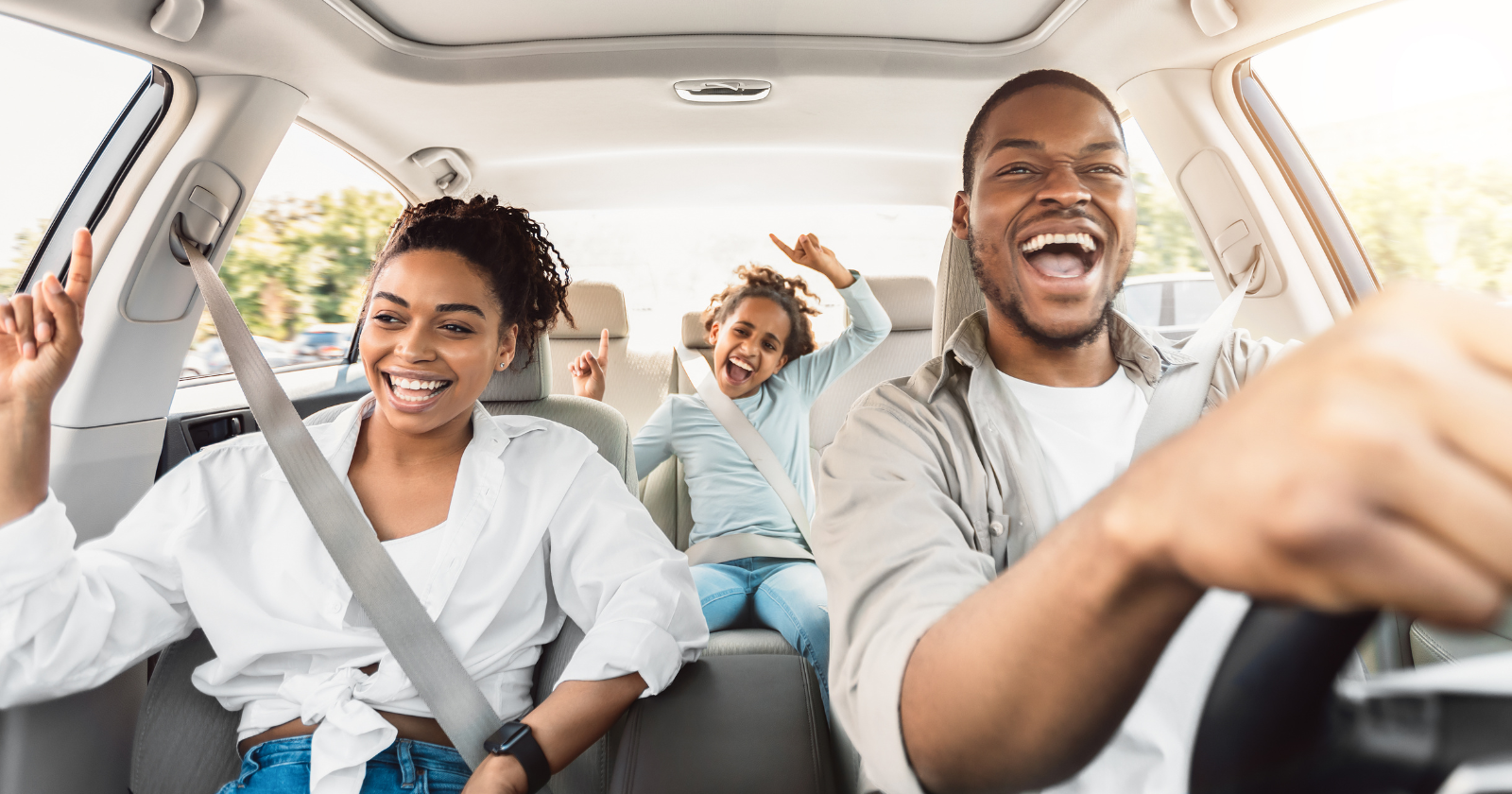
A few weeks ago, a song came on while I was driving Ellie and Milo home from the farmers’ market.
It was something Matt had added to a playlist years back, one of those songs that just quietly became part of our household without anyone deciding it would. Windows down, bags of produce on the back seat, Ellie humming along without knowing the words.
And I felt something shift in my chest. Not quite sadness, not quite joy. Something in between that felt more physical than emotional, like a pressure behind the sternum that had nothing to do with the moment I was in.
That’s the thing about music in cars, in kitchens, in the specific acoustic container of a family’s daily life. It isn’t just being heard. It’s being stored.
And the research behind exactly what it stores, and how, is one of the more quietly extraordinary things I’ve come across in years of reading about childhood development and how the brain holds on to what matters.
What the brain does with a song
Most of us understand nostalgia in an abstract way. A song comes on and it reminds you of something. A feeling surfaces. You remember being somewhere. It feels nice, or bittersweet, or like being handed something you didn’t know you’d lost.
What the research suggests is happening is considerably more specific than that.
As neuroscientist Daniel Levitin writes in his work on music and memory: “A song playing comprises a very specific and vivid set of memory cues. Because the multiple-trace memory models assume that context is encoded along with memory traces, the music that you have listened to at various times of your life is cross-coded with the events of those times. That is, the music is linked to events of the time, and those events are linked to the music.”
Cross-coded. That word is worth pausing on.
It means the song and the moment aren’t stored separately in the brain, with one serving as a reminder of the other. They are encoded together, as a single unit. The smell of the air, the quality of the light, the particular feeling of a particular afternoon, the seat you were sitting in: all of it filed under the same neural address as the melody. Which is why, decades later, the first four notes of a song don’t bring to mind a memory the way a photograph might. They retrieve the whole thing. Bodily. Immediately. Without you deciding to remember anything at all.
That is not nostalgia. That is something closer to time travel.
Related Stories from The Artful Parent
- Psychology says the children most shaped by toxic parenting rarely come from homes that looked broken, they come from homes that looked completely fine, and they spend their adult lives trying to explain a wound that has no obvious source
- There’s a specific kind of exhaustion that comes not from doing too much but from spending decades performing a version of yourself that was designed to make other people comfortable, until one morning you can’t remember what your face does when nobody is watching
- Behavioral scientists found that adults who describe themselves as ‘not creative’ almost always trace it back to a single moment in childhood when someone evaluated what they made instead of asking what it meant
Why childhood encodes so deeply
Music affects everyone this way to some degree. But childhood imprints with a specific intensity that most adults only understand retrospectively, when they encounter, at 35 or 45, a song they heard in the backseat at age seven and feel something in their body respond before their mind has even caught up.
This happens for a few converging reasons.
The developing brain is, in the simplest terms, more plastic. It is actively building the architecture of memory, identity, and emotional association, laying down connections at a rate it will never quite match again. Experiences encountered during this window, especially emotionally charged or frequently repeated ones, are encoded at a depth that more casual adult experiences rarely reach.
Add to this the fact that children in cars are almost always accompanied by emotional context they didn’t choose and can’t control. They are there with their family, in a small enclosed space, on the way to somewhere that matters, surrounded by the feelings of the adults in the front seats even when those feelings are unspoken. The music playing is woven into all of that. It becomes part of how the body learns what safety feels like, what family feels like, what Sunday mornings and long drives and the particular emotional weather of their particular household feels like.
And researchers at Harvard Medical School have documented how this works neurologically: music engages the hippocampus and amygdala together, the brain’s memory and emotional processing centers, while simultaneously influencing the autonomic nervous system, the system governing involuntary responses like heart rate, breathing, and the physical felt-sense of being somewhere safe or somewhere anxious. This is why hearing a childhood song doesn’t just remind you of a feeling. It generates the feeling. In the body. In the present.
The song isn’t a map to the memory. It is the memory, made physical again.
- The movable type story and what it still means for creators building on borrowed ground - The Blog Herald
- The case for selling your own ad space as a blogger - The Blog Herald
- Psychology says the reason creative people struggle more than most with ordinary daily routines isn’t lack of discipline — it’s that their nervous system processes interruption as a genuine threat to the fragile mental state that makes the work possible - The Blog Herald
What this means for the music playing right now
I think about this often, and not always comfortably.
Growing up in a small Midwest town, dinnertime had a particular soundtrack. My mother cooked to the radio and so certain songs are, for me, permanently and inseparably fused with the smell of onions softening in a pan and the feeling of late afternoon light in a kitchen. I don’t reach for those memories. They arrive uninvited whenever the right song comes on, and they arrive whole. The particular quality of that kitchen. The sound of a screen door. The specific kind of safe and slightly restless feeling of being a child in a house at the end of a long day.
I had no idea, at seven, that any of that was being encoded. Neither did my mother.
Which brings me to the part that makes me sit up straighter as a parent.
Our children are encoding right now. This week, this month, the years of their childhood that are unfolding in real time in our house: Ellie at five, Milo at two, both of them absorbing the music that moves through our days without anyone naming it as significant. The Saturday morning pancake playlist Matt puts on while he cooks. The album we play on long drives. The songs I hum while I’m making bread or tending the garden, the ones Ellie has started humming back without noticing she learned them.
Thirty years from now, some subset of those songs will put my children back in this house. Back in that particular morning light. Back in their exact chair at a table that will be long gone.
The thought of that does something to me that is hard to articulate. A mix of tenderness and responsibility and something that feels close to the word reverence.
Not a reason to become precious about it
I want to be careful here, because it would be easy to take this information and turn it into a kind of anxiety. To start curating the family playlist with the same seriousness as a curriculum. To become self-conscious about every song that plays while the children are in earshot, worrying whether this moment is encoding correctly.
That would miss the point entirely.
What the research is describing is something that happens whether we intend it or not, whether the music is carefully chosen or stumbled across. The car doesn’t care if you planned the playlist. The brain doesn’t require it to be intentional. It just needs the conditions that ordinary family life already provides: repeated experience, emotional presence, a child in a small shared space, music in the background.
The invitation here isn’t to perform a curated childhood. It’s to be a little more awake to what is already happening.
To notice that the song playing while everyone is grumpy and tired on the way home from somewhere that ran too long is also going in. That the album that became the background to a difficult season will carry that feeling forward into your child’s adult body. That the music you play because it makes you feel good while cooking is teaching your child something about what home sounds like.
None of that is a reason for anxiety. Most of it is a reason for something more like wonder.
The playlist is already being written
There’s a version of this that I find deeply moving: the idea that the music filling our house right now is quietly becoming part of who Ellie and Milo are. Not in a grand, deliberate way. In the ordinary, unremarkable way that everything about childhood becomes part of a person.
The songs that will pull them back, decades from now, to a backyard and a mud kitchen and Saturday mornings and the smell of bread in the oven. The specific sound of this family, in this house, at this age.
They won’t remember deciding to love those songs. They’ll just hear them one day, somewhere unexpected, and feel something arrive in their chest that they can’t quite explain.
And it will be this. All of this.
