

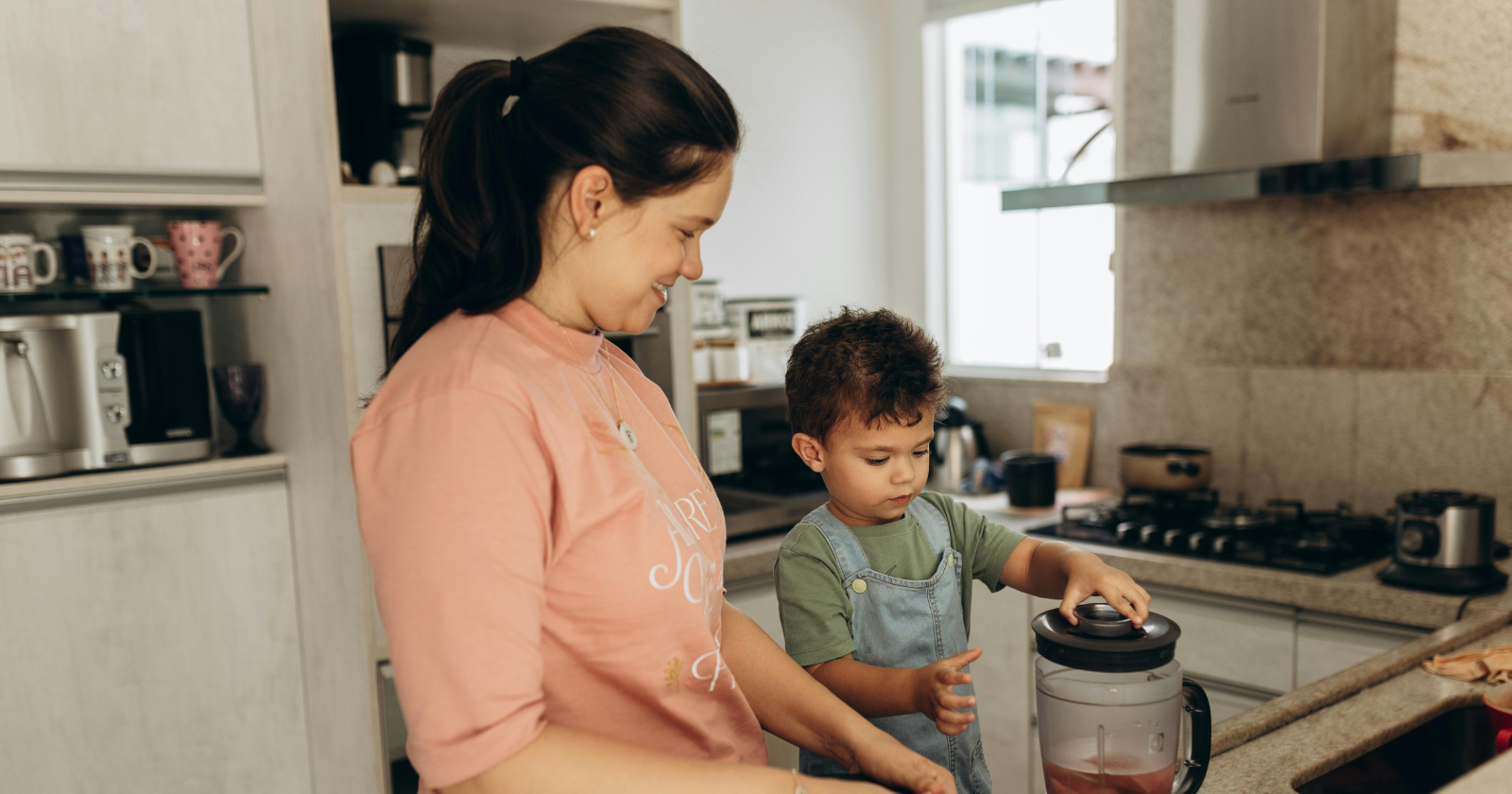
I spent the first year of motherhood convinced that if I just made the right choices – the bamboo swaddles, the homemade purees, the wooden toys arranged just so—I’d somehow unlock the secret to being a good mother. Spoiler alert: I was wrong.
Those early days with my first baby were a blur of organic cotton onesies and anxiety. I’d scroll through social media at 3 AM while nursing, comparing my reality to everyone else’s curated highlights. My nursery looked magazine-worthy, sure, but inside I was falling apart, wondering why none of it felt like enough.
It took me five years and two kids to realize that good mothering had nothing to do with the aesthetic choices I was obsessing over. The real work? That came from confronting some uncomfortable truths about myself and what my children actually needed from me.
1. My children needed my presence, not my perfection
Remember those organic purees I mentioned? I’d spend hours steaming, blending, and portioning them into those cute little containers. Meanwhile, my daughter would be playing alone on her mat, occasionally looking up at me for interaction while I frantically wiped down counters.
The truth hit me one afternoon when she grabbed a store-bought pouch at a friend’s house and declared it “yummy.” All those hours I’d spent trying to be the perfect food provider, and what she really wanted was me sitting on the floor, making silly faces while she ate.
These days, we still eat mostly organic when possible, but sometimes dinner is scrambled eggs and toast. The difference? We’re all at the table together, actually talking and laughing instead of me stressed in the kitchen trying to create Instagram-worthy meals.
2. Embracing my struggles made me stronger, not weaker
After my second baby arrived, I found myself drowning in postpartum anxiety that no amount of lavender essential oil could fix. For months, I hid it behind a smile and perfectly packed diaper bag, terrified that admitting I was struggling meant I was failing.
You know what actually made me a worse mother? Pretending everything was fine. My anxiety was like background static, making me snappy and disconnected. When I finally walked into that therapist’s office, shaking and exhausted, it wasn’t giving up—it was growing up.
Therapy taught me that acknowledging my limits wasn’t weakness. Now when I feel overwhelmed, I tell my kids, “Mama needs a minute to feel her feelings.” They’ve learned that emotions are normal, not something to stuff down or hide.
3. My kids didn’t need a Pinterest-perfect childhood
I used to plan elaborate sensory bins and themed activities, spending more time setting them up than my kids spent playing with them. One rainy morning, out of sheer exhaustion, I handed my daughter a cardboard box and some crayons. She spent two hours turning it into a “leaf sorting station”- way longer than she’d ever played with those expensive Montessori materials I’d carefully researched.
What did I learn? Kids are naturally creative when we stop micromanaging their play. Now our best activities happen spontaneously: collecting sticks on walks, making “soup” from garden weeds, or building the hundredth couch cushion fort of the week.
Related Stories from The Artful Parent
- The way you speak to your partner in front of your children becomes the voice they expect love to sound like—and most parents never make the connection
- 7 “small” moments from childhood that felt like nothing to the parent but became the story the child tells everyone when they describe how they grew up
- 9 things every kid who grew up with a stay-at-home mother didn’t appreciate until they became a parent themselves and realized the job has no clock-out, no performance review, and no one who says you did a good job today
4. Saying no to good things made room for better things
There was a time when our calendar looked like a game of Tetris—music class, playgroup, library time, nature walks, all carefully scheduled to provide “enriching experiences.” We were exhausted, cranky, and constantly rushing from one thing to the next.
One week, we all got sick and had to cancel everything. And you know what? It was the most connected we’d felt in months. We read books in bed, had slow mornings, and actually enjoyed each other’s company.
Now I protect our downtime fiercely. Yes, we miss out on some activities that look great on paper, but we’ve gained something more valuable: the space to just be together without an agenda.
5. My marriage needed attention too (and that was okay)
For the longest time, I believed that being a good mother meant putting my kids first, always. Date nights felt selfish. Taking time to connect with my husband seemed indulgent when there were lunches to pack and laundry to fold.
But kids learn about relationships by watching ours. When they see us laughing together over Saturday morning pancakes or holding hands during evening walks, they’re learning what love looks like in action. When we disagree (because we do), and they watch us work through it respectfully, they’re getting lessons no parenting book could teach.
6. Gentle parenting didn’t mean permissive parenting
I confused being a gentle parent with never letting my kids feel disappointed. If they cried, I rushed to fix it. If they were frustrated, I solved the problem for them. I thought I was being compassionate, but I was actually robbing them of crucial life skills.
- Psychology says people who prefer solitude to socializing aren’t anti-social — they just stopped pretending small talk is more interesting than their own silence - Global English Editing
- Nobody talks about the parents who live close to their adult children but feel more alone than those whose kids moved across the country – because at least distance has a reason, but when your child is twenty minutes away and still doesn’t come, the only explanation left is that they’re choosing not to - Global English Editing
- Psychology says the kind of tiredness that persists despite good sleep is not a sleep problem at all. It’s often a signal that your nervous system is stuck in a low-grade stress response your conscious mind stopped registering years ago. - Global English Editing
The day my daughter had a complete meltdown because her tower fell down, and I just sat there saying, “That’s so frustrating, isn’t it?” instead of rebuilding it for her, felt revolutionary. She cried, she stomped, and then – miracle of miracles – she tried again herself.
Boundaries and empathy aren’t opposites. My kids need both.
7. Comparison was stealing my joy
Every time I scrolled through social media, I’d see another mom doing it “better.” Their kids ate vegetables without complaint. Their homes stayed clean. They managed to shower daily.
Here’s what I finally understood: we’re all showing our highlight reels. That mom with the perfect lunch boxes? Maybe she’s crying in her car after drop-off. The one with the spotless house? Perhaps her kids watch TV all afternoon so she can clean.
When I stopped comparing and started connecting -really talking to other moms about the hard stuff – I found my tribe. Turns out, we’re all just doing our best with what we have.
8. My children were already exactly who they needed to be
I spent so much energy trying to mold my kids into some ideal version I had in my head. My daughter should be more outgoing. My son should sleep better. They should, they should, they should.
But when I stopped trying to fix them and started really seeing them, everything changed. My sensitive daughter who notices everything? She doesn’t need to be more outgoing; she needs me to honor her careful, thoughtful nature. My climber who turns everything into an adventure? He’s not “too much” – he’s exactly enough.
The truth about good mothering
These days, my house is messier, our meals are simpler, and our schedule is lighter. The nursery that once looked Pinterest-perfect now has crayon marks on the walls and mismatched bedding. And yet, I’ve never felt more successful as a mother.
Good mothering isn’t about the choices we make about food, toys, or sleep methods. It’s about showing up authentically, admitting when we’re struggling, and being willing to grow alongside our children.
Some days I nail it. Other days I apologize at bedtime for losing my patience. But every day, I’m learning that my kids don’t need a perfect mother – they need a real one. And that’s something no amount of organic meal prep could ever provide.
