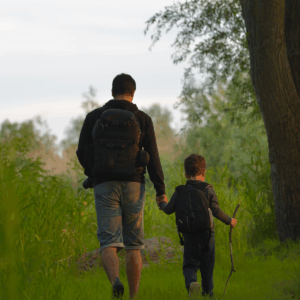

Being cut off from your grandchildren might be the most painful thing you’ll ever experience. I know because I watched it happen to close friends, and I’ve come dangerously close to that edge myself.
There’s a special kind of heartbreak that comes with estrangement. You see other grandparents posting photos at birthday parties, hear them talking about weekend sleepovers, and meanwhile you’re sitting there wondering if your grandkids even remember your voice. The silence is deafening.
After thirty years in human resources, helping people navigate workplace conflicts, I thought I understood communication pretty well.
But when tensions rose with one of my sons after he became a father, I realized family dynamics play by different rules. The skills that helped me mediate between coworkers didn’t automatically translate to healing rifts with adult children.
If you’re reading this while estranged from your grandchildren, you need to hear some hard truths. Not because I want to hurt you, but because understanding these realities might be your only way back.
1) Your adult children don’t owe you access to their kids
This one stings, doesn’t it? You raised them, sacrificed for them, and now they’re keeping your grandchildren away. It feels fundamentally unfair.
But here’s what took me years to understand: when our children become parents, they get to make the rules for their families. Just like we did. Remember how annoyed you got when your parents questioned your parenting decisions? That feeling doesn’t disappear just because we’ve switched roles.
Your adult children are protecting what they believe is best for their kids. Right or wrong, that’s their call to make. The sooner you accept this, the sooner you can stop fighting a battle you can’t win and start working toward reconciliation.
2) “But I was a good parent” isn’t the magic phrase you think it is
How many times have you said this? How many times have you thought it?
I used to lean heavily on this defense. After all, my sons never went hungry, always had clean clothes, got to college. I showed up to their games, worked hard to provide. Wasn’t that enough?
But parenting isn’t a report card where meeting basic requirements earns you a passing grade forever. What felt like good parenting to us might have left wounds we never knew about. Maybe we were too strict, too lenient, too absent, too hovering. Maybe we said things in anger that stuck with them for decades.
Related Stories from The Artful Parent
- The thing nobody tells you about raising children the way you wish you’d been raised is that it means confronting everything you spent your whole life trying to leave behind
- Psychologists explain that people who insist they had a great childhood while displaying every marker of emotional neglect aren’t lying. Loyalty to the family story was the price of belonging, and some people will defend the narrative long after it stopped protecting them.
- 7 things children hear before age 5 that become the soundtrack of their entire emotional life — and most parents have no idea their voice is being recorded permanently
The point isn’t to spiral into guilt. It’s to recognize that our perspective on our parenting isn’t the only valid one.
3) Your version of events isn’t the only version that matters
During a particularly tense period with one of my sons, he brought up an incident from his childhood that I remembered completely differently. In his memory, I had dismissed something important to him. In mine, I was teaching him resilience.
Who was right? We both were. Memory isn’t a video recording; it’s filtered through emotions, development stages, and subsequent experiences.
When your adult child tells you how something affected them, believing their experience doesn’t mean admitting you’re a villain. It means acknowledging that two people can experience the same event differently, and both experiences are real.
4) Demanding instant forgiveness pushes them further away
“I said I was sorry, what more do you want?”
If you’ve said this, you’re not alone. But apologies aren’t coins you insert into a vending machine to get forgiveness dispensed immediately.
- I’m 73 and the regrets I carry aren’t about the things I didn’t do — they’re about the version of myself I maintained for so long that the people closest to me spent their entire childhoods and marriages relating to a performance rather than a person, and I’m not sure how to account for that or whether accounting for it at this stage counts as enough - Global English Editing
- Psychology says the way someone reacts the very first time you say no to them tells you everything about whether they valued you as a person or simply valued what you were willing to give them - Global English Editing
- Psychology says the reason talking to pets is so emotionally satisfying isn’t because they understand language — it’s because they offer consistent nonverbal feedback without ever dismissing, interrupting, or recentering the conversation on themselves - Global English Editing
I learned this lesson the hard way with my brother. We had a falling out that lasted several years, and my first attempts at reconciliation failed because I expected him to immediately return to normal after I apologized. My impatience made things worse.
Real apologies need time to sink in. Trust needs time to rebuild. Pushing for quick resolution often signals that you care more about ending your discomfort than actually healing the relationship.
5) Sometimes the problem really is you (and that’s actually good news)
I know this sounds harsh, but stick with me. If the problem is partly or entirely on your end, that means you have power to change things.
After years of tension, I finally asked one of my sons to tell me specifically what I had done that hurt him. Not to argue, not to defend, just to listen. It was one of the hardest conversations of my life. Some of his points seemed unfair, but others hit me like a lightning bolt of recognition.
I had to apologize for specific things. Not vague “I’m sorry if I hurt you” non-apologies, but real acknowledgments: “I’m sorry I missed your school play because of work. I see now how that made you feel unimportant.”
Those specific apologies opened doors that staying defensive had kept locked for years.
6) Their boundaries aren’t punishments
When your adult child says you can only visit once a month, or can’t babysit unsupervised, or need to call before coming over, it feels like punishment. But boundaries aren’t about hurting you. They’re about what your adult children need to feel safe and respected.
I watched both my sons become fathers and make different choices than I would have. One is stricter about screen time than I ever was. The other has rules about food that seem excessive to me. But respecting their boundaries, even when I don’t understand them, shows them I respect their role as parents.
Fighting boundaries guarantees you’ll see less of your grandchildren. Respecting them, consistently and without complaint, often leads to them gradually relaxing.
7) You might need to become someone different to be in their lives
This is the truth nobody wants to say because it sounds cruel: the person you are right now might not be someone your adult children want around their kids.
Maybe you still drink too much. Maybe you can’t stop making critical comments. Maybe you refuse to respect their spouse. Maybe you’re stuck in patterns that worked when they were kids but don’t work now.
Changing yourself for access to your grandchildren might feel like manipulation or betrayal of who you are. But consider this: we all change throughout life. Becoming someone your grandchildren can safely be around isn’t betraying yourself; it’s evolving into your best self.
Closing thoughts
I have four grandchildren now, ranging from three to eleven. There was a time when I wasn’t sure I’d have any relationship with them at all. The path back required swallowing my pride, examining my failures honestly, and accepting that my adult children’s feelings were more important than my need to be right.
Is it fair that grandparents have to do most of the work to heal these relationships? Maybe not. But fair isn’t the point. The point is whether you want a relationship with your grandchildren more than you want to protect your ego.
What’s stopping you from making that first genuine apology today?