

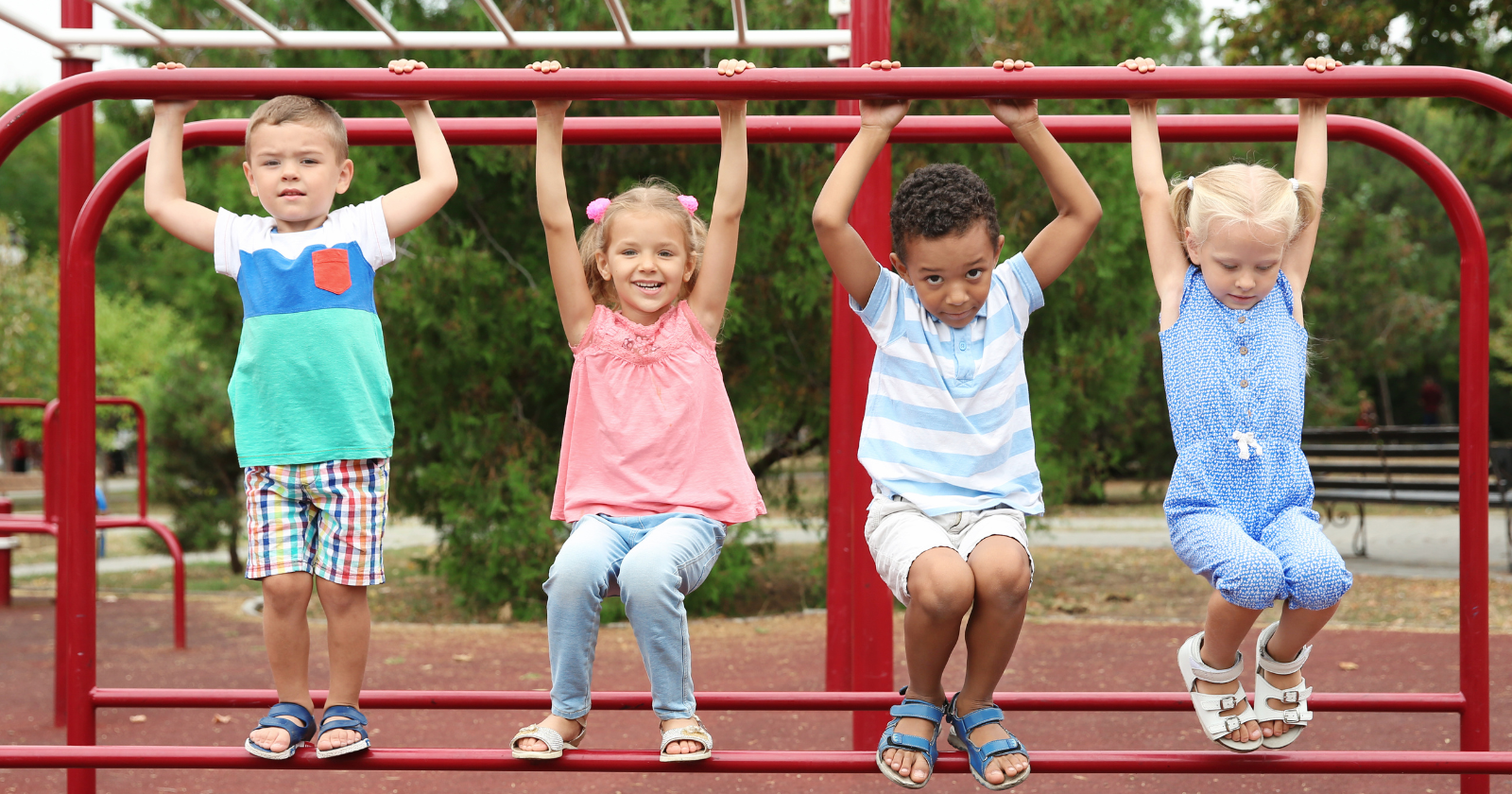
Yesterday at the park, I watched my five-year-old navigate a standoff over the monkey bars while I sat on my hands, literally.
The autumn air smelled like wet leaves and that particular playground rubber mulch scent, and I could hear the negotiations happening twenty feet away.
“You went twice already!” one kid protested. “But I was here first!” my daughter countered. My instinct screamed to jump in, to mediate, to make it fair.
Instead, I took a breath and watched as they worked it out themselves, eventually creating a counting system that somehow satisfied everyone.
That moment reminded me why I let my kids figure things out on the playground without my constant intervention.
Sure, classrooms teach reading and math, but those wood chips and swing sets? They’re teaching the stuff that really matters when you’re thirty and your boss is being unrealistic or your partner is having a bad day.
1) How to read a room without anyone explaining the vibe
You know that feeling when you walk into a meeting and just know something’s off? Kids learn this on playgrounds every single day.
They approach a group playing tag and instantly gauge whether they’re welcome or need to wait.
No teacher stands there explaining social dynamics, they just feel it out.
Last week, my two-year-old toddled up to some bigger kids building a sand castle.
Without a word being said, he understood he needed to watch first, then slowly moved closer until one kid handed him a bucket.
Related Stories from The Artful Parent
- Nobody talks about the specific loneliness of being the parent who did everything differently than their own parents did — and ending up with an adult child who is healthy and independent and doesn’t call unless you call first
- We chose the wrong dog for our family and spent three years learning why breed matters more than most people admit — here’s what I wish someone had told us before we fell in love at the shelter
- Grandparents who build unbreakable bonds with their grandchildren are giving that child something the parents structurally cannot — love with no agenda, attention with no schedule, and the specific unhurried quality of a person who has finally run out of reasons to be anywhere else
Nobody taught him that dance; he learned it through dozens of playground interactions where I didn’t rush over to facilitate introductions.
2) That falling down isn’t the end of the world
Remember when you learned to ride a bike? Nobody could explain balance to you.
You had to fall, get up, fall again, and eventually something clicked.
Playgrounds offer this same gift daily, minus the bike.
My kids have taken spectacular tumbles off climbing structures (nothing dangerous, just dramatic).
Each time, they look around, assess the damage, and make a choice: cry, laugh it off, or try again.
When we rush in with “Oh no! Are you okay?!” before they’ve even processed what happened, we steal their chance to develop their own internal response system.
3) Natural consequences hit different than lectures
Ever notice how kids who hog the slide eventually end up playing alone? No adult needs to deliver a sermon about sharing.
The playground delivers that lesson with surgical precision.
This aligns perfectly with how I approach things at home too.
Natural consequences teach what no amount of talking can.
When my daughter decided to exclude someone from her game last month, she found herself excluded the next day.
She came home confused and hurt.
We talked about it, sure, but the playground had already done the heavy lifting.
4) How to negotiate without a mediator
“I get the swing for five minutes, then you get it for five minutes.”
Kids create these treaties constantly, and honestly? They’re usually more creative than adult solutions.
Have you ever watched kids divide up playground equipment when there’s not enough to go around? They create elaborate systems, trade-offs, and compromises.
Sometimes they’re unfair, and sometimes someone storms off, but they’re learning to advocate for themselves without an adult judge making declarations.
5) That different kids have different limits
The playground teaches empathy in ways no classroom lesson on “being kind” ever could.
Kids quickly learn that Sarah is scared of the tall slide but amazing at monkey bars, while Jake can climb anything but cries if he scrapes his knee.
My tender-hearted helper often notices when younger kids are struggling and adjusts her play style.
Nobody assigned her this role.
She developed this awareness through countless playground hours where she observed, adjusted, and learned that not everyone operates the same way she does.
6) Boredom breeds creativity
When there’s no structured activity and no adult suggesting games, magic happens.
Sticks become swords, then wands, then drawing tools in the dirt.
The space under the slide transforms into a shop, a jail, a secret base.
This mirrors what happens at our collage table at home, where the whole family contributes to art projects without rules or endpoints.
However, the playground version is even more powerful because kids create these worlds with strangers, half-friends, and temporary allies.
7) How to join and leave groups gracefully
This might be the most underrated playground skill.
Kids learn the art of “Can I play?” and equally important, how to exit when they’re done or things get weird.
Adults struggle with this constantly: How do you leave a conversation at a party? How do you join an established friend group?
Kids practice these moves hundreds of times on playgrounds, developing an intuition for social flow that no amount of coaching could provide.
8) Physical risk assessment
“Is that jump too far? Can I make it across those bars? Will this branch hold my weight?”
Kids become their own safety inspectors when we’re not hovering with constant warnings.
Yes, sometimes they miscalculate.
My climber-cuddler regularly overestimates his abilities, but each small failure teaches him to evaluate better next time.
He’s learning his own limits through experience, not through my anxiety-driven restrictions.
9) That conflicts can end without grudges
Here’s what amazes me most: Kids can be in a screaming match over a soccer ball, then five minutes later they’re building a fort together.
They don’t need conflict resolution workshops because they just move on.
We adults could learn something from this.
Kids don’t carry playground disputes into the next day unless we make a big deal about them.
They fight, they resolve (messily, imperfectly), and they continue playing; the playground teaches that conflict is temporary and relationships can survive disagreement.
The bigger picture
Look, I’m not suggesting we abandon our kids at playgrounds and hope for the best.
There’s a balance between keeping them safe and letting them navigate their own social world.
Yet, after years of watching both as a former elementary school teacher and now as a mom, I’ve seen how kids who get space to figure things out become adults who don’t crumble at the first sign of conflict.
When we constantly intervene, mediate, and smooth over every playground dispute, we’re creating adults who need HR for every workplace disagreement and who can’t handle a friend canceling plans without taking it personally.
The playground is messy, and kids get their feelings hurt.
They sometimes make unfair trades or get excluded from games, but these micro-doses of real life—delivered in a relatively safe environment—build resilience that no amount of classroom social skills curriculum can match.
Next time you’re at the playground and you see conflict brewing, try sitting on your hands like I did yesterday.
Count to thirty before intervening, and you might be surprised at what your kids can handle when you give them the chance to try!
