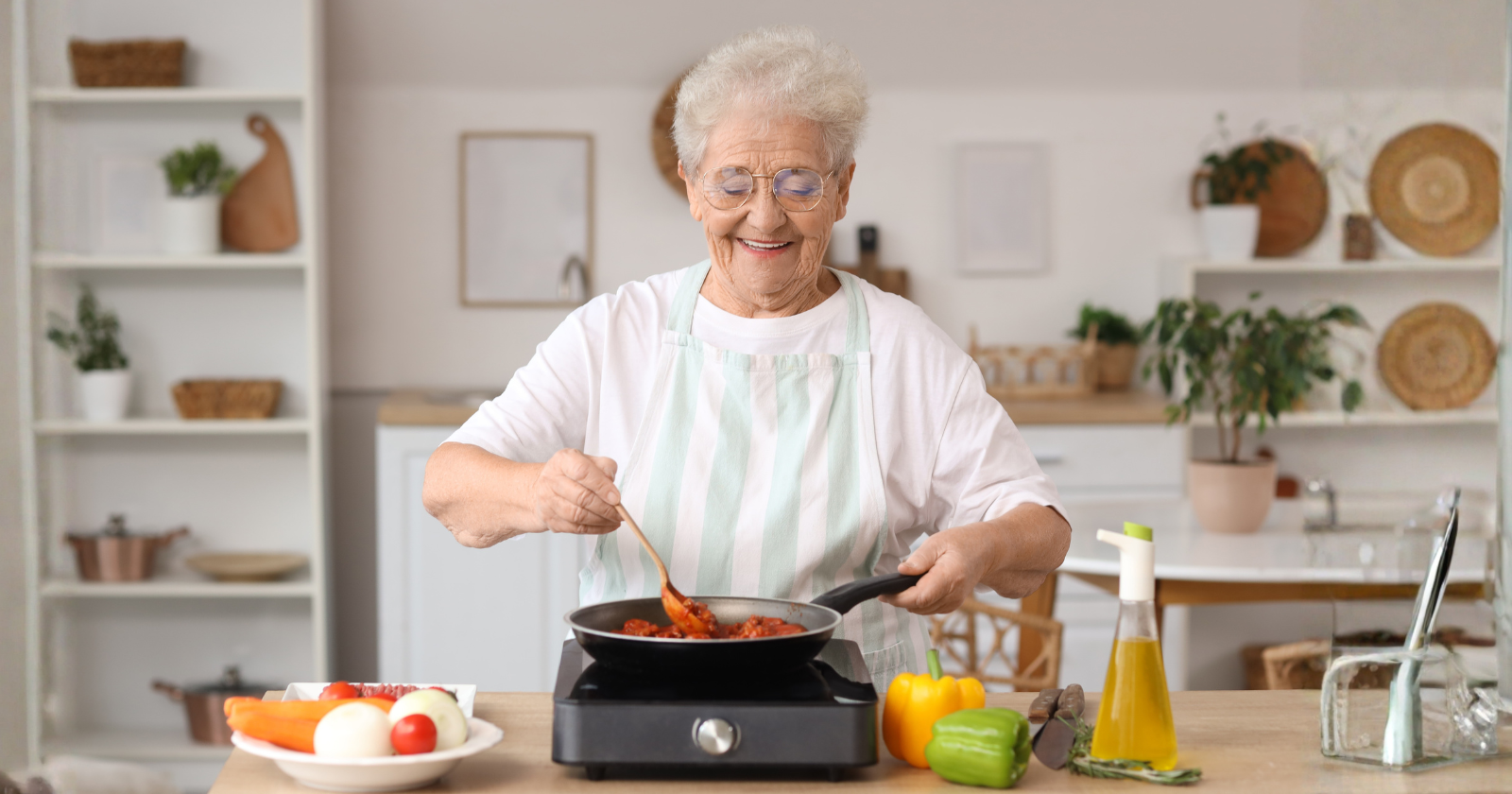
Last week, I caught myself standing in my kitchen, eyes closed, breathing in the scent of garlic and onions sizzling in the pan.
For just a moment, I was seven again, perched on a wooden stool in my mother’s kitchen, watching her stir something magical on the stove.
The funny thing? What I was cooking tasted nothing like what she used to make, but that smell—butter meeting heat, onions softening—transported me instantly.
Have you ever wondered why certain smells can pull you through time like that? Why your grandmother’s perfume or your father’s aftershave can make you feel five years old again, safe and small and held?
The science behind why smells unlock time travel
Here’s what blew my mind when I first learned it: Unlike our other senses, smell takes a shortcut in our brains.
Dr. Drew Cumming, a psychiatrist, explains it perfectly: “Smell signals bypass the thalamus and go directly to the olfactory bulb and then quickly to the amygdala and hippocampus.”
What does that mean for those of us without neuroscience degrees? While sight and sound and touch all get filtered through our thinking brain first, smell goes straight to the feeling and memory centers.
Just pure, unfiltered emotion and memory.
Think about it: When you see an old photograph, you recognize it first, then feel something. But when you smell your mother’s soup? You’re already crying before you even realize why.
My own mother made everything from scratch. We didn’t have much money, but we always had a garden and meals that took all afternoon to prepare.
She was anxious—I see that now as an adult—but in her kitchen, kneading bread or stirring soup, she found her rhythm.
Related Stories from The Artful Parent
- Psychology says the children most shaped by toxic parenting rarely come from homes that looked broken, they come from homes that looked completely fine, and they spend their adult lives trying to explain a wound that has no obvious source
- There’s a specific kind of exhaustion that comes not from doing too much but from spending decades performing a version of yourself that was designed to make other people comfortable, until one morning you can’t remember what your face does when nobody is watching
- Behavioral scientists found that adults who describe themselves as ‘not creative’ almost always trace it back to a single moment in childhood when someone evaluated what they made instead of asking what it meant
And somehow, my nervous system filed all of it under “safe.”
Why comfort food is really comfort memory
I watch my kids now in our kitchen: My daughter helping me measure flour for our twice-weekly bread, and my son stealing tastes of everything with his little fingers.
Our kitchen is the heart of our home too, usually cluttered with art supplies and half-finished projects, steam from something simmering fogging up the windows.
But here’s what I’ve realized: The actual food isn’t the point.
My bread doesn’t taste like my mother’s did. Her sauce was different from mine.
What matters is that my children’s nervous systems are recording these moments—the warmth, the smells, the sound of my voice humming while I cook—and filing them away as “home.”
Every family dinner (and yes, we eat together every night, just like my family did) is laying down another layer of that foundation.
Even when conversations stay light—who did what at school, plans for the weekend—their bodies are learning: this is what safety feels like.
This is where I belong.
How memories get stored in your body, not just your brain
Do you ever notice how your body remembers things your mind forgot? How you can walk into a bakery and suddenly feel your grandmother’s presence, even though you can’t remember the last conversation you had with her?
Rachel Herz, a neuroscientist at Brown University, puts it beautifully: “Smell can instantly trigger an emotional response along with a memory, and our emotional states have a very strong effect on our physical well-being.”
This explains so much, doesn’t it? Why certain smells can make us feel instantly calm or inexplicably anxious. Why walking into someone’s kitchen during the holidays can make us feel like crying, from something deeper and something our bodies remember even when our minds don’t.
I think about this when I’m cooking now, especially on hard days.
When the world feels chaotic and uncertain, I find myself making the foods that ground me; not necessarily my mother’s exact recipes, but foods that smell like safety.
Onions browning, bread rising, and soup bubbling.
Creating new comfort memories while honoring old ones
What fascinates me most is how we can consciously create these sensory anchors for our children.
Every time I bake bread with my kids, letting them get their hands sticky with dough, I’m not just teaching them to cook. I’m giving their nervous systems something to hold onto years from now, when they need to remember what home feels like.
But we can do this for ourselves too, can’t we? We don’t have to be stuck only with the memories we inherited.
I’ve been intentionally creating new sensory anchors: Lighting the same candle during our evening stories, using lavender oil during our bedtime routine, and playing certain music while we cook together.
Sometimes I wonder if my mother knew what she was doing, if she understood that her kitchen was writing itself into my cells.
Probably not, she was just doing what mothers do: Feeding her family, making do with what she had, and trying to create something warm and good from simple ingredients.
Closing thoughts
Maybe that’s the most beautiful part of all this: Our mothers and grandmothers probably didn’t know about the amygdala or the hippocampus.
They just cooked; they just loved us with wooden spoons and worn recipe cards and kitchens that always smelled like something good was happening.
Now when I stand in my own kitchen, scattered with art supplies and filled with the chaos of young children, I understand something profound: Every meal I make is a future memory, and every smell that fills this house is a breadcrumb trail my children can follow back home (no matter how far they travel or how old they grow).
The flavor might fade from memory, recipes might get lost, but that feeling—that deep, body-level knowing of being safe and loved and home—that stays forever, stored in the parts of us that remember without words.
What smells bring you home? What are you cooking into the memories of those you love?