Last night, I caught myself doing it again.
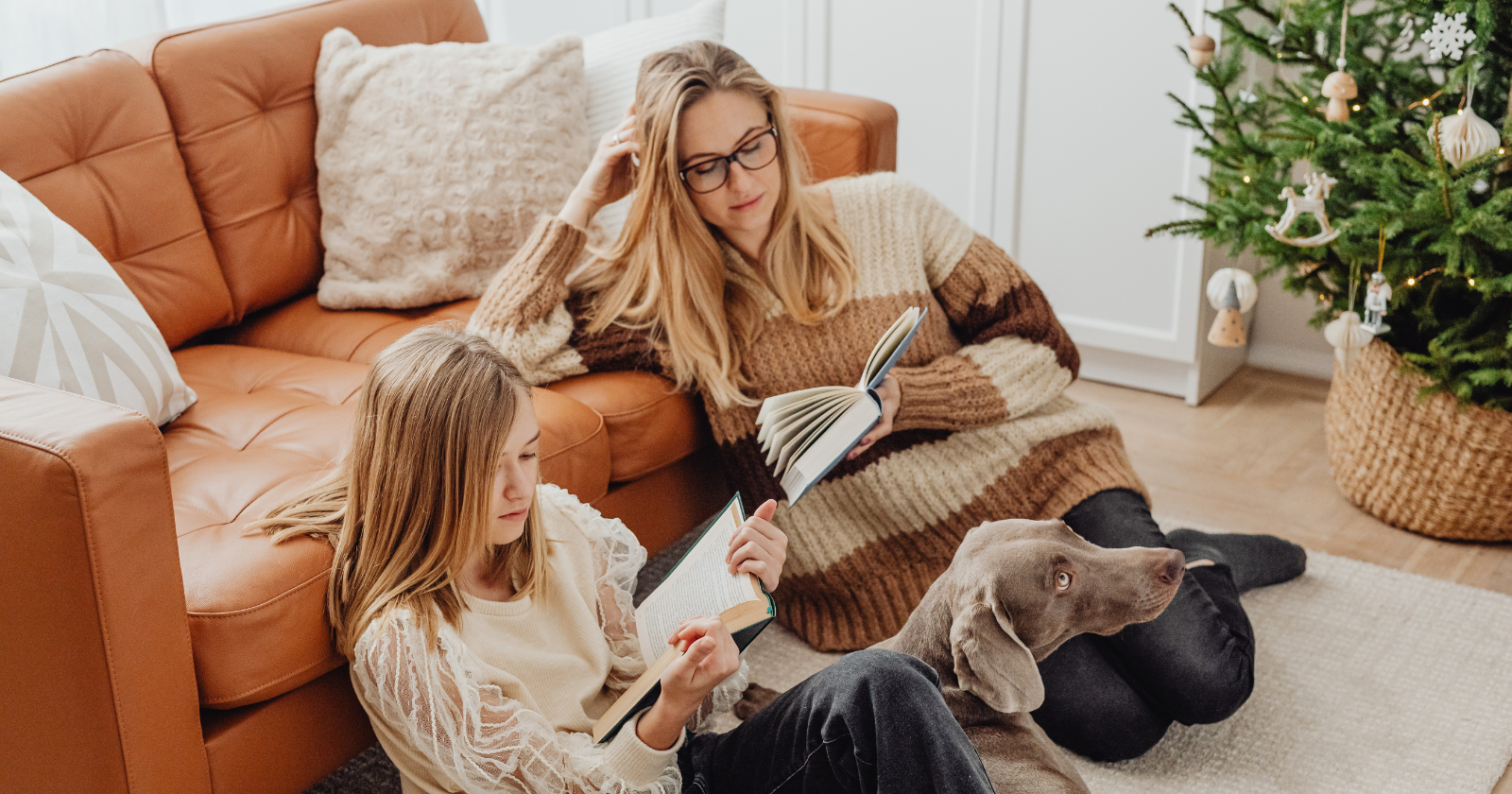
There I was, curled up in the corner of our worn leather chair, completely lost in a novel while the dinner dishes sat waiting in the sink.
No parenting book, no self-help manual, just a story about someone else’s life in another place.
Ellie had wandered over with her stuffed rabbit, watched me for a moment, then settled on the floor beside me with her own picture book, turning pages in perfect mimicry of my movements.
That’s when it hit me.
In all our efforts to teach our children about reading—phonics apps, library programs, reward charts—we sometimes forget the most powerful lesson happens when we’re not actively teaching at all.
The magic happens when they’re watching
You know what’s fascinating?
Kids absorb everything we do, especially when we think they’re not paying attention.
I learned this during my seven years teaching kindergarten, but it really sank in after having my own little ones.
They watch how we hold a book, how our faces change as we read, how we unconsciously reach for that paperback when we need a moment of peace.
The National Centre for Family Learning found that “Reading for pleasure was found to be the most important indicator of the future success of a child (OECD, 2002).”
Related Stories from The Artful Parent
- Psychology says the children most shaped by toxic parenting rarely come from homes that looked broken, they come from homes that looked completely fine, and they spend their adult lives trying to explain a wound that has no obvious source
- There’s a specific kind of exhaustion that comes not from doing too much but from spending decades performing a version of yourself that was designed to make other people comfortable, until one morning you can’t remember what your face does when nobody is watching
- Behavioral scientists found that adults who describe themselves as ‘not creative’ almost always trace it back to a single moment in childhood when someone evaluated what they made instead of asking what it meant
But here’s the kicker—it’s not just about them reading for pleasure. It’s about them seeing us do it.
When children witness their parents genuinely enjoying a book, not because they have to, not because it’s educational, but simply because they want to, something profound happens.
They learn that stillness can be chosen, that quiet can be rich, that being alone with your thoughts and a story is a form of contentment that doesn’t need batteries or wifi.
Creating a different relationship with quiet
Remember when quiet time meant something other than screen time?
I’ve been thinking about this a lot lately, especially as I watch other families in waiting rooms and restaurants.
There’s this immediate reach for devices the moment boredom threatens.
But what if our kids saw us reach for a book instead?
I’m not anti-technology—we use tablets for learning apps and video calls with grandparents.
But there’s something irreplaceable about the physical act of reading for pleasure.
The way afternoon light falls across pages, how you have to actually turn them, the satisfying thud of closing a finished book.
These sensory experiences create memories that sink deep.
My collection of books from library sales and thrift stores has become a visible reminder in our home that stories are treasures worth seeking out.
The kids see me get genuinely excited about a 50-cent find, treating it like gold.
They’re learning that value isn’t always about price tags.
Why reading together hits differently
Sure, we do bedtime stories every night—my husband has taken that duty as his sacred territory, complete with voices and sound effects that make me smile from the hallway.
But I’m talking about something else here.
I’m talking about parallel reading, where everyone has their own book, their own world, but we’re together in our separateness.
Dr. Terri D. McFadden explains it beautifully: “Over time, those shared moments create a rich emotional vocabulary. A child learns that it’s OK to feel sad or frustrated, that joy is worth celebrating, and that feelings, big or small, are part of being human.”
Sometimes on Sunday mornings, we’ll all pile onto the big bed with our books.
My two-year-old flips through board books, making up stories in his gibberish language.
My five-year-old studies picture books with the intensity of a scholar.
I’m lost in whatever novel has captured me this week.
Nobody’s performing, nobody’s teaching.
We’re just… being.
The invisible lessons of a reading life
What are kids really learning when they see us read for pleasure?
They’re absorbing lessons about delayed gratification—watching us stick with a book even when the beginning is slow.
They’re learning about emotional regulation—seeing how we turn to stories for comfort after hard days.
They’re witnessing focus in action—observing how we can sit still with just words on a page for company.
After particularly chaotic days, when I finally collapse into bed at 10:30 with my book, I sometimes wonder if I should be doing something more “productive.”
Then I remember that my daughter now packs books for car rides without being asked.
She knows that waiting rooms and long drives are opportunities for stories, not just endurance tests requiring entertainment.
Building readers without trying
Here’s what nobody tells you about raising readers: the harder you push, the more they might resist.
But when reading is just what people do in your house—like breathing or eating breakfast—it becomes part of their internal landscape.
I’ve watched this play out in real time.
When friends come over, they’re often surprised to find my kids choosing books during free play.
“Don’t they want to watch something?” they’ll ask.
But for my children, books aren’t the consolation prize when screens aren’t available.
They’re a first choice, a comfort object, a friend.
The research backs this up too. Dr. Paula J. Schwanenflugel notes that “Children whose parents continue to read to them, suggest good books for them to read, and give books for birthdays and holiday gifts show greater reading motivation and more frequent reading patterns than those whose parents do not.”
But I’d add this: children whose parents read for their own pleasure show something even more powerful—they show that reading isn’t just a childhood activity you grow out of.
It’s a lifetime companion.
Finding your own stillness
Look, I get it.
Finding time to read for pleasure when you have young kids feels almost laughable some days.
There are meals to make, laundry mountains to climb, and approximately 47 Lego pieces to extract from various crevices.
But here’s what I’ve learned: those stolen moments with a book aren’t selfish.
They’re deposits in your family’s emotional bank account.
Start small.
Maybe it’s just ten minutes while they’re having snack time.
Maybe it’s choosing a book instead of scrolling while they play at the park.
The point isn’t to become some literary superhero.
It’s to let your kids catch you in the act of choosing stillness.
Because in a world that profits from our constant stimulation, teaching our children that peace can be found in the pages of a book—not through buying something, not through achieving something, just through the simple act of reading—might be the most countercultural gift we can give them.
Tonight, after bath time and back rubs, after the last glass of water and final tuck-in, I’ll probably find myself back in that leather chair with my novel.
And maybe, just maybe, one of my little ones will peek around the corner and see me there, lost in words, perfectly still, perfectly content.
That image will settle into their growing understanding of what it means to be human, to find joy in simple things, to know that happiness doesn’t always make noise.
That’s the relationship with stillness that money really can’t buy.
It has to be witnessed, absorbed, lived alongside until it becomes as natural as breathing.
One page, one quiet evening, one observed moment at a time.