

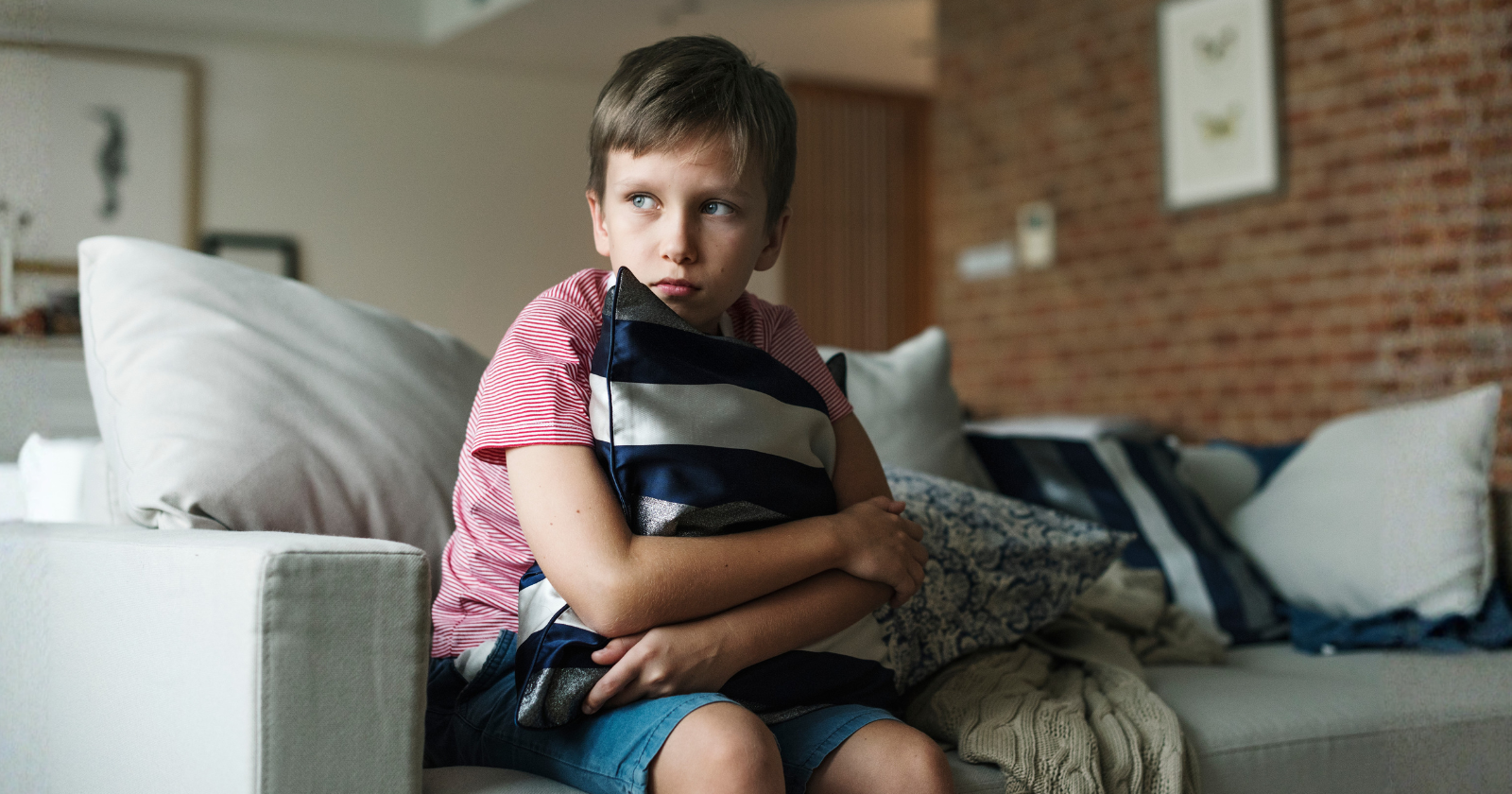
Yesterday afternoon, my two-year-old lost it over a broken cracker. Not just upset—full meltdown mode, throwing himself on the kitchen floor like the world had ended.
After teaching kindergarten for seven years before having kids, I thought I’d have this figured out by now. But there I was, staring at my screaming toddler, realizing that all my classroom management tricks weren’t quite cutting it.
That’s when I remembered something crucial: what we say in these moments matters more than we think. The right words can transform a volcanic eruption into a manageable moment. The wrong ones? They’re like pouring gasoline on a fire.
Through years of trial and error (emphasis on error), I’ve discovered certain phrases that work like magic when kids are angry. And I’ve definitely learned which ones make everything infinitely worse.
1. “Tell me more about what’s happening”
This has become my default response to big feelings in our house. When my five-year-old comes stomping in from the backyard, face red and fists clenched, these four words work better than any lecture ever could.
Why does it work? Because it shows you’re ready to listen without judgment. You’re not minimizing their feelings or rushing to fix things. You’re simply creating space for them to express what’s going on inside.
I recently watched this video and it really resonated with how I view children’s anger. The speaker explained that “Anger is not a choice. It’s the body overflowing. Anxiety, sadness, shame, fear—they all boil under the surface.” There’s a gap they don’t know how to bridge between what they’re feeling and how to express it. “Tell me more” helps them build that bridge.
2. “I can see you’re really upset right now”
Validation is powerful. When kids feel seen and understood, their defenses start to drop. This simple acknowledgment shows them you’re not the enemy—you’re on their team.
Last week, my daughter melted down because her brother knocked over her leaf collection. Instead of launching into “it was an accident” or “you can pick them up again,” I just said, “I can see you’re really upset right now.” She immediately stopped screaming and started explaining exactly why those particular leaves mattered. Connection restored.
3. “Your feelings make sense”
Even when the trigger seems ridiculous to adult brains (see: broken cracker incident), the feelings are real. This phrase validates their emotional experience without necessarily agreeing with their behavior.
Think about it—when you’re upset and someone tells you you’re overreacting, does that help? Never. Same goes for kids. They need to know their feelings are acceptable, even when their actions aren’t.
Related Stories from The Artful Parent
- I’m 65 and I stopped arguing politics with my daughter three years ago — not because I gave up on her, but because I finally understood that protecting our relationship mattered more than being right about things neither of us can control
- Psychology says the hardest part of watching your parents age isn’t the physical decline – it’s the moment you realize they’ve started performing competence the same way you performed adulthood when you first moved out, and you’re both pretending not to notice the act
- Psychology says people others describe as ‘easy to talk to’ aren’t being casual — they’re performing one of the hardest social skills that exists
4. “Let’s take some deep breaths together”
Sometimes kids are too flooded to talk. Their nervous systems are in overdrive, and words just bounce off. That’s when co-regulation becomes your best friend.
I’ll sit down at their level and start taking slow, exaggerated breaths. Usually, they resist at first. But after a few breaths, they often join in. It’s not about forcing them to calm down—it’s about modeling a way through the storm.
5. “What do you need right now?”
Kids often don’t know what they need, but asking gives them agency. Sometimes my daughter will say “a hug,” sometimes “to be alone,” sometimes “to throw something.” (We keep a basket of soft toys specifically for angry throwing—best parenting hack ever.)
This question shifts them from reactive to reflective mode. Even if they can’t answer, you’ve planted the seed that they have choices in how to handle their feelings.
6. “I’m here when you’re ready”
Some kids need space to process. My son is like this—trying to comfort him when he’s angry just escalates things. So I’ll say this phrase and sit nearby, available but not intrusive.
It’s incredibly hard to resist the urge to fix, explain, or comfort. But sometimes the most loving thing we can do is simply be present without demanding interaction.
7. “That sounds really frustrating/scary/disappointing”
Naming emotions helps kids develop emotional literacy. When we give them the vocabulary for what they’re experiencing, we’re teaching them to identify and communicate their feelings more effectively next time.
Plus, when you accurately name what they’re feeling, kids often visibly relax. It’s like finally being understood in a foreign country where nobody speaks your language.
The 3 phrases that make everything worse
Now for the phrases I’ve learned (the hard way) to avoid:
“Calm down!” This is like telling someone who’s drowning to just swim. They would if they could. Commanding calmness when a child is dysregulated only adds shame to their emotional overwhelm.
“You’re okay” or “You’re fine.” No, they’re not. If they were okay, they wouldn’t be screaming. This phrase invalidates their experience and teaches them not to trust their own feelings. I catch myself saying this one all the time and have to consciously stop.
“Stop crying” or “Big kids don’t cry.” Crying is a healthy release of emotion. When we shut it down, we’re teaching kids to stuff their feelings, which only leads to bigger explosions later. Or worse, kids who can’t access their emotions at all.
Making it work in real life
Look, I don’t nail this every time. Sometimes I’m tired, touched out, or dealing with my own big feelings. There are days when “Because I said so!” escapes my lips before I can stop it.
But here’s what I’ve learned: it’s not about perfection. It’s about intention and repair. When I mess up (which is often), I circle back when we’re both calm. “Hey, I didn’t handle that well earlier. I was frustrated too. Can we try again?”
The goal isn’t to eliminate anger from our kids’ lives. That would be impossible and honestly unhealthy. The goal is to teach them that anger is acceptable, manageable, and temporary. That they can feel furious and still be loved. That big feelings don’t have to lead to big problems.
These phrases aren’t magic wands. They’re tools. And like any tool, they work better with practice. Start with one or two that resonate with you. See how they land with your specific kid, because every child is different.
Most importantly, remember that staying calm in the face of a child’s anger is a skill. You’re not born knowing how to do this. Give yourself the same grace you’re learning to give your kids.
