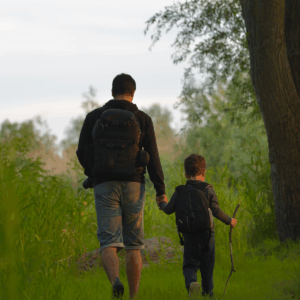

Last week, while pushing my grandchild on the swings, I overheard two moms discussing whether to let their kids walk to school alone. One was adamant it was too dangerous; the other remembered doing it herself as a kid but still seemed unsure. It struck me how much has changed since I raised my boys.
Look, I get it. The world feels scarier now with 24-hour news cycles and social media horror stories. But here’s what those of us who raised kids back then understand: some of the “old-fashioned” approaches we took actually worked pretty darn well. And many of today’s parents are missing out on these lessons.
As Jeff Segal, Psy.D., puts it: “Children haven’t changed, but childhood has.” That’s exactly right. The fundamentals of raising good kids remain the same, even if the packaging looks different.
1. Independence builds confidence, not danger
When my sons were eight and ten, they’d disappear on their bikes for hours. Were we negligent? Hardly. We taught them boundaries, made sure they knew our phone number by heart, and trusted them to make good choices. Today, I see parents tracking their teenagers’ every move through apps.
What’s getting lost? The chance for kids to develop their own internal compass. When you navigate small challenges alone—getting lost and finding your way back, resolving a dispute with friends without adult intervention—you build problem-solving muscles that last a lifetime.
2. Boredom is a gift, not a problem to solve
Remember summer days with absolutely nothing planned? My boys would complain they were bored, and you know what I’d say? “Good! Figure something out.” By noon, they’d have built a fort, started a neighborhood game, or discovered some new interest.
Now I watch parents schedule every minute of their kids’ lives. Piano on Monday, soccer on Wednesday, coding camp on weekends. When do these kids learn to entertain themselves? When do they discover what genuinely interests them versus what looks good on a college application?
3. Natural consequences teach better than lectures
Here’s something we understood back then: if you forgot your lunch, you went hungry until you got home. Forgot your homework? You explained it to the teacher yourself. We weren’t being cruel; we were teaching responsibility.
I see parents today racing forgotten items to school like they’re running an emergency service. What message does that send? That someone will always bail you out? Life doesn’t work that way, and it’s kinder to learn that lesson at eight than at twenty-eight.
4. Not every moment needs to be documented
We had maybe one photo album per year for our entire family. Birthday parties, holidays, the occasional school play. That was it. And you know what? We were present for those moments because we weren’t viewing them through a screen.
When I take my grandkids to the park now, I notice parents spending more time photographing their children playing than actually playing with them. Those kids are growing up feeling like performers rather than just being kids. Sometimes the best memories are the ones that live only in our hearts.
Related Stories from The Artful Parent
- The cruelest part of having no close friends isn’t the big moments like birthdays or emergencies. It’s the ordinary Tuesday when something small and funny happens and you reach for your phone and then put it back down because there’s nobody who would understand why it was funny without a paragraph of context
- I watched E.T. again at 35 and cried — not because the movie changed, but because I finally understood that Spielberg wasn’t making a film about an alien, he was making a film about a child in a broken home who needed something gentle to take care of — and every parent who has watched their child pour love into a stuffed animal or a stray cat knows exactly what that need looks like
- My mother never told me she loved me — not once, not in sixty years — and when she died I didn’t cry at the funeral and I’ve spent four years trying to decide whether that makes me damaged or finally free
5. Disagreement and conflict are part of healthy relationships
We let our kids see us disagree (respectfully, of course). We let them work out their own sibling squabbles unless things got physical. They learned that conflict doesn’t mean the end of a relationship; it means you care enough to work through differences.
Today’s parents seem terrified of any discord. They jump in to mediate every disagreement, smooth over every hurt feeling. But how will these kids handle a difficult roommate, a demanding boss, or relationship challenges if they’ve never learned to navigate conflict themselves?
6. “Good enough” parenting is actually great
We didn’t agonize over every parenting decision. We didn’t read seventeen books about the best way to introduce solid foods. We did our best with what we knew, and when we messed up (which we definitely did), we apologized and moved on.
The pressure on today’s parents to be perfect is crushing. Every choice feels monumental. But kids don’t need perfect parents; they need real ones who show them how to be human, mistakes and all.
7. Community raises kids, not just parents
If Mrs. Henderson down the street saw my boys misbehaving, she’d tell them to knock it off, and then she’d tell me about it. We looked out for each other’s kids. It really did take a village, and we weren’t afraid to be that village.
Now, parents are hesitant to even speak to other people’s children, let alone correct them. We’ve lost that communal safety net, and both parents and kids are more isolated because of it.
- When preaching civility gets you into a fight with the BBC - The Blog Herald
- Research suggests people who document their lives in writing — blogs, journals, essays — don’t just remember their experiences better, they understand them differently, because narration and comprehension use the same cognitive architecture - The Blog Herald
- What a 2006 government exercise reveals about online speech and national security - The Blog Herald
8. Respect was expected, not negotiated
This might sound old-fashioned, but we expected our kids to respect adults, period. Not blind obedience—we taught them about safety and standing up for themselves—but basic respect for teachers, coaches, and yes, even that cranky neighbor.
I watch parents today negotiate with their five-year-olds like they’re equal partners. While it’s great to validate kids’ feelings and give them choices, they also need to understand that sometimes, the adult knows best and that’s okay.
9. Play was unstructured and creative
We gave our kids sticks, cardboard boxes, and maybe some chalk. They turned them into swords, spaceships, and masterpieces. Their imagination did the heavy lifting, not expensive toys with predetermined outcomes.
Today’s toys often do the playing for the child. They light up, make sounds, and leave little room for creativity. When everything is provided, nothing is invented. Some of my best memories are watching my boys turn our backyard into different worlds with nothing but their imagination.
Closing thoughts
Listen, I’m not saying everything was better “back in my day.” We made plenty of mistakes, and there are things today’s parents do brilliantly that we never thought of. The awareness around mental health, the open communication about feelings, the emphasis on individuality—these are wonderful developments.
But as I watch my own sons navigate parenthood, I sometimes want to tell them: trust yourselves more. Let your kids fail a little. Step back and let them figure things out. The lessons we learned raising kids aren’t outdated; they’re timeless.
So here’s my question for today’s parents: what would happen if you borrowed just one idea from how we used to do things? Maybe let your kids be bored this weekend, or resist solving a problem they could handle themselves. You might be surprised at what they’re capable of when given the chance.