
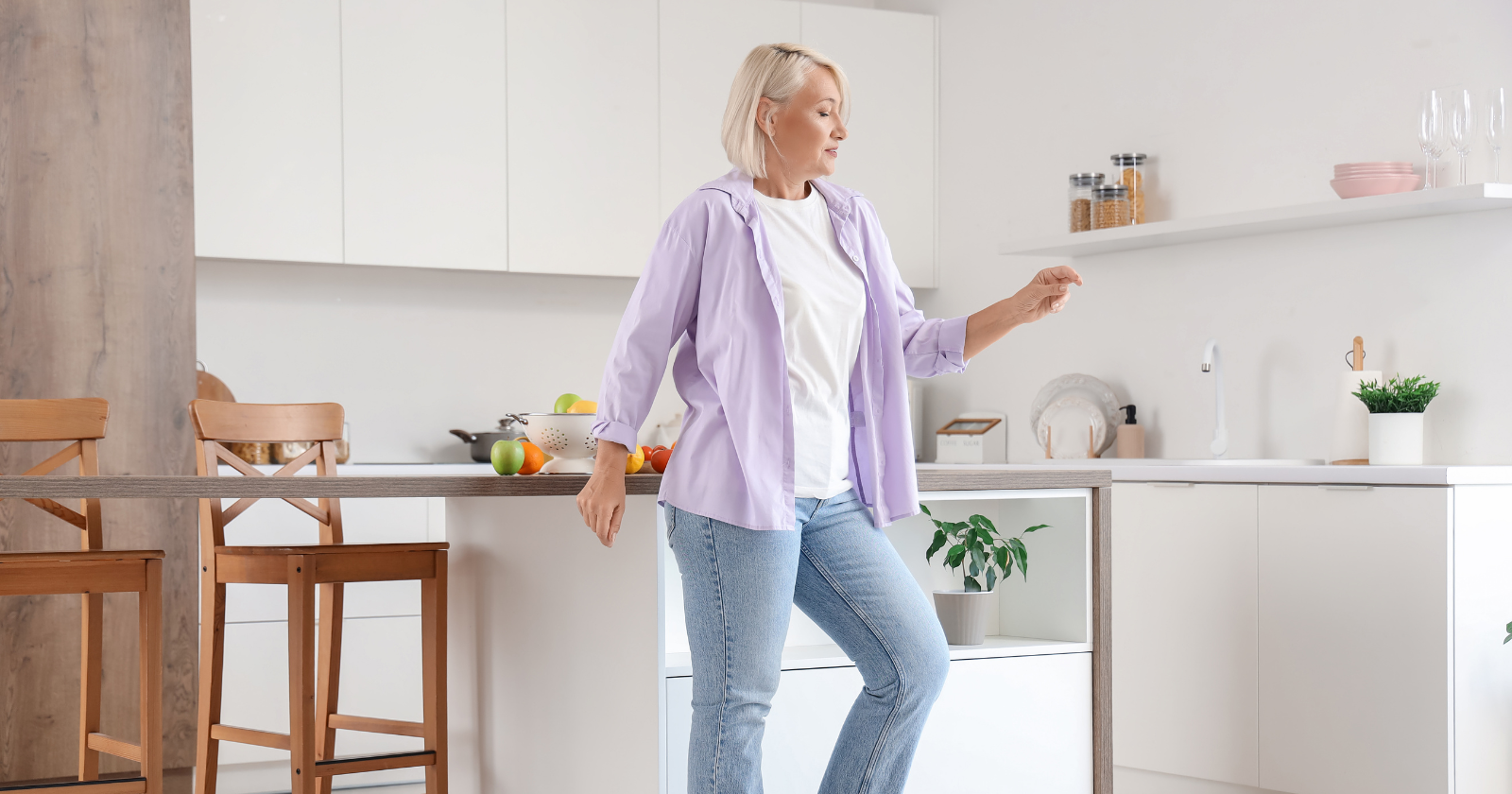
My daughter was barely six months old when I caught myself doing something I’d sworn I’d never do: singing made-up songs about vegetables while doing the dishes at 10 PM.
Just like that, I’d become one of those parents with their own weird little rituals.
The same kind I used to notice my own parents doing when I thought they weren’t looking.
But here’s what stopped me cold that night: I realized this wasn’t some new quirk parenthood had given me.
This playful, creative side had always been there.
I’d just buried it somewhere along the way, probably around the same time I decided being the quieter brother meant keeping certain parts of myself locked away.
Recent behavioral research has revealed something profound about these moments.
Those quirky rituals we discover our parents doing when we’re not around? They’re not just random habits picked up in middle age.
They’re pieces of personality that got quietly filed away during the intense years of keeping small humans alive and relatively sane.
Think about it.
When was the last time you saw your mom dancing alone in the kitchen, or caught your dad tinkering with that model train set he “suddenly” got interested in?
Related Stories from The Artful Parent
- 9 signs you were raised by a parent who loved you but didn’t know how to show it
- Psychology says people who were raised by emotionally unavailable parents don’t just struggle with relationships—they struggle with believing they’re worth one and that belief doesn’t surface as insecurity, it surfaces as over-giving, because somewhere before the age of ten they decided the only way to keep people close was to make leaving too expensive
- Psychology says the reason you feel exhausted after talking to certain family members isn’t drama — your body just spent two hours regulating itself around someone it doesn’t feel safe with and that regulation is invisible and expensive and the crash that hits you in the car on the way home is the bill for every honest sentence you didn’t say
These aren’t new hobbies.
They’re old loves finally getting some air time.
The false self we build (and pass on)
Growing up, most of us learn pretty quickly which parts of ourselves get applause and which ones get side-eyes.
We adapt. We perform. We survive.
As the MEDA Foundation explains it: “The child constructs what psychologists call a false self—a persona designed to secure approval, avoid rejection, and maintain belonging.”
Sound familiar?
- Nobody talks about the version of loneliness that lives inside a perfectly fine marriage—the kind where nothing is wrong, nobody is cruel, the partnership functions exactly as designed—but somewhere around year twenty-five one person realized they’d been having their most honest conversations in their own head - Global English Editing
- The Boomer generation that could sit through a three-hour family dinner without once reaching for a screen developed a tolerance for unstructured time that most people under 40 now medicate, distract, or schedule away—and behavioral scientists say that tolerance is one of the strongest predictors of emotional stability in later life - Global English Editing
- I’m 73 and the thing that keeps me up at night isn’t fear of dying—it’s the possibility that my children will clean out this house in a weekend and not understand that every drawer, every shelf, every pile they’ll throw away was a sentence in a conversation I was trying to have with them - Global English Editing
I spent years perfecting my own false self.
The responsible one. The quiet observer. The guy who had it together even when anxiety was eating me alive from the inside out.
And you know what? It worked.
Until it didn’t.
Then parenthood arrives and suddenly you’re not just managing your own false self anymore.
You’re actively shaping another human being while simultaneously trying to be the adult you think you’re supposed to be.
Your creative writing becomes bedtime stories.
Your love of dancing becomes silly moves to stop the crying.
Your philosophical ponderings become simplified life lessons delivered between diaper changes.
Before you know it, twenty years have passed and those parts of you that used to light you up?
They’ve been reformatted into parent-appropriate versions or shelved entirely.
Why rituals matter more than we think
Yair Wairauch notes that “Rituals are common among healthy individuals and across cultures and often serve adaptive purposes.”
But here’s what’s fascinating: the rituals aren’t just about the actions themselves.
They’re about reclaiming space.
When I was deep in my mid-twenties funk, feeling lost despite checking all the conventional success boxes, I started developing my own rituals without even realizing it.
Morning runs where I’d let my mind wander.
Late-night reading sessions diving into Eastern philosophy.
These weren’t just habits.
They were tiny rebellions against the person I thought I had to be.
Now, watching my daughter explore the world with zero concern for what anyone thinks, I’m reminded of something crucial.
We all start out whole.
It’s the world that teaches us to compartmentalize.
Parents feel this acutely.
You pour so much of yourself into creating stability for your kids that you forget you’re allowed to be a full person too.
That’s why those solo rituals matter so much. They’re not eccentric behaviors. They’re acts of remembering.
The creative awakening no one talks about
Here’s something that might surprise you: becoming a parent can actually unlock creativity you forgot you had.
But there’s a catch.
It usually happens in the margins.
Those 10 PM kitchen concerts I mentioned?
That’s where it lives.
The early morning journaling before anyone else wakes up.
The weekend hobby that seems to come out of nowhere but feels strangely familiar.
In my book *Hidden Secrets of Buddhism: How To Live With Maximum Impact and Minimum Ego*, I write about how Buddhism teaches us to see beyond our constructed identities.
Parenthood, weirdly enough, offers the same lesson.
It strips away your ego while simultaneously demanding you become someone new.
The result?
A strange period where you’re both losing and finding yourself at the same time.
Maybe that’s why empty nest syndrome hits so hard.
It’s not just about missing your kids.
It’s about suddenly having space to be yourself again and realizing you’re not entirely sure who that is anymore.
Breaking the cycle (or at least understanding it)
So what do we do with this knowledge?
How do we avoid suppressing our whole selves for two decades?
First, recognize that some suppression is inevitable.
Parenthood requires sacrifice.
That’s not a bug, it’s a feature.
The humbling that comes with raising tiny humans teaches us things we can’t learn any other way.
But we can be more intentional about keeping pieces of ourselves alive.
Those rituals your parents developed?
Start yours now.
Not when the kids move out.
Not when you have more time. Now.
Michael Norton, Professor of Business Administration at Harvard Business School, puts it perfectly: “Rituals really bring family together, often in a way that’s powerful.”
But here’s my addition to that: rituals also bring YOU back together with yourself.
Maybe it’s five minutes of meditation while the coffee brews.
Maybe it’s that weird hobby you’ve been putting off.
Maybe it’s finally admitting you like terrible reality TV and watching it without apology.
The point isn’t what you choose.
It’s that you choose something that’s purely, unapologetically yours.
Final words
Watching my daughter discover the world has taught me something unexpected about my own parents.
All those quirky things I caught them doing when they thought no one was watching?
That was them remembering how to play.
The behavioral scientists are right.
Those aren’t new personalities emerging.
They’re old friends finally getting invited back to the party.
As I continue stumbling through early parenthood, making up vegetable songs and rediscovering parts of myself I’d forgotten existed, I’m trying to remember this: We don’t have to wait twenty years to be whole people again.
Yes, parenthood changes you.
Yes, you’ll suppress parts of yourself to keep your kids safe and sane.
That’s love in action.
But those rituals, those small acts of being yourself when no one’s watching?
They’re not eccentric.
They’re essential.
They’re you, keeping the pilot light on for the person you’ll get to be again someday.
And maybe, just maybe, if we’re conscious about it now, our kids won’t have to discover our “secret” personalities later.
They’ll just know us as the wonderfully weird, fully human people we’ve been all along.