
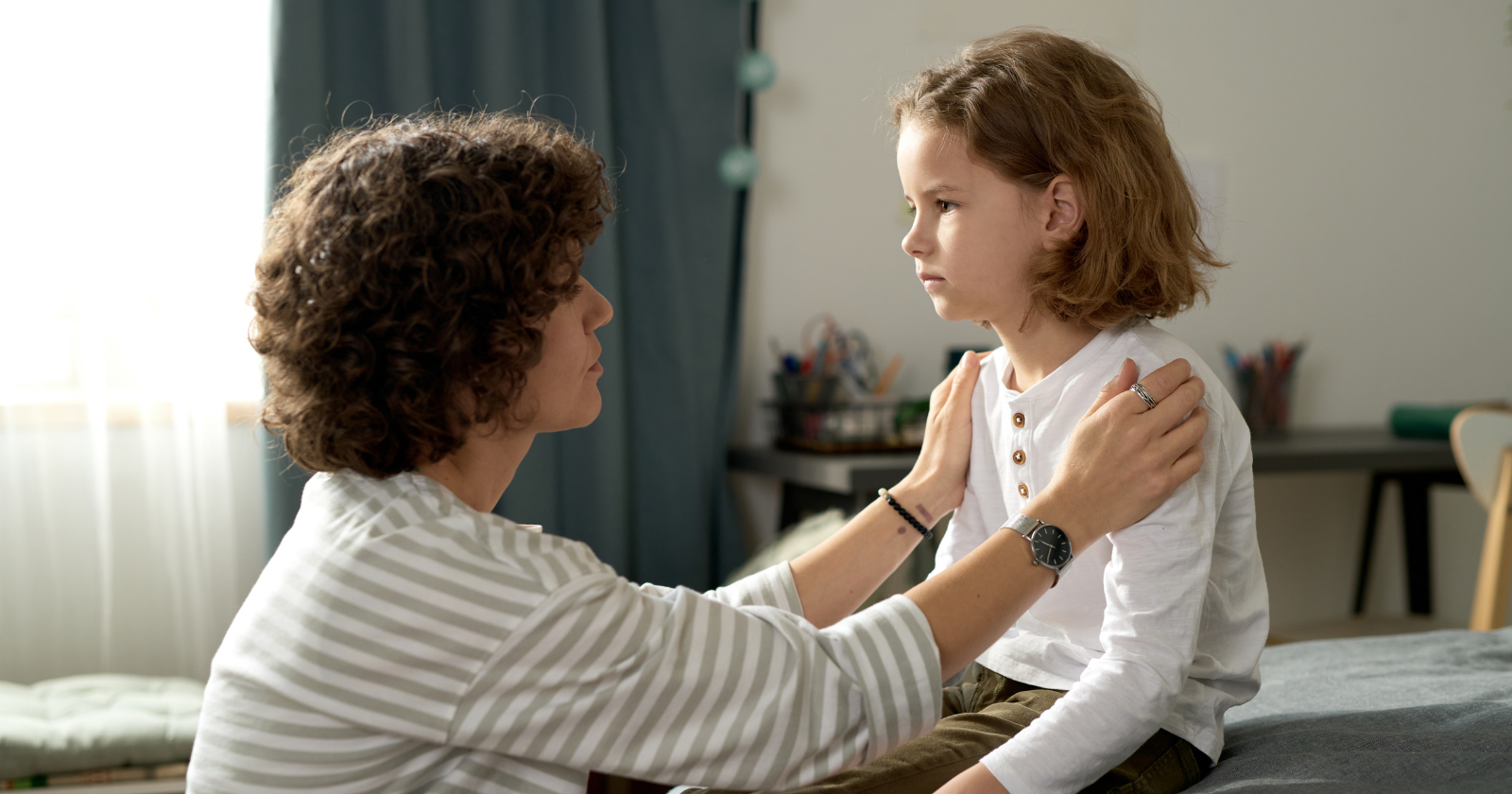
Kids can smell a lecture from two rooms away.
The minute our voice tilts into “speech mode,” their brains go elsewhere (mine, too).
However, what sticks is the story, a question, and a moment of being on the same team.
I’ve bumped into plenty of walls figuring this out with my two—Ellie and Milo—as we lean natural and low-tox, play outside more than we scroll, and keep things flexible because real life is messy.
Here are five ways I pass on what I’ve learned without eye-rolls, power struggles, or me making it all about me:
1) Lead with a story, not a sermon
If I start with “When I was your age,” Ellie tenses up but a tiny, honest story pulls her in.
She came home crushed after a friend called her bossy.
Instead of advice, I told her about my doomed second-grade leaf-collecting club—how I barked orders, everyone quit, and I learned that inviting is different from directing.
I ended with, “What could I have done differently?” She said, “Let them pick some leaves.”
Her idea, no lecture.
Keep stories short and specific—one minute, tops.
As Brené Brown reminds us, “Clear is kind.”
A clear, human story beats ten minutes of tips.
2) Ask before I advise
“Do you want ideas or just a listener?”
That little question saves so many moments.
Sometimes Ellie wants cocoa and a hug, sometimes she wants role-play practice, and sometimes Milo just needs to be held like a koala.
If they choose “just listen,” I reflect feelings: “Sounds like you felt left out.”
If they pick “ideas,” I offer options, not orders: “Want to write what you might say?” or “Want to try it with me first?”
Curiosity protects dignity.
Advice lands like a gift when it’s invited.
Try a menu of support—ears, brainstorm, practice, or move-your-body time (stirring soup, watering the garden, a quick walk).
Let your children pick for you.
3) Share the feeling, not the fear

Fear makes me say “No!” faster than I can breathe, but when fear leads, kids hear “The world is too big for you.”
When feeling leads, they hear “You’re capable, and I’m here.”
At the park, Ellie eyed a high branch.
While hearing the sirens in my head, I said, “I feel nervous watching you up there because I love you.”
Then I pivoted to skill: “Show me your plan to climb down—three points of contact.”
She showed me, we set a “pause” word, and she climbed with care.
Honesty plus a skill beats a shutdown.
At bedtime, we don’t erase emotions; we check facts with a flashlight and breathe together.
“Do the best you can until you know better. Then when you know better, do better,” Maya Angelou said.
Naming my feeling and teaching a tool is my “know better.”
4) Offer do-overs and tiny tools
Nothing ends listening faster than feeling trapped.
Do-overs unlock the door.
If Ellie uses a sharp tone, I’ll ask, “Want a do-over?”
She almost always takes it.; we practice, cheer the attempt, and move on.
Mistakes become reps, not verdicts.
We also lean on tiny tools:
- Two-beat pause: Two slow breaths before we answer. Milo learned it as “smell the flower, blow the candle.”
- The sandwich: Warmth—need—warmth: “I want to play; I need the blocks to stay; want to help me rebuild?”
- Choices card: A sticky note by the art shelf: “Watercolor or crayons? Porch or table? Ten or fifteen minutes?”
- Natural helper: Give a purposeful job—garlic to smash in a bag, socks to pair. Purpose calms chaos.
Repair is our family ritual.
If I snap, I circle back: “I’m sorry I used a harsh voice. I felt overwhelmed. Here’s my calmer try.”
That teaches change better than any speech.
5) Model values in motion, not in marble
Kids watch our feet more than our mouths.
If I preach “screens last” but scroll at every red light, the message is muddled.
I show the value, imperfectly and out loud.
We prioritize organic, but frozen peas and pancakes happen; we bless the peas.
We love co-sleeping, but if no one’s sleeping then we pivot.
Low-tox matters—and so does laughing when the sourdough overflows.
When I share past mistakes—like people-pleasing—I don’t chisel commandments.
I narrate practice: “I used to say yes to everything and feel resentful, but now I check my body. Tight chest means no for now, but a warm belly means yes.”
Then I ask Ellie, “Where do you feel your yes or no?”
She pokes her tummy and grins.
No lecture—just a map.
As Alfie Kohn puts it, “Kids learn to make good decisions by making decisions, not by following directions.”
I leave space for them to choose, even when it’s messy.
Closing thoughts
If you’ve been a lecturer, you haven’t ruined anything because you tried what you knew.
Now, you know something different so that the next time your child brings you their messy, marvelous heart, try one:
- Tell a one-minute story and end with a question.
- Ask if they want ears or ideas.
- Name your feeling, then teach a skill.
- Offer a do-over and a tiny tool.
- Let your feet show the value.
We’ll still mess up, but we’ll repair, breathe, and get outside; fresh air and simple play have a way of resetting everyone.
Little by little, our kids absorb the lesson we meant all along: You are loved, you are capable, and you don’t need a lecture to know it.
