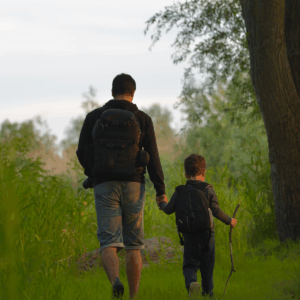

Looking back at how we raised our kids, I sometimes wonder what today’s parenting experts would make of it all.
The truth is, we did a lot of things that would probably raise eyebrows in modern parenting circles.
And yet, when I talk to my own grown children and their friends, they don’t look back with resentment. They remember those years with surprising fondness.
Sure, we weren’t perfect, but maybe we got some things right by accident. Or maybe, just maybe, the experts don’t have all the answers either.
Here are eight things we boomer parents did that supposedly went against the rulebook, but somehow created memories our kids still treasure.
1. Let kids roam free without constant supervision
We sent our kids out the door after breakfast and expected to see them when the streetlights came on. No cell phones. No GPS tracking. No “check in every hour” rules.
They disappeared on bikes, built forts in the woods, and figured out their own entertainment. Modern safety experts would probably have heart palpitations at the thought.
I remember my daughter once spent an entire Saturday exploring a creek two miles from our house with her friends. She came home muddy, sunburned, and absolutely thrilled.
Did I know exactly where she was every moment? No. Did she learn to navigate the world, assess risks, and solve problems without an adult hovering over her shoulder? Absolutely.
That kind of freedom taught kids things you can’t replicate with organized activities and constant supervision. They learned to read situations, trust their instincts, and handle unexpected challenges.
When you’re two miles from home and your bike chain breaks, you figure it out. Our kids learned that they were capable of handling things on their own, and that lesson stuck with them long after childhood ended.
Related Stories from The Artful Parent
- I’m 65 and I stopped arguing politics with my daughter three years ago — not because I gave up on her, but because I finally understood that protecting our relationship mattered more than being right about things neither of us can control
- Psychology says the hardest part of watching your parents age isn’t the physical decline – it’s the moment you realize they’ve started performing competence the same way you performed adulthood when you first moved out, and you’re both pretending not to notice the act
- Psychology says people others describe as ‘easy to talk to’ aren’t being casual — they’re performing one of the hardest social skills that exists
2. Allowed “dangerous” playground equipment
Remember those metal slides that turned into frying pans in the summer sun? The merry-go-rounds that spun so fast kids flew off into the dirt? The towering monkey bars perched over nothing but concrete and woodchips?
Safety experts have systematically removed most of this equipment from modern playgrounds, deeming it too risky for children. And they’re absolutely right to do that.
But ask anyone who grew up with those “dangerous” playgrounds, and their eyes light up. Those were the sites of their greatest childhood triumphs. Making it across the entire set of monkey bars without falling. Spinning the merry-go-round fast enough to feel that thrilling mix of terror and exhilaration.
Kids learned to calculate risk on those playgrounds. They developed physical literacy by figuring out what their bodies could and couldn’t do. A fall from the monkey bars hurt, but it taught you to hold on tighter next time.
Those old playgrounds weren’t perfect, but they created memories of real adventure and taught lessons that padded surfaces and carefully engineered play structures just can’t match.
3. Didn’t worry about screen time limits
Saturday morning cartoons started early and ran for hours. After school, the TV often stayed on from three o’clock until dinner. We didn’t count minutes or enforce strict limits.
- Gary Vaynerchuk says bloggers who obsess over monetization before audience-building are making a fatal mistake - The Blog Herald
- The people’s opera: what a 2009 Twitter experiment reveals about audience-led content - The Blog Herald
- How to protect your personal brand on social media as a blogger - The Blog Herald
Today’s parenting experts would be horrified at that kind of unlimited screen access.
However, those hours in front of the television served a purpose beyond simple entertainment. Kids from all over the neighborhood watched the same shows, creating shared cultural experiences. Monday morning conversations revolved around what happened on the latest episode. Those shows became a common language that connected an entire generation.
There was also something wonderfully guilt-free about that screen time. Kids weren’t anxious about exceeding their daily limits. Parents weren’t constantly monitoring and restricting.
Television was just part of the landscape of childhood, as normal as playing outside or reading a book. The lack of drama around it probably made it less of an obsession than it might have been otherwise.
4. Served “unhealthy” processed convenience foods
TV dinners in their little aluminum trays. Sugary cereals that turned the milk neon colors. Tang instead of orange juice. Bologna sandwiches on white bread with mayonnaise.
If modern nutritionists could travel back in time to peek into our kitchens, they’d need smelling salts.
Here’s the thing, though. Those foods carry an enormous amount of nostalgia for the people who grew up eating them.
There was something special about the ritual of TV dinners on Friday nights or getting to pick your own cereal at the grocery store. Those bright boxes with cartoon mascots were tiny rebellions against the idea that everything had to be serious and healthy all the time.
My grandson recently asked me what my favorite childhood food was, and without hesitation I said spaghetti from a can. He looked at me like I’d grown a second head.
But I have genuinely fond memories of heating up that canned pasta after school. It was definitely not nutritious, no doubt about that, but it was downright delicious to an eight-year-old. We didn’t agonize over every ingredient, and somehow, despite the processed ingredients and questionable nutritional value, we raised kids who grew up healthy.
5. Let kids settle their own disputes
When kids came running to us with complaints about their siblings or friends, our default response was usually some variation of “work it out yourselves” or “I don’t want to hear about it unless someone’s bleeding.”
We didn’t mediate every disagreement or coach them through conflict resolution strategies. Child development experts today recommend a much more hands-on approach.
That hands-off strategy forced kids to develop their own negotiation skills. When your brother took your toy and mom said “figure it out,” you had to decide whether to trade something, make a deal, or accept the loss and move on. You learned that adults wouldn’t always step in to referee every dispute.
Kids figured out compromise through trial and error. They learned which battles were worth fighting and which ones to let go. They developed street smarts about dealing with different personalities.
These were lessons learned through experience. Those skills served them well long after childhood ended.
6. Didn’t validate every feeling or offer constant praise
We didn’t rush to comfort every disappointment or celebrate every minor achievement.
When kids came home upset about something, we might offer sympathy, but we were just as likely to tell them to shake it off or look at the bright side. We didn’t hand out participation trophies or praise them for completing basic tasks.
That matter-of-fact approach to emotions taught kids that feelings were temporary and manageable. When your parent responded to your disappointment with “well, that’s life sometimes,” you learned that emotional discomfort wasn’t an emergency requiring immediate intervention.
You developed your own coping mechanisms. You figured out how to self-soothe and bounce back without external validation.
We praised genuine achievements, but kids didn’t get applause for everything they did. They learned to find internal motivation rather than constantly seeking external approval.
The satisfaction came from the doing, not from the praise afterward. That built a different kind of confidence, one rooted in actual competence rather than empty reassurance.
7. Didn’t childproof everything
Child safety experts today recommend extensive childproofing to prevent injuries. But back then, our homes had sharp corners on coffee tables. Cleaning supplies sat in unlocked cabinets. Tools hung on garage walls within reach. We didn’t install safety gates or cover every electrical outlet.
Kids learned through natural consequences what was dangerous and what wasn’t. Touch a hot stove once, and you figured out pretty quickly not to do it again. Bump your head on that sharp corner, and you learned to give it a wider berth.
These small lessons taught kids to be aware of their environment and exercise caution.
That approach built spatial awareness and good judgment. Kids developed an instinct for what might hurt them rather than relying on parents to remove every potential hazard.
When they eventually left home and encountered environments their parents hadn’t sanitized, they already had those skills. We kept truly dangerous things out of reach, but we also didn’t wrap the world in bubble wrap.
8. Made kids endure boring adult situations
What’s the secret to raising patient kids who can entertain themselves? We dragged our children to long dinners at restaurants where they had to sit quietly.
They waited in the car during errands with nothing but the view out the window. They attended adult gatherings where there was no entertainment designed for children.
Those boring hours taught valuable lessons. Kids learned that the world didn’t revolve around their entertainment. They developed patience by having to wait without complaining. They figured out how to occupy their minds with nothing but their own imagination.
Sitting through a two-hour dinner party taught them observation skills, social awareness, and the understanding that sometimes you do things for other people.
I once took my kids to a four-hour wedding when they were seven and nine. They survived with nothing but some crayons and a pad of paper.
Of course, they weren’t thrilled about it. But did they learn that they could handle extended periods of structured boredom without falling apart? Absolutely.
That lesson served them well in countless situations throughout their lives.
Conclusion
Were we perfect parents? Of course not. Did we get everything right? Hardly.
But looking back, I think we understood something that sometimes gets lost in modern parenting culture: childhood doesn’t have to be perfectly optimized to be wonderful.
Kids are remarkably resilient, and they don’t need every moment curated, every emotion validated, or every risk eliminated to grow into capable adults.
The warmth with which our grown children remember their childhoods tells us something important. Sometimes the “wrong” approach creates the right memories. Sometimes letting kids experience boredom, risk, disappointment, and independence gives them exactly what they need to thrive.
Maybe we weren’t following the expert playbook, but we were building childhoods worth remembering. And in the end, that matters more than getting every parenting decision perfectly right.