
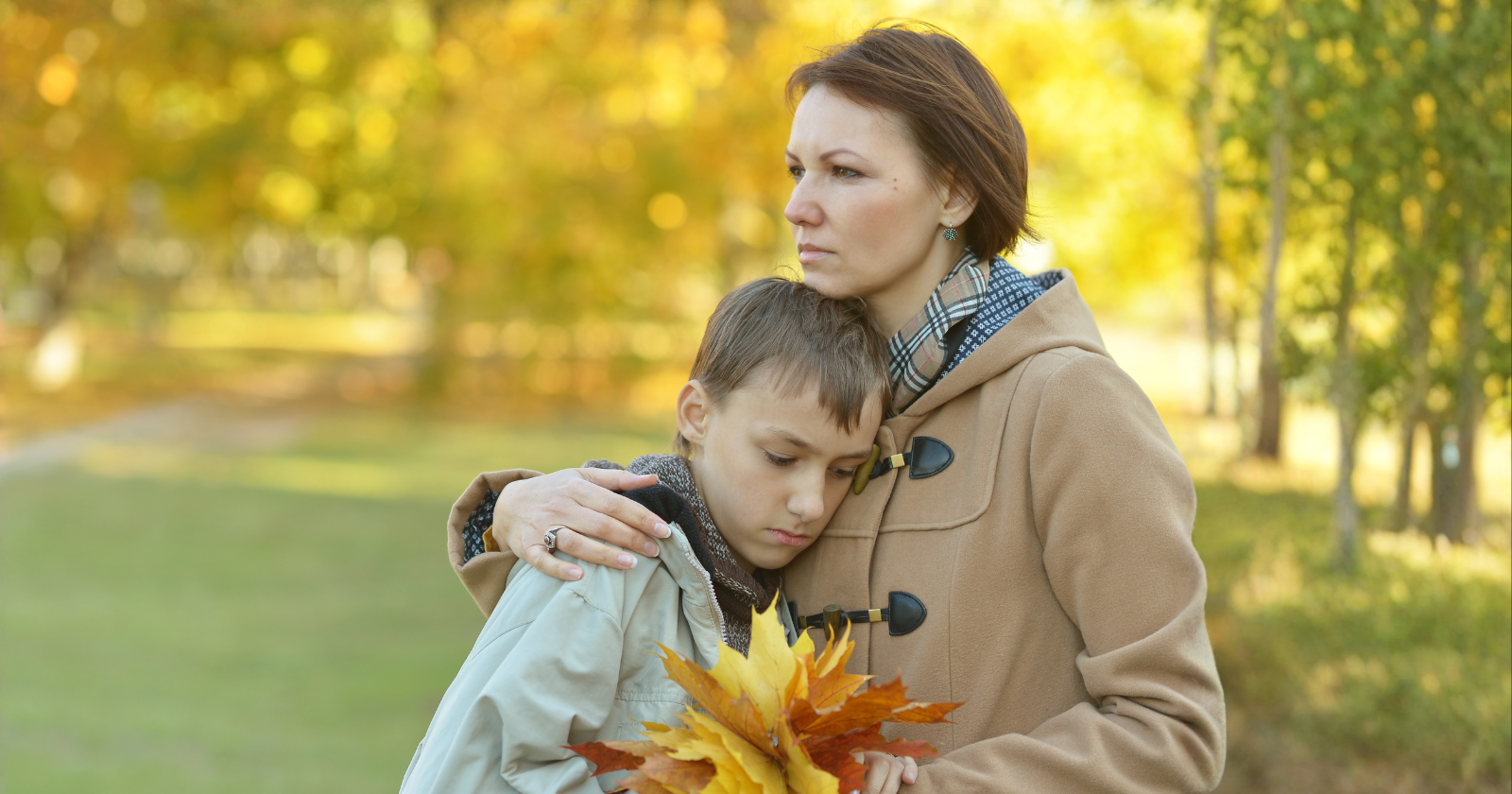
You know that moment when your child falls at the playground and looks to you with those big, watery eyes?
Last week, my two-year-old took a tumble off the bottom step of the slide. My instinct was to rush over with “You’re okay! You’re fine!” But I caught myself.
Because here’s what I’ve been learning: sometimes the phrases we think are supportive actually teach our kids that discomfort is something to immediately escape from, rather than something they can handle.
After seven years teaching kindergarten, I thought I knew all the right things to say. But now, watching my own two navigate disappointment and frustration, I’m realizing how many well-meaning phrases actually rob kids of the chance to build real resilience.
1. “You’re okay! You’re fine!”
This one tumbles out so automatically, doesn’t it? Your child scrapes their knee or gets their feelings hurt, and boom—there it is.
But when we rush to tell them they’re okay before they’ve even processed what happened, we’re essentially telling them their feelings aren’t valid.
What if they’re not okay? What if it really does hurt?
I’ve been trying something different lately. When my daughter comes to me upset, I say “Tell me what happened” or simply “I’m here.” It gives her space to actually feel what she’s feeling and decide for herself if she’s okay.
The beautiful thing? Usually, after a minute of processing, she concludes on her own that she can handle it.
2. “Don’t worry about it”
My five-year-old was anxious about show-and-tell last month. My knee-jerk response wanted to be “Don’t worry about it, sweetie!”
However, worry serves a purpose. It helps us prepare and problem-solve.
Related Stories from The Artful Parent
- Nobody prepares you for the loneliest part of parenting – the realisation that doing it well sometimes means being the person your child is furious with today so they can become the person they need to be in twenty years. Every link must be real and accurate
- Nobody talks about why the parent who cooked every meal gets less gratitude than the parent who occasionally took everyone out to dinner
- The parents who controlled everything and the parents who controlled nothing both believed they were doing the opposite of their own parents. The difference is that the children of strict homes had something to push against, and the children of permissive homes had nothing to push against at all — and a muscle that never meets resistance never develops strength.
Instead of dismissing the worry, I’ve learned to acknowledge it: “Sounds like you’re feeling nervous about talking in front of everyone.”
Then we can actually work through it together. What could help? Practice at home? Bringing a comfort object? The worry becomes a problem to solve rather than an emotion to stuff down.
3. “I’ll fix it for you”
There’s this powerful YouTube video called “Why the ‘Best’ Parents Are Raising the Most Fragile Kids” that really shifted my perspective on this one. One of the insights there that stopped me in my tracks: “Here’s the uncomfortable truth. Comfort feels like love. And love wants to remove pain…But comfort doesn’t build strength.”
Every time I jump in to fix things, whether it’s a tough puzzle, a friendship squabble, or a broken toy, I’m sending the message that discomfort equals emergency. That they need rescuing.
Now when my kids struggle with something, I try “What have you already tried?” or “What do you think might work?”
Yes, it takes longer. Yes, sometimes there are tears. But watching them figure things out on their own? That pride on their faces is worth every extra minute.
4. “You’re so brave!”
This one surprised me when I first realized its impact. We say it when they’re clearly scared, like going down the big slide or getting a shot at the doctor.
But if they’re genuinely frightened and we’re insisting they’re brave, what message does that send?
That their real feelings are wrong. That they should pretend to feel something they don’t.
I’ve switched to acknowledging what’s actually happening: “This feels scary to you” or “You did something that felt hard.” It validates their experience while still recognizing their effort.
5. “Just ignore them”
Remember dealing with mean kids at school? The standard advice was always “just ignore them.”
But here’s the thing—some situations shouldn’t be ignored. Some boundaries need to be set. Some conversations need to happen.
When we constantly tell kids to ignore problems, we teach them that discomfort should be avoided rather than addressed. Instead, I’m teaching my kindergartener to say things like “I don’t like when you do that” or “I need space right now.”
It’s messier than ignoring, sure. But it’s teaching her that she has the power to advocate for herself, even when it’s uncomfortable.
6. “Everyone’s a winner!”
Coming from teaching, I’ve seen how the “everyone gets a trophy” mentality plays out.
Look, kids know when they’ve lost. They know when someone else did better. Pretending otherwise doesn’t protect them; it just confuses them.
Last week, my daughter didn’t win the reading challenge at library story time. She was disappointed. Instead of “But you’re still a winner to me!” I went with “You’re disappointed you didn’t win. That’s a tough feeling.”
We talked about how she felt, what she learned, and what she might try next time.
Real life has winners and losers, successes and failures. If we never let kids experience that disappointment in small, safe ways, how will they handle bigger setbacks later?
7. “You need to be happy”
Have you ever noticed how uncomfortable we get when kids aren’t happy? “Come on, smile!” or “Let’s turn that frown upside down!”
The problem with this approach is that constantly pushing happiness teaches kids that other emotions are unacceptable.
My recovered-perfectionist self has had to work hard on this one. All feelings are information. Sadness tells us something matters to us. Anger tells us a boundary might have been crossed.
When we rush kids out of these feelings, we’re teaching them to ignore important internal signals.
8. “That’s not a big deal”
To us, a broken crayon or a canceled playdate might not seem significant. But minimizing what feels big to them teaches them not to trust their own emotional responses.
I’m trying to remember that their problems are scaled to their experience. To my two-year-old, that broken cookie is a genuine tragedy. Meeting him where he is—”You’re really sad about your cookie breaking”—teaches him that his feelings matter, even if the trigger seems small to me.
The path forward
Look, I’m still figuring this out daily. Sometimes the old phrases slip out before I can catch them.
These shifts feel uncomfortable at first, for us and for our kids. Sitting with their discomfort also means sitting with our own. Watching them struggle hits every protective instinct we have.
But each time we resist the urge to immediately soothe, dismiss, or fix, we’re giving them a gift: the knowledge that they can handle hard things.
The goal isn’t to make our kids uncomfortable on purpose. It’s to stop teaching them that discomfort is an emergency. Because life will bring challenges, disappointments, and failures. If they’ve learned that these feelings are survivable, even valuable, they’ll be ready.
Our words matter more than we realize. They become the internal voice our children carry forward. So maybe it’s worth pausing before we speak, asking ourselves: Am I helping them avoid this feeling, or helping them move through it?
Because the kids who learn to sit with discomfort, to problem-solve through challenges, to feel their feelings fully are the kids who grow into adults who can handle whatever life throws their way. And isn’t that what we’re really after?