

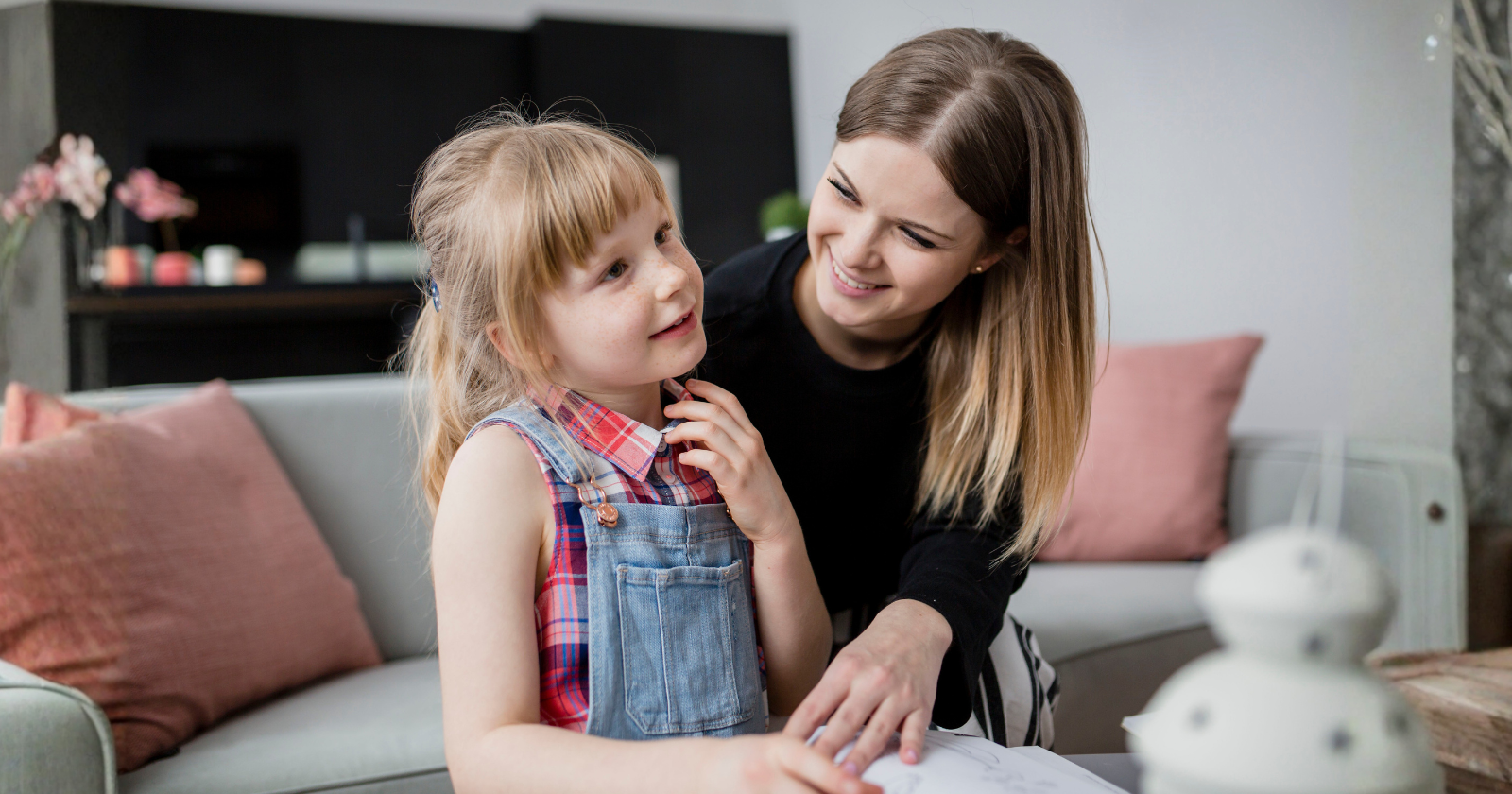
Last week at the farmers’ market, my five-year-old stopped dead in her tracks at the apple stand. “But I want the green ones AND the red ones,” she said, clutching her little cloth bag.
The vendor smiled, waiting. I could have jumped in, made the choice for her, kept the line moving. Instead, I crouched down and asked, “How many apples fit in your bag?” She counted the space with her fingers, looked at the prices, and made her choice. Two green, one red. The vendor winked at me. “Smart cookie you’ve got there.”
That moment stuck with me because it captured something I’ve been thinking about a lot lately: how do we raise kids who can think for themselves without letting chaos reign?
After seven years teaching kindergarten before having my daughter, I thought I knew all about managing little ones. But there’s something different about nurturing independence in your own children while still being the parent they need you to be.
The truth is, raising independent thinkers isn’t about stepping back completely. It’s about knowing when to guide and when to let them figure things out. Here are eight habits that have helped me strike that balance.
1. Ask questions instead of giving answers
When my daughter asks why the moon follows our car, my first instinct is to launch into an explanation about perspective and distance.
But I’ve learned to pause and ask, “What do you think?” The theories she comes up with are wild, creative, and sometimes surprisingly insightful.
This habit does more than encourage creativity. It shows her that her thoughts matter, that she’s capable of reasoning through problems. Sure, I’ll eventually guide her toward understanding, but letting her explore first builds confidence in her own thinking process. Try it with simple things: “Why do you think we need to water the plants?” or “What might happen if we leave the milk out?”
You’re still the authority with the right answers, but you’re inviting them into the thinking process.
2. Let natural consequences do the teaching
Remember being told not to touch the stove because it’s hot? Most of us learned that lesson a different way.
Natural consequences are powerful teachers, and they don’t require us to be the bad guy.
Related Stories from The Artful Parent
- 8 things your teenager is doing that look like disrespect but are actually the healthiest signs of development a parent could ask for
- The way you speak to your partner in front of your children becomes the voice they expect love to sound like—and most parents never make the connection
- 7 “small” moments from childhood that felt like nothing to the parent but became the story the child tells everyone when they describe how they grew up
Last month, my daughter insisted on wearing her princess dress to the park. I mentioned it might get dirty. She wore it anyway.
When it got muddy, she was upset, but she learned something I couldn’t have taught with words alone. Now she asks, “Will we be doing messy things?” before choosing her outfit.
This doesn’t mean letting them experience dangerous consequences. But age-appropriate natural results teach cause and effect better than any lecture. They learn to think ahead, to consider outcomes, all while you maintain your role as protector, not controller.
3. Create structured choices within boundaries
“Do you want to brush teeth first or put on pajamas first?” This simple question changed our bedtime routine from a battle to a collaboration. The bedtime isn’t negotiable, but the path there is.
Giving choices within clear boundaries teaches decision-making while respecting necessary limits. You’re still the authority setting the framework, but they’re practicing autonomy within it.
This works for everything from meal planning (“Should we have carrots or broccoli with dinner?”) to weekend activities (“Park or library this morning?”). They’re thinking, choosing, and learning that their voice matters, all while you maintain the structure they need.
- Psychology says the loneliest part of getting older isn’t being alone – it’s realizing that some friendships don’t survive the moment you stop initiating, and understanding that they were never actually held together by mutual care but by your willingness to do all the work - Global English Editing
- Psychology says the exhaustion that many people accept as a normal part of aging is frequently not about age at all. It’s a nutritional deficit that accumulated so slowly it became part of their identity before they thought to question it - Global English Editing
- Psychology says boomers who planned meticulously for retirement and still feel an inexplicable emptiness once they get there aren’t ungrateful — they optimized obsessively for the finish line and forgot, somewhere along the way, to figure out what they were actually running toward - Global English Editing
4. Model thinking out loud
Kids learn more from what we do than what we say. When I’m problem-solving, I narrate my thought process. “Hmm, we’re out of eggs for breakfast. Let me think… we could make oatmeal instead, or maybe those banana pancakes that don’t need eggs.”
This shows them that adults don’t have all the answers immediately, that thinking through problems is normal. It demonstrates that questioning and considering options is how we navigate life.
They see that being an authority doesn’t mean knowing everything instantly; it means knowing how to figure things out.
5. Encourage respectful disagreement
This one’s tough for many parents. We want respect, but we also want thinkers.
The key is teaching them how to disagree appropriately. In our house, “I don’t think that’s fair because…” is acceptable. Whining or demanding isn’t.
When my daughter disagrees with a rule, I ask her to explain why. Sometimes she makes good points that lead to compromise. Sometimes she doesn’t, but she’s heard.
She’s learning to articulate her thoughts, to build arguments, to think critically about rules and their purposes. She’s also learning that authority can be questioned respectfully and that good leaders listen.
6. Resist the urge to over-explain
I admit, this is one habit I’m truly guilty of. But watching this video really shifted my perspective on this. The speaker said something that stopped me in my tracks:
“Some lessons don’t arrive through understanding. They arrive through friction. When we explain too much, we don’t just give information. We take something away. We take away the chance to discover: ‘I can handle this.'”
How often do we rob our kids of that discovery? When my toddler struggles with a puzzle piece, my teacher brain wants to explain spatial reasoning. But watching him figure it out himself, seeing that light in his eyes when it clicks, that’s where real learning happens. Save explanations for when they’re truly stuck or when safety’s involved.
7. Build in reflection time
Every night at dinner, we share our “think about” from the day. It might be something puzzling, something that didn’t go as planned, or something we want to understand better.
This isn’t about finding solutions immediately; it’s about valuing the process of reflection.
This habit teaches them that thinking takes time, that it’s okay to sit with questions. It shows them that even adults are still figuring things out. As they grow, this becomes their internal process for handling challenges independently while knowing they can bring their thoughts to trusted authorities when needed.
8. Trust their capacity while providing scaffolding
Planning to homeschool has made me think deeply about this balance. Kids are capable of far more than we often believe, but they need support structures.
Think of it like teaching someone to ride a bike. You don’t explain the physics; you hold the seat, run alongside, and gradually let go.
Apply this to thinking skills. When they’re working through a problem, be present but not intrusive. Offer tools, not solutions. “Would it help to draw it out?” rather than “Here’s what you should do.”
You’re maintaining your authority as guide while building their independence as thinkers.
Finding your balance
Raising independent thinkers while maintaining appropriate authority isn’t about perfection. Some days I jump in too quickly with answers. Other days I let them flounder too long. The goal isn’t to get it right every time but to consistently create space for their thoughts while providing the structure they need.
What matters is the pattern we create over time. Little by little, question by question, choice by choice, we’re raising kids who can think critically, solve problems, and navigate their world confidently. They’ll know when to question, how to reason, and why thinking for themselves matters, all while respecting appropriate authority and understanding boundaries.
The beauty is, as we teach them to think, they teach us to see the world through fresh eyes. Those wild theories about the moon? Sometimes they remind me that there’s more than one way to understand the world. And that’s exactly the kind of thinking our kids will need for the future they’re growing into.
