

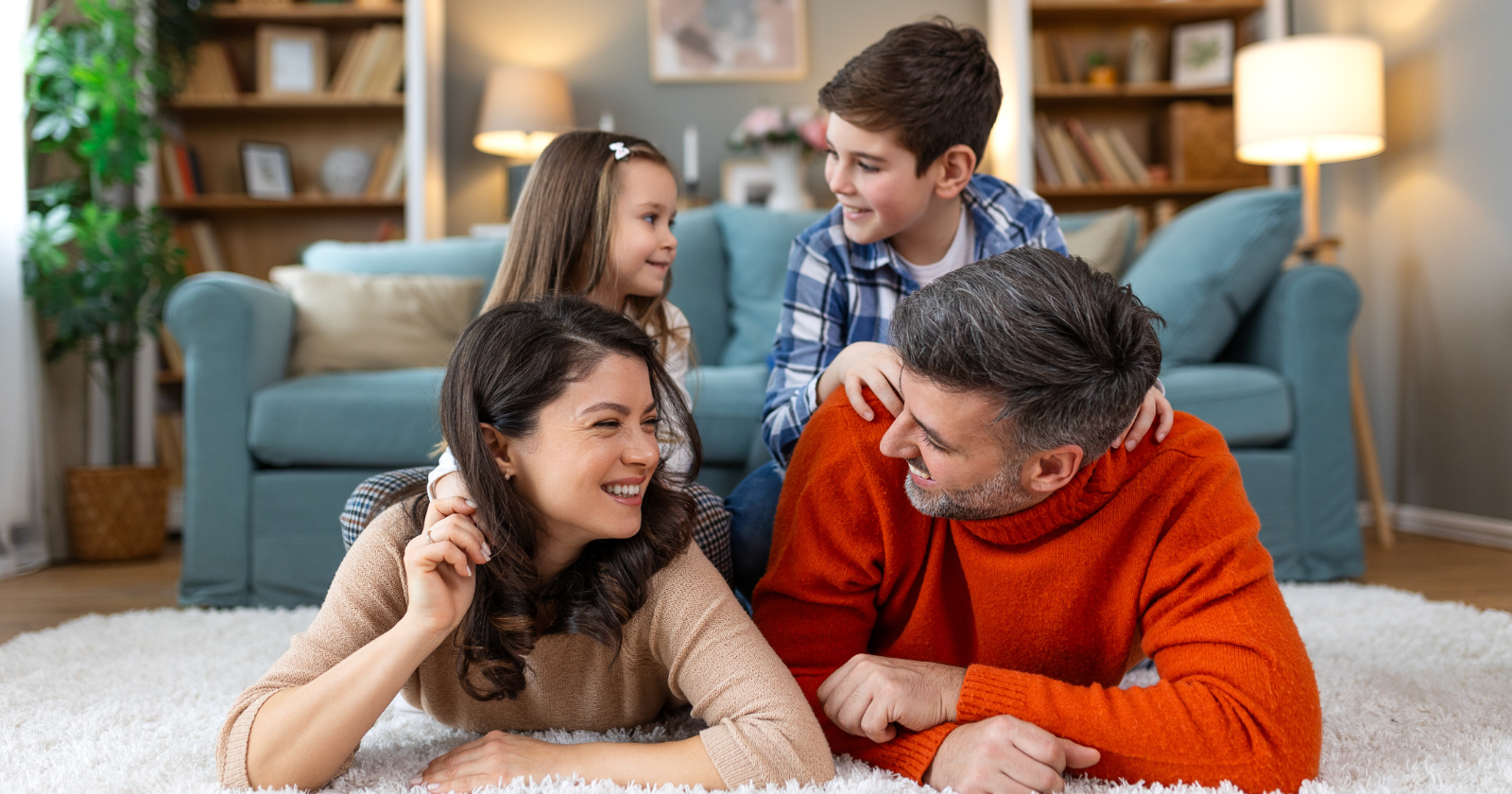
Ever notice how some homes just feel different the moment you walk in? Not because they’re perfectly decorated or spotlessly clean (trust me, mine is neither), but because there’s this underlying warmth that makes you want to kick off your shoes and stay awhile?
I used to think creating a healthy home meant having the right organic snacks in the pantry and limiting screen time. But after transitioning from teaching elementary school to being home with my kids, I’ve learned it goes so much deeper than that.
It’s about the invisible threads that connect us, the unspoken agreements we have with each other, and the small daily choices that add up to something bigger.
1. Everyone feels safe expressing their emotions
You know that feeling when you’re upset but pretend everything’s fine because it’s easier? Kids feel that too, except they haven’t mastered the art of fake smiling yet.
In a healthy home, tears aren’t met with “you’re okay, stop crying” but with “I can see you’re really upset. Want to tell me about it?”
My 2-year-old had a complete meltdown yesterday because his toast was cut into triangles instead of squares. Did it make logical sense? Nope. Did his feelings matter anyway? Absolutely.
When we validate those seemingly irrational emotions, we’re teaching our kids that all feelings are acceptable, even if all behaviors aren’t.
This doesn’t mean letting emotions run the household. It means creating space for feelings while maintaining boundaries. “You can be angry, but you can’t hit your sister” becomes the refrain, repeated approximately 847 times per day in our house.
2. Mistakes are learning opportunities, not disasters
In healthy homes, making mistakes never feels like the end of the world. Spilled milk really is just spilled milk.
For instance, when my daughter accidentally used permanent marker on our dining table (thinking it was a dry erase marker), my first instinct was frustration. But then I caught myself. What message did I want to send?
We problem-solved together, researching how to remove permanent marker from wood. Some methods worked, some didn’t, but the faint marks that remain remind me that teaching resilience matters more than having perfect furniture.
Related Stories from The Artful Parent
- The difference between people who feel successful at 70 and people who feel like they wasted their life almost always comes down to whether they spent their energy impressing strangers or deepening relationships with people who actually knew them
- I’m 37 and I watched my parents retire with everything they worked for – a paid-off house, savings, good health — and then slowly, year by year, become two people who sit in separate rooms scrolling their phones because they forgot how to be interesting to each other
- Longevity researchers found that people who live past 95 don’t share diet or exercise habits – they share something behavioral scientists call ‘sustained social usefulness,’ the feeling that someone still needs what only they can provide
When kids know mistakes won’t result in shame or harsh punishment, they’re more likely to take healthy risks, try new things, and come to you when they mess up. That open communication becomes invaluable when they’re teenagers facing bigger decisions.
3. Connection happens before correction
There’s this moment when your child is mid-tantrum or doing something they shouldn’t, and every fiber of your being wants to launch into correction mode immediately. But healthy homes prioritize connection first.
When I find my kids drawing on the walls (again), instead of immediately scolding, I might say, “Wow, you really wanted to draw something big today.”
Once they feel heard, they’re actually receptive to problem-solving. “Where could we draw big pictures that won’t damage the walls?”
This approach takes more time initially but saves countless power struggles down the road. Kids who feel connected are kids who want to cooperate. It’s not permissive parenting; it’s strategic relationship building.
4. Everyone contributes to the family team
A healthy home isn’t run by parents while kids simply exist in it. Everyone contributes in age-appropriate ways.
In our family, my 5-year-old sets the table (usually forgetting spoons), while the 2-year-old “helps” by carrying napkins one at a time from the kitchen to dining room, taking approximately seventeen trips.
Obviously, it’s faster to do everything myself. But when kids contribute, they develop competence and feel like valued team members.
Plus, there’s something beautiful about a child beaming with pride because they helped make dinner, even if “helping” meant stirring the pot three times and eating half the cheese.
5. There’s rhythm without rigidity
Healthy homes have predictable rhythms that create security without becoming prisons of routine. We have general meal times, a bedtime flow, and regular family activities, but we’re not slaves to the schedule.
Sometimes dinner happens at 5:30, sometimes at 7:00 because we were having too much fun at the park. Bedtime stories might stretch longer on hard days when extra connection is needed.
The rhythm provides stability while flexibility shows kids that people matter more than schedules.
6. Joy and laughter are regular visitors
When was the last time your family had a genuine belly laugh together? In healthy homes, silliness isn’t just tolerated; it’s celebrated.
Dance parties while cleaning up toys, ridiculous voices during story time, and spontaneous games of hide-and-seek after dinner.
Yesterday, we spent twenty minutes pretending the floor was lava, leaping from couch to ottoman while shrieking with delight. The dishes waited. The laundry waited.
But those moments of pure joy are building the foundation of childhood memories and family bonds.
7. Rest and downtime are protected
Our culture glorifies busy, but healthy homes recognize that rest isn’t laziness; it’s necessary.
This means saying no to activities that would overload the schedule, protecting weekend mornings for pajamas and pancakes, and teaching kids that boredom often sparks creativity.
We have quiet time every afternoon. The youngest naps while my daughter plays quietly or looks at books. Sometimes I use this time productively, but often I just sit with a cup of tea, staring out the window.
This deliberate slowing down helps everyone reset and prevents the constant overwhelm that plagues so many families.
8. Authentic connection trumps perfect parenting
Every evening, my husband and I have this check-in: “How was your day really?” Not the surface stuff, but the real underneath parts.
This authentic connection extends to our kids too. We share our struggles in age-appropriate ways, apologize when we mess up, and show them that adults are still learning and growing.
Healthy homes aren’t built by perfect parents but by real humans doing their best, acknowledging their limitations, and choosing connection over perfection repeatedly.
Creating your own healthy home
Here’s what I know for sure: healthy homes aren’t created overnight, and they definitely don’t look the same for every family. Mine is usually messy, occasionally loud, and never quite matches the peaceful family scenes I imagined before having kids.
But it’s real. It’s warm. It’s a place where feelings matter, mistakes are survivable, and everyone belongs exactly as they are. That’s worth more than all the Pinterest-perfect playrooms and color-coordinated schedules in the world.
What would change in your home if you picked just one of these elements to focus on this week? Start there. Small shifts create big changes over time, and before you know it, you’ll have the kind of home where everyone exhales a little deeper when they walk through the door.
