
I was folding laundry the other day when Ellie came running in, breathless and muddy, clutching a handful of dandelions she’d picked from our backyard.
“Mama, look! I found the biggest one ever!” she announced, her face lit up like she’d discovered buried treasure.
It got me thinking about my own childhood — those endless summer afternoons helping my mom in the garden, the way my dad would let me “help” him fix things even though I probably slowed him down. Simple moments that didn’t cost anything but somehow meant everything.
The truth is, I think a lot of kids today are missing out on these kinds of experiences. Not because parents don’t care, but because somewhere along the way, we’ve convinced ourselves that childhood needs to be more complicated than it actually does.
If your parents did these activities with you growing up, consider yourself lucky. You had something many kids today are desperately craving — real connection, unhurried time, and the freedom to just be.
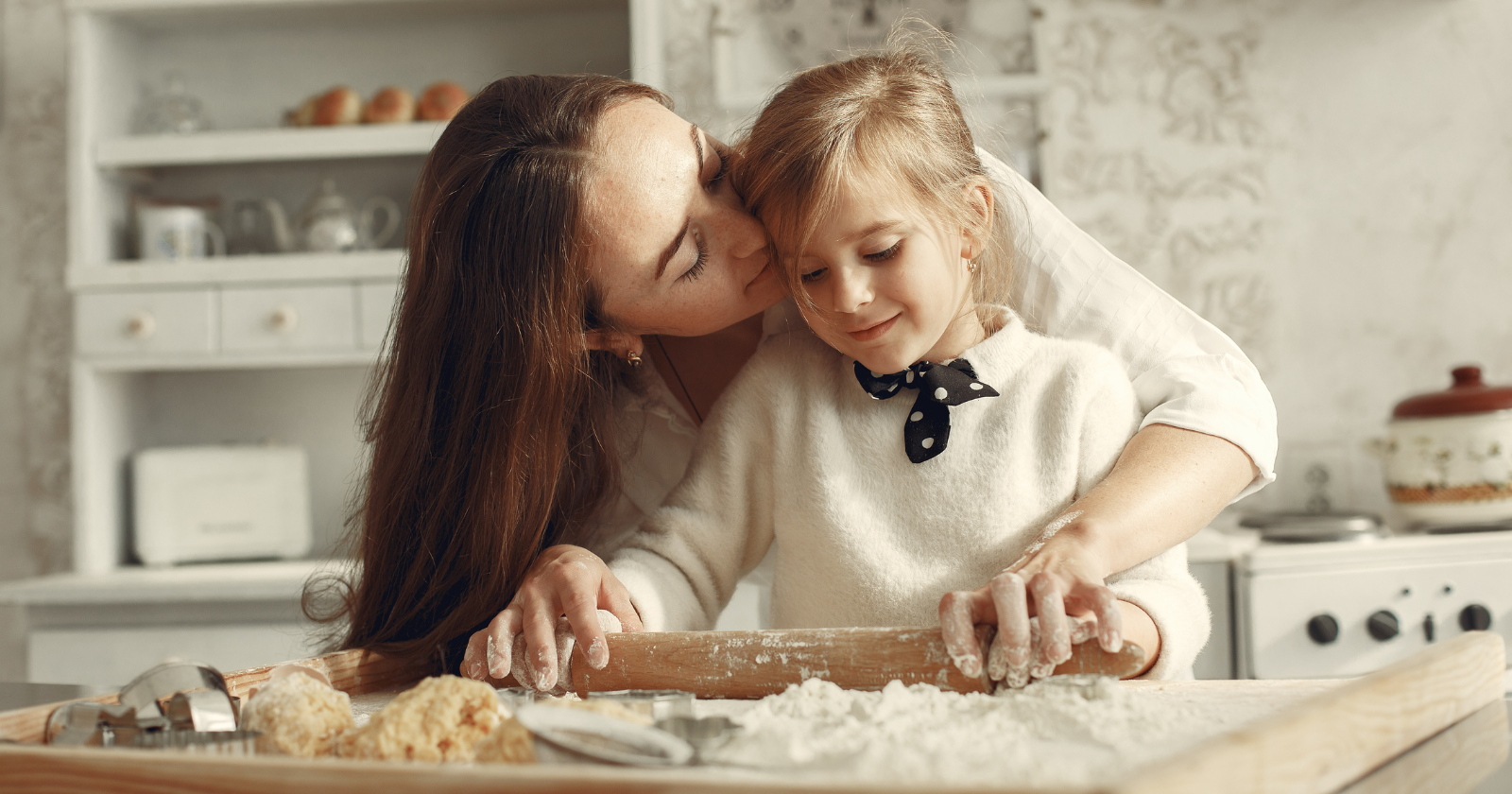
1) They cooked meals with you in the kitchen
Remember standing on a chair at the counter, flour everywhere, learning to crack eggs without getting shells in the bowl?
My mom always let me help with dinner, even when it would’ve been faster to do it herself. I’d measure ingredients (badly), stir things (messily), and feel like I was contributing something important to our family.
Now I do the same with my kids. Sure, it takes three times as long and the kitchen looks like a disaster zone afterward, but those moments are everything.
Kids who cooked with their parents learned so much more than just how to follow a recipe. They learned patience, measurements, how ingredients transform. They learned that mistakes happen and you can usually fix them. They learned that feeding people is an act of love.
As noted by child development experts, cooking with children builds confidence and teaches essential life skills that go far beyond the kitchen.
Today, with schedules packed and takeout so convenient, fewer families are cooking together regularly. But those kids who grew up as kitchen helpers? They learned something invaluable about slowing down and creating together.
Related Stories from The Artful Parent
- We chose the wrong dog for our family and spent three years learning why breed matters more than most people admit — here’s what I wish someone had told us before we fell in love at the shelter
- Grandparents who build unbreakable bonds with their grandchildren are giving that child something the parents structurally cannot — love with no agenda, attention with no schedule, and the specific unhurried quality of a person who has finally run out of reasons to be anywhere else
- I’m 35 and I just realized my parents weren’t the moral anchors I built my entire value system around — they were just two people who got really good at performing certainty while making it up as they went along
2) They let you get bored
This one might sound strange, but hear me out.
If your parents didn’t rush to entertain you every second of every day, they gave you a gift. Because boredom is where creativity lives.
I remember long stretches of summer where I had nothing scheduled, no screens to stare at, just time. And you know what happened? I built forts. I invented games. I spent hours arranging my collection of rocks and leaves into elaborate patterns.
My parents didn’t feel guilty about my boredom. They just said “go find something to do,” and somehow, I always did.
Now I try to create that same space for my kids, even though it goes against every modern parenting instinct. When I hear “I’m bored,” I resist the urge to immediately suggest an activity or hand over a device.
The most amazing creations happen in our house when I step back and let boredom work its magic. No tutorial, no instructions, just pure imagination taking over.
Kids today are so overscheduled and over-entertained that they’ve forgotten how to generate their own fun. But the ones who are allowed to be bored become the problem-solvers and creative thinkers.
3) They spent unstructured time outside with you
My dad used to take us on “exploring walks” where we’d wander through the woods behind our house with no particular destination. We’d flip over logs to see what was underneath, collect interesting sticks, watch birds.
There was no goal, no lesson plan, no educational objective. We were just outside, noticing things.
Matt and I make this a priority with our kids too. Every morning, weather permitting, we’re outside. Sometimes it’s the backyard, sometimes the park, sometimes just wandering our neighborhood looking at trees and gardens.
There’s something magical about letting kids lead the way on these walks. They notice things adults rush past, like the ant carrying something twice its size, the interesting pattern on tree bark, or the way light filters through leaves.
The research backs this up too. Childhood development experts say that unstructured outdoor play supports children’s cognitive, physical, social, and emotional development in ways that structured activities simply can’t replicate.
But how many kids today get regular, unstructured outdoor time? Between safety fears, busy schedules, and the pull of screens, nature time has become a luxury rather than a given.
4) They read aloud to you regularly
Not just at bedtime, though that counts too. But actual dedicated time where reading together was the main event.
My mom would read to us every afternoon after school. We’d pile onto the couch with blankets and she’d read chapter books way above our reading level. I remember getting completely lost in those stories.
Now this is my favorite part of the day. We have a basket of library books that we rotate through, and there’s something special about that close, focused time together where nothing else matters but the story.
Reading together does something screens can’t. It slows us down. It requires us to be close, physically touching. It opens up conversations about big ideas in safe, story-shaped ways.
Kids who were read to regularly learned that books were portals to other worlds. They developed longer attention spans. They heard rich vocabulary used in context. They associated reading with warmth and connection rather than obligation.
And in all probability, they had better relationships with their parents because of all that close, focused time together.
5) They included you in household tasks
I’m not talking about harsh chores or child labor. I mean those moments when parents let you participate in the real work of running a household.
For instance, my mom taught me to fold towels, sort laundry, set the table. My dad showed me how to change a lightbulb, plant seeds in the garden, put air in bicycle tires.
Were my contributions actually helpful? Probably not at first. But I felt capable. I felt needed. I learned that everyone contributes to making a home function.
The same principle applies in our house now. Little hands can help unload groceries, water plants, set out napkins. The point isn’t perfection. It’s participation.
6) They had meals together at the table
No phones, no TV in the background, just people and food and conversation.
My family ate dinner together every single night. It was non-negotiable. The food wasn’t always fancy (in fact, often it was pretty basic) but we were together.
Those dinners taught me how to have a conversation. How to listen. How to share about my day and ask about others’. How to sit still for twenty minutes and be present.
Matt and I protect family dinner time fiercely. It’s usually around six, right after he gets home from work. Some nights it’s elaborate, some nights it’s scrambled eggs and toast. Doesn’t matter.
What matters is we’re together, talking and connecting.
The Family Dinner Project notes that regular family meals are linked to lower rates of substance abuse, teen pregnancy, and depression, while improving grades and vocabulary.
But beyond the statistics, family meals create a rhythm. They’re an anchor point in the day when everyone reconvenes and reconnects.
Kids who had regular family meals learned that they mattered enough for their family to show up for them every day. They learned conversation skills, table manners, and how to be part of something bigger than themselves.
7) They let you help fix and build things
My dad was always fixing something — a leaky faucet, a squeaky door, a broken toy. And he’d let me stand there with him, handing him tools and asking endless questions.
I wasn’t particularly handy, but I learned that when things break, you try to fix them. You don’t just throw them away and buy new ones.
Matt does this with our kids now. There’s always a project happening in his workshop, and little helpers are always welcome, even if it’s just holding a screwdriver and chattering away while he works.
There’s something powerful about creating or repairing with your hands, especially for kids growing up in such a digital world.
Those kids who helped their parents fix and build things learned resourcefulness. They learned that they could shape their physical environment. They learned that mistakes and failures are just part of the process.
And maybe most importantly, they learned that their presence and participation were valued, even when their actual contribution was minimal.
8) They celebrated ordinary moments
Not every childhood memory needs to be a big vacation or birthday party. Sometimes the richest moments are the smallest ones.
I remember my mom making a big deal when the first tomatoes ripened in our garden, or when we spotted a particularly beautiful sunset, or when someone learned something new.
She had a way of making ordinary things feel special just by pausing to notice and appreciate them.
I try to bring that same energy to our family life. When someone brings me their latest creation or accomplishes something new, we celebrate. Not with rewards or bribes, just with genuine enthusiasm and recognition.
Last week we had an impromptu dance party in the kitchen while making dinner because a song we all loved came on. Was it silly? Absolutely. Will anyone remember it specifically? Maybe not, but they’ll remember the feeling.
Kids who had parents who celebrated ordinary moments learned that life doesn’t have to be extraordinary to be worth savoring. They learned presence and gratitude. They learned that joy can be found in the everyday if you’re paying attention.
Conclusion
Looking back at these activities, what strikes me most is how simple they all are. None of them cost money. None require special equipment or expertise. They just require time, presence, and the willingness to include kids in the regular rhythms of life.
I think that’s what made childhoods richer back then, not that everything was perfect or easier, but that kids were woven into the fabric of family life in a different way.
They weren’t constantly entertained or shuttled between activities. They were just there, participating, learning, connecting.
And here’s what I keep coming back to as I raise my own kids: we can still choose this.
Even in our busy, complicated modern world, we can slow down enough to cook together, read together, be outside together. We can let our kids be bored sometimes. We can celebrate ordinary moments.
It won’t look exactly like our childhoods did, and that’s okay. But we can give our kids what really matters: our presence, our time, and the message that they belong right here, in the middle of regular life, with us.
That’s the real gift. Not perfection, not constant stimulation, not a packed schedule of activities. Just connection, participation, and the freedom to grow at their own pace.
And honestly, that’s exactly what childhood should be.