

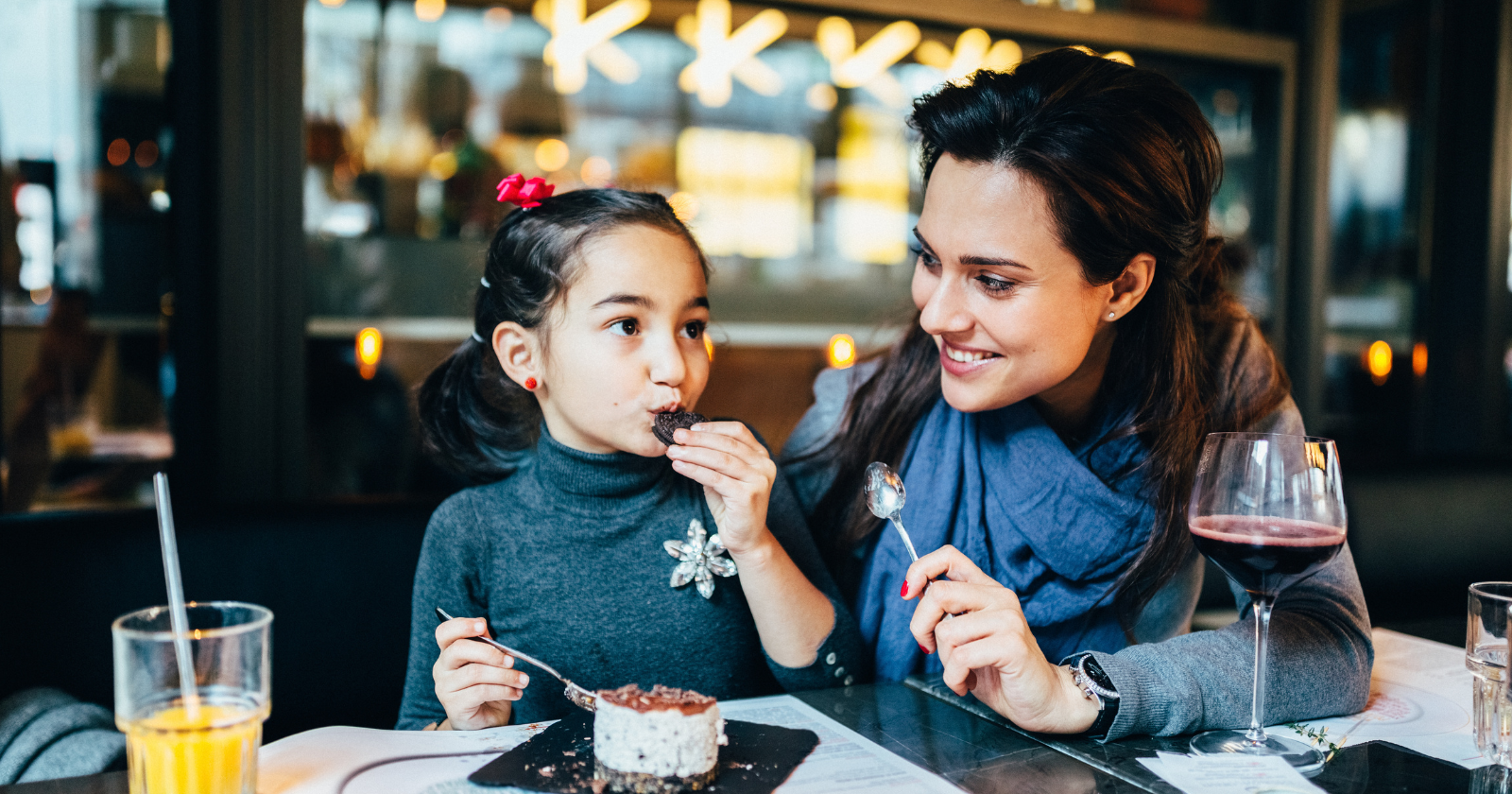
Last week, I took my two little ones to a local farm-to-table restaurant, the kind with real tablecloths and actual breakable dishes. As we waited for our food, I watched my 5-year-old carefully unfold her napkin and place it on her lap while my 2-year-old sat (mostly) still, coloring on the paper menu they’d given him.
A couple at the next table caught my eye and smiled. “Your children are so well-behaved,” the woman said. “You don’t see that much anymore.”
I thanked her, but honestly? It got me thinking. What exactly makes some kids stand out in restaurants while others… don’t? After years of teaching elementary school and now raising my own kids, I’ve noticed certain behaviors that really do separate children who’ve been taught real standards from those who haven’t.
These aren’t about perfection or turning kids into tiny robots. Trust me, we’ve had our share of spilled milk and dropped forks. But there are specific behaviors that show a child has been raised with thoughtful boundaries and expectations.
1) They greet the server
When our server approaches, I watch my daughter look up, make eye contact, and say “hi” back when greeted. Even my toddler waves and attempts his version of hello. This might seem small, but acknowledging service staff as actual humans? That’s huge.
Kids who’ve been taught real standards understand that everyone deserves basic courtesy, whether they’re bringing your food or running the company. If a child can’t acknowledge the person taking their order, what message have they internalized about who “matters” in this world?
I always remind my kids: the person bringing our food is working hard to help us have a nice meal. The least we can do is treat them kindly.
2) They stay seated during the meal
Does this mean they never wiggle? Of course not. My son is two, after all. But children with real standards understand that restaurants aren’t playgrounds. They stay in their seats rather than wandering between tables or running laps around the dining room.
This isn’t about suppressing their energy. It’s about teaching them that different spaces have different expectations. Just like we use indoor voices in the library and walking feet in the house, we stay seated at restaurants.
Kids who grasp this concept show they can adapt their behavior to their environment, which is a crucial life skill.
3) They use indoor voices
Have you ever been at a restaurant where kids are literally screaming their conversations? Not crying (that happens), but just… yelling because they can?
Children raised with standards understand volume control. They might get excited telling a story, sure, but when reminded to lower their voice, they actually do it. They’ve learned that their fun shouldn’t ruin everyone else’s meal.
Teaching this starts at home. We practice “restaurant voices” during regular dinners, making it a game to see who can tell the most exciting story while keeping their voice calm. By the time we’re actually at a restaurant, they know what’s expected.
4) They say please and thank you
“Can I have the mac and cheese, please?”
“Thank you for the crayons!”
These simple phrases reveal so much about how a child is being raised. Kids who consistently use please and thank you without constant prompting have internalized gratitude and politeness. Their parents haven’t just taught them to parrot magic words; they’ve modeled appreciation in daily life.
What really stands out? When kids thank the busser clearing plates or the host who seated them. That shows they’re not just performing politeness for their parents’ approval but genuinely understand courtesy.
- There’s always one person in the friend group nobody actually likes—here are 6 signs it might be you - Global English Editing
- I’m 73 and my relationship with my son is better now than it’s ever been — and it only happened because I finally stopped treating him like my child and started treating him like a person I genuinely wanted to know - Global English Editing
- I told my adult son I was proud of him for the first time at 65 — not because I never felt it but because my generation was never taught that saying it out loud was part of the job and the look on his face told me I should’ve said it 30 years ago - Global English Editing
5) They handle waiting without screens
Okay, this one might ruffle feathers, but hear me out. Children who can wait for food without immediately needing a tablet or phone show remarkable self-regulation. They might color, play simple games with their parents, or just… talk.
I’m not militant about screens. There are times when they’re helpful tools. But kids who absolutely cannot function in a restaurant without digital entertainment haven’t learned to tolerate boredom or engage with their surroundings.
My kids and I play “I spy” or make up stories about other diners (quietly, of course). Sometimes we just chat about our day. These moments of connection matter more than keeping them occupied at any cost.
6) They try new foods (or politely decline)
Watch how a child reacts when presented with unfamiliar food. Do they shriek “EWWW, GROSS!” or do they either give it a taste or say, “No thank you, I’ll stick with my chicken”?
Children with real standards have learned that food rejection doesn’t need to be dramatic. Even my picky eater knows how to decline politely. We’ve taught them that someone prepared this food with care, and even if it’s not their favorite, we don’t insult it.
The trying part matters too. Kids who’ll at least taste something new show they’ve been encouraged to step outside their comfort zone in safe, low-stakes ways.
7) They clean up their space
No, I don’t expect toddlers to bus their own tables. But children raised with standards make some effort not to destroy their eating area. They use napkins. They try to keep food on plates. When something spills, they help clean it up or at least acknowledge the mess.
I’ve seen kids deliberately throw food on the floor while parents ignore it, leaving disaster zones for staff to handle. Meanwhile, children with real standards might still drop things (they’re kids!), but there’s an attempt at consideration.
My daughter will pick up dropped napkins. My son hands me the fork he flung across the table. Small gestures, big character lessons.
8) They show patience when things go wrong
The kitchen mixed up the order. The food is taking forever. They’re out of chocolate milk.
How a child handles restaurant disappointments reveals everything about their emotional education. Do they melt down immediately, or can they express frustration appropriately and move on? Can they understand that mistakes happen and the world doesn’t revolve around their preferences?
Kids with real standards have learned emotional regulation. They might feel disappointed, but they can work through it without ruining everyone’s meal. They’ve been taught that flexibility and grace matter more than getting exactly what you want every time.
Raising kids with real standards
Here’s what I want you to remember: none of this happens overnight. My kids aren’t perfect, and neither am I. We’ve left restaurants mid-meal when things went sideways. We’ve dealt with tantrums and spills and all the messy realities of raising small humans.
But consistently teaching these standards at home makes restaurant visits so much more pleasant for everyone. It starts with family dinners where we practice conversation, taking turns, and basic table manners. It continues with age-appropriate expectations and gentle corrections. Most importantly, it requires us to model the behavior we want to see.
These eight behaviors aren’t about creating perfectly behaved robots or impressing strangers. They’re about raising children who understand consideration, can adapt to social situations, and will grow into adults others want to be around. When we teach real standards, we’re giving our kids tools for life, not just rules for restaurants.
