Growing up, I never really paid attention to how my dad parked his car. It was just one of those things that happened every day around 5:30 pm. The garage door would rumble open, and there he’d be, carefully backing his sedan into our driveway.
Every. Single. Day.
As a kid, I thought it was weird. All my friends’ parents just pulled straight in. When I asked him about it once, he mumbled something about “being ready for the morning” and went back to reading his newspaper.
It wasn’t until last week, sitting in my own driveway in Los Angeles, that it finally clicked. I was watching my neighbor struggle to back out while his teenage daughter waited impatiently in her car behind him. And suddenly, I understood.
My father wasn’t thinking about his own convenience. He was thinking about ours.
The psychology of putting others first
There’s something profound about the small, daily choices we make that reveal who we really are. Behavioral scientists call these “micro-decisions” – tiny acts that, when repeated over time, form the architecture of our character.
My dad’s parking habit wasn’t just about parking. It was about a mindset. Every evening, he’d take those extra 30 seconds to back in so that my mom could pull out easily for her morning shift at the hospital. So my siblings and I could get to school without delay. So nobody had to wait for him.
Think about the people in your life who consistently make these kinds of choices. The colleague who always refills the coffee pot. The friend who texts to make sure you got home safe. These aren’t grand gestures. They’re barely noticeable most of the time.
But they matter.
I’ve been reading a lot about decision fatigue lately, and there’s fascinating research showing that people who structure their lives around service to others actually report higher levels of life satisfaction. It sounds counterintuitive in our “self-care first” culture, but the data doesn’t lie.
When consideration becomes character
My father worked in construction management for thirty years. Long days, tough crews, endless problems to solve. But he never brought that stress home in obvious ways. Instead, it showed up in how he organized his life around making things easier for everyone else.
Related Stories from The Artful Parent
- There are three stages to your mother’s handwriting on birthday cards — first it’s perfect cursive, then it gets a little shaky, then one year someone else signs her name and you keep that card in a drawer forever
- Research says people who had complicated relationships with their fathers grieve harder, not easier, than the ones who had healthy ones — because uncomplicated love produces uncomplicated grief, and the grief that carries unfinished business has nowhere to deliver it and no one left to receive it
- I finally understand why my father never talked about his accomplishments — it wasn’t because he lacked pride, it was because his generation understood that character doesn’t need an audience
The backed-in car was just one example. He’d wake up early on Saturdays to mow the lawn before anyone else was awake, so we could enjoy the yard without the noise. He’d fill up my mom’s gas tank on Sunday evenings. He’d leave Post-it notes on the steering wheel if he noticed someone’s tire pressure was low.
These weren’t acts of a martyr or someone seeking recognition. Half the time, we didn’t even know he’d done them. They were the habits of someone who’d internalized a simple truth: taking care of people is what gives life meaning.
I remember being frustrated by this as a teenager. Why didn’t he ever put himself first? Why was he always thinking about what everyone else needed?
Now, at 44, I get it. There’s a quiet power in being the person who makes life flow more smoothly for others. Not in a codependent way, but in a way that acknowledges we’re all in this together.
The invisible infrastructure of love
Have you ever noticed how the best relationships often run on these invisible rails of consideration? The partner who starts the coffee before you wake up. The parent who packs lunches the night before. The roommate who takes out the trash without being asked.
These acts create what I call an “infrastructure of love” – a foundation that makes everything else possible.
- People who attract the most devoted blog readers write for one specific person — never for a crowd - The Blog Herald
- 7 types of comments that matter (and why most bloggers ignore them) - The Blog Herald
- The loneliest realization for bloggers isn’t that nobody reads their work — it’s discovering they chose a niche where even excellent content can’t overcome structural problems like low search intent, no monetization pathways, or audiences that don’t form communities - The Blog Herald
My dad’s reversed parking was part of this infrastructure. It said: “I’m thinking about you even when you’re not here. Your morning matters to me. Your convenience is worth my time.”
In our rush to optimize everything for maximum personal efficiency, we sometimes forget that relationships aren’t built on efficiency. They’re built on these small surrenders of convenience.
I’ve mentioned this before, but during a trip to Japan a few years back, I was struck by how this principle seemed embedded in the culture. People would stand to one side on escalators. They’d wait for everyone to exit before boarding trains. Small acts, but they created a sense of collective ease that was palpable.
Learning to back in
Last month, I started backing into my own driveway. It felt awkward at first. My neighbors probably thought I’d lost it, doing a three-point turn every evening just to park.
But something interesting happened. My partner mentioned how much easier her mornings had become. She could just hop in and go, especially on those rushed mornings when she was running late for her yoga class.
That small comment made me realize how many opportunities we have every day to make these kinds of choices. To think ahead about how our actions affect others. To build our own infrastructure of consideration.
It doesn’t have to be parking. Maybe it’s restocking the printer paper at work before it runs out. Maybe it’s scheduling meetings for times that work for everyone, not just you. Maybe it’s simply asking, “What would make your day easier?” and actually listening to the answer.
The research on prosocial behavior is clear: people who regularly engage in these small acts of service report feeling more connected, more purposeful, and yes, happier than those who don’t.
The long game of character
My father passed away three years ago. At his memorial, person after person stood up to share stories. Not one of them was about his professional achievements or material success.
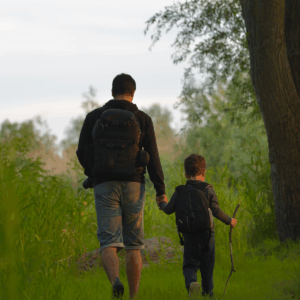
They talked about how he’d helped them move on a rainy Saturday. How he’d taught them to change their oil. How he’d always been there, steady and reliable, making life a little easier for everyone around him.
One of his former coworkers mentioned the parking thing specifically. Apparently, Dad did it at work too. For twenty years, he’d backed into his spot at the construction site so the guys could get their trucks out easier at the end of the day.
“That was just him,” the guy said. “Always thinking three steps ahead about how to help.”
Wrapping up
These days, when I back into my driveway, I think about my dad. Not with sadness, but with gratitude for the lesson he taught without ever really teaching it.
Success isn’t just about getting ahead. Sometimes it’s about making sure everyone else can get out first.
The world tells us to optimize for ourselves, to put our own oxygen mask on first, to practice radical self-care. And sure, there’s value in that. But there’s also value in being the person who thinks about the morning rush while parking in the evening. Who considers the ripple effects of their small decisions.
Because in the end, how we park our cars might just be a metaphor for how we live our lives. And I’m finally understanding that backing in, taking that extra moment to set things up for others, isn’t a sacrifice.
It’s an investment in the kind of person we want to be and the kind of world we want to live in.