

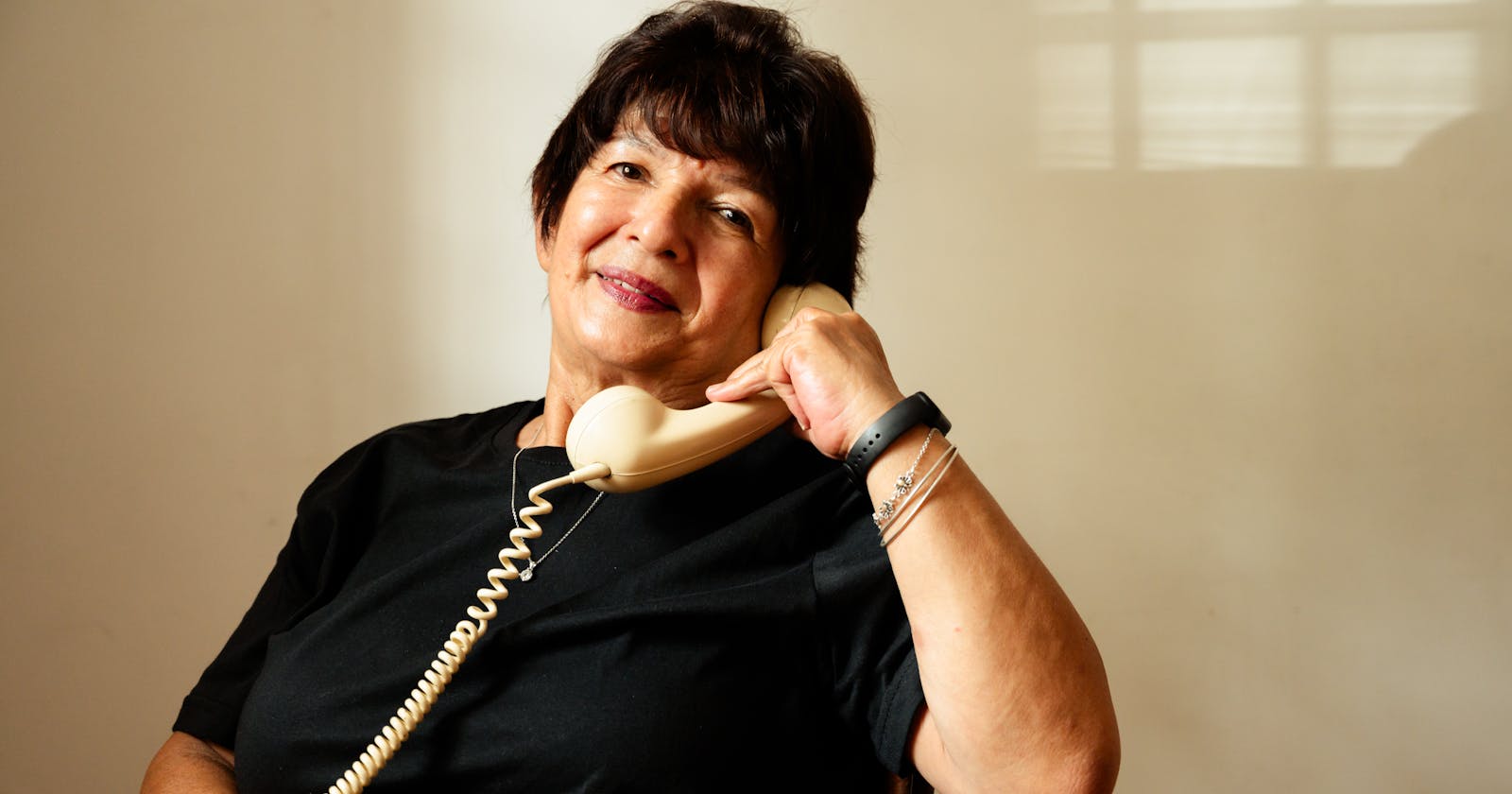
Every Sunday at 2 PM, my phone rings. Without looking, I know who it is. My grandmother, calling from her small apartment where she’s lived alone for the past eight years since my grandfather passed. Sometimes I answer. Sometimes I don’t. And when I don’t, she calls again ten minutes later.
Last month, I finally understood something that had been staring me in the face for years. After missing three of her calls in a row (I was deep in a photography project), I listened to her voicemail. “Just calling to see how you’re doing, honey. I made that lentil soup you like. Call me back when you can.”
That’s when it hit me. She wasn’t just calling because she was lonely. She was calling because loving us is what she knows how to do, and phone calls are one of the few ways she has left to express it.
Love needs somewhere to go
Think about it. My grandmother spent forty years actively loving people through daily acts of service. She raised four kids on a teacher’s salary, somehow managing to pack lunches, attend every school play, and still have dinner on the table by six. Every Saturday morning, even now at 78, she volunteers at the local food bank because “people need to eat.”
Her entire identity was built around caring for others through action. Through doing.
But what happens when the kids grow up? When they move across the country? When Sunday dinners become once-a-year visits?
The love doesn’t disappear. It just loses its usual outlets.
Have you ever felt energy with nowhere to direct it? That restless feeling when you’re used to being busy and suddenly you’re not? Imagine that, but with love. Decades of practiced, habitual, daily love suddenly hitting a wall.
The language we forget how to speak
I remember reading about how our brains form neural pathways based on repeated behaviors. The more we do something, the stronger those pathways become. My grandmother has superhighways in her brain dedicated to expressing love through action.
When she calls, she’s not trying to bother anyone. She’s speaking the only language she’s fluent in.
A few years ago, I had what I call my “crisis moment” at Thanksgiving. I’d recently gone vegan, and when I politely declined her famous green bean casserole, she actually cried. Not dramatic tears, just quiet ones that she tried to hide by busying herself with clearing plates.
Related Stories from The Artful Parent
- The hardest lesson of parenthood doesn’t arrive when your children are small, it arrives when they’re grown and you hear yourself described through their memories — because the parent you thought you were and the parent they experienced are almost never the same person, and sitting with that gap is the real work of later life
- Cognitive scientists say the single best predictor of a child’s long-term creativity isn’t talent or encouragement — it’s whether they regularly watched an adult struggle with something difficult and keep going anyway
- Adult children who rarely visit their parents aren’t necessarily selfish or ungrateful — they’re often recreating the exact relationship dynamic their parents modeled, where love meant providing things instead of sharing presence
I thought she was being overly sensitive. I now realize I was rejecting more than food. I was rejecting her primary form of communication.
You know what she does now? She makes one vegan side dish every holiday, just for me. She calls it “that weird quinoa thing you eat,” but she makes it. Because that’s how she says “I love you.”
The phone calls aren’t about loneliness
Sure, loneliness might be part of it. But reducing her calls to simple loneliness misses the deeper truth.
When she calls to tell me about her neighbor’s new cat, or to ask if I’ve been eating enough vegetables (the irony isn’t lost on me), or to share that eggs are on sale at the grocery store, she’s not really talking about cats or vegetables or eggs.
She’s maintaining the only connection she knows how to maintain.
I’ve mentioned this before, but behavioral psychology teaches us that humans are creatures of habit. We don’t just stop being who we are because circumstances change. My grandmother has been a caregiver for sixty years. Those instincts don’t just evaporate because there’s no one left in her daily orbit to care for.
When she drove six hours to bring me soup during college because I mentioned having the flu during our weekly call? That wasn’t helicopter grandparenting. That was her love finally finding an outlet, a purpose, a direction.
What we miss when we don’t pick up
Every unanswered call is a small rejection of that love. Not intentionally, of course. We’re busy. We’ll call back later. We forget.
But imagine having all this love, this care, this desire to nurture, and repeatedly finding closed doors. It’s like being a musician in a world that’s suddenly gone deaf.
The saddest part? Many grandmothers adapt by calling less. They internalize the message that their love is inconvenient. They apologize for “bothering” us. They preface every call with “I know you’re busy, but…”
When did love become something to apologize for?
Reframing the story
So how do we change this narrative?
First, recognize the calls for what they are. Not interruptions, but love looking for a place to land. When you understand this, answering becomes less of a chore and more of an opportunity to receive something precious.
Second, give that love something to do. Ask for her advice on something. Let her know you’re sick (she’ll have remedies). Tell her you’re thinking about buying a new couch (she’ll have opinions). Give her love a job.
Third, create new outlets. Maybe she can’t cook for you daily, but could she share her recipes? Could she teach you over video call? Could you start a weekly tradition where you cook “together” over the phone?
Wrapping up
Next time your grandmother calls and you’re tempted to let it go to voicemail, remember this: She’s not calling because she has nothing better to do. She’s calling because loving you is what she does best, and the phone is one of the few tools she has left.
Answer the call. Let her tell you about the weather. Let her ask if you’re wearing a jacket. Let her remind you to check your tire pressure.
Let her love you in the only way she knows how.
Because one day, your phone won’t ring at 2 PM on Sunday. And I promise you, the silence will be deafening.
