

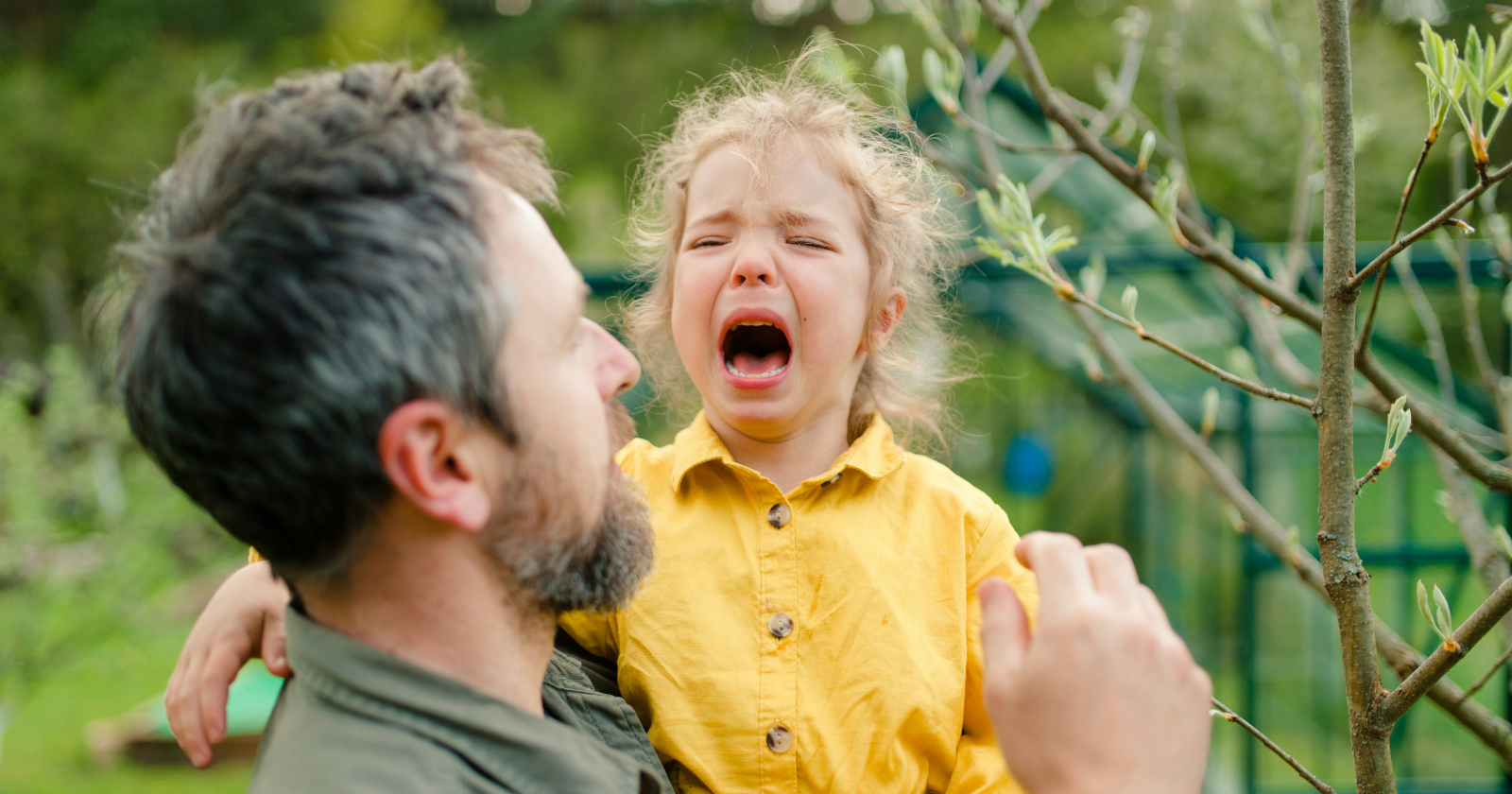
There’s a moment in every meltdown where things could go either way. Your child is screaming, maybe throwing themselves on the floor, and you feel your own pulse quicken. In that split second, something happens inside you that determines what happens next for both of you.
I used to think calm parents were just born that way. That they had some magical reserve of patience I simply wasn’t given. But after years of navigating big feelings with my own kids, and plenty of my own not-so-proud moments, I’ve realized something different.
Calm parents aren’t calmer people. They’ve just learned a handful of small, specific things to do in those heated moments. Things the rest of us skip without even knowing we’re skipping them.
1) They pause before they respond
This sounds so simple it almost feels silly to mention. But that tiny pause, even just two or three seconds, changes everything. When Milo is mid-tantrum because his banana broke in half, my first instinct is to immediately fix it or explain why it doesn’t matter. But that instinct comes from my discomfort, not his need.
Calm parents create a small gap between the trigger and their response. In that gap, they’re not doing nothing. They’re taking a breath, softening their shoulders, maybe even placing a hand on their own chest. This pause lets the nervous system catch up with the moment instead of reacting from a place of alarm.
As noted by Dr. Dan Siegel, author of The Whole-Brain Child, when we pause before reacting, we give our prefrontal cortex a chance to come online instead of letting our lower brain take over. That pause is the difference between responding and reacting.
2) They get low and close
When a child is melting down, towering over them with your hands on your hips sends a very clear message, even if you don’t say a word. Calm parents know this instinctively. They crouch down, sit on the floor, or kneel so they’re at eye level or below.
This isn’t about being permissive or giving in. It’s about signaling safety. A child in the middle of a meltdown is already flooded with stress hormones. Their brain is in survival mode. When you get low and close, you’re telling their nervous system, “I’m not a threat. I’m here with you.”
I’ve noticed with Ellie that when I kneel beside her instead of standing over her, her crying softens faster. She reaches for me sooner. Something shifts in her body when she sees I’m not there to overpower the moment but to be in it with her.
3) They drop their voice instead of raising it
Here’s a pattern I had to unlearn: when my kids got louder, I got louder too. It felt like the only way to be heard. But matching their volume only escalates things. Calm parents do the opposite. They get quieter.
A low, slow voice has a regulating effect. It signals calm to a child’s nervous system in a way that words alone can’t. You don’t have to whisper, but dropping your tone even slightly can shift the entire energy of the room.
Related Stories from The Artful Parent
- 8 signs you’re raising an emotionally secure child even when it doesn’t feel like you know what you’re doing
- 9 things creative kids do that look like misbehavior but are actually signs their mind is working overtime
- The 8 messiest childhood activities are actually the ones building your child’s brain in ways screens never will
Try it next time. When your child is screaming, respond in a voice that’s softer and slower than your normal speaking voice. You might feel silly at first, but watch what happens. Often, they’ll quiet down just to hear what you’re saying.
4) They name the feeling without fixing it
When Milo is crying because we have to leave the park, my instinct is to say, “We’ll come back tomorrow!” or “Don’t be sad, we had so much fun!” But those responses skip right over what he’s actually feeling. They tell him his emotions are a problem to be solved.
Calm parents pause and name the emotion first. “You’re really sad. You didn’t want to leave.” That’s it. No fix. No redirect. Just acknowledgment.
This is what Dr. Becky Kennedy calls being a “sturdy leader” for your child. You’re not crumbling under the weight of their big feelings, and you’re not dismissing them either. You’re simply holding space for what’s true in that moment. Children feel seen when we do this. And feeling seen is often the first step toward calming down.
5) They resist the urge to explain
This one is hard for me. I’m a talker. When Ellie is upset, I want to explain why things are the way they are. I want to reason with her, help her understand. But in the middle of a meltdown, logic doesn’t land. The part of the brain that processes reasoning is essentially offline when a child is flooded with emotion.
Calm parents know that explanations can wait. They save the teaching for later, when everyone is regulated and connected again. In the moment, they keep words minimal. “I’m here. I know this is hard. I’m not going anywhere.”
Less talking, more presence. It feels counterintuitive, but it works. When I stopped trying to explain and started just being with Ellie in her hard moments, she started coming out of them faster. She didn’t need me to make sense of things. She needed me to stay.
6) They let the meltdown run its course
There’s a temptation to rush through meltdowns. To distract, bargain, or do whatever it takes to make the crying stop. But calm parents understand that meltdowns have a natural arc. They build, they peak, and they come down. Trying to shortcut that process often backfires.
When we let children move through their emotions without rushing them, we’re teaching them that feelings are safe to have. That they won’t be abandoned or shamed for falling apart. This builds emotional resilience over time.
I’ve learned to sit with Milo while he cries, even when it’s uncomfortable. I don’t try to fix it or hurry it along. I just stay. And almost every time, there’s a moment where his body softens, he takes a shaky breath, and he reaches for me. That moment wouldn’t happen if I had rushed him through it.
7) They check their own body first
Here’s something I didn’t realize for a long time: my kids can feel my tension. If I’m holding my breath, clenching my jaw, or gripping my hands, they pick up on it. My stress becomes their stress, and the meltdown intensifies.
Calm parents do a quick body scan in the middle of chaos. They notice where they’re holding tension and consciously release it. Shoulders down. Jaw soft. Hands open. Deep breath into the belly.
Research from the Zero to Three organization shows that children rely on co-regulation with their caregivers to manage big emotions. They literally borrow our calm. If we don’t have any calm to offer, they stay stuck in their distress. Regulating yourself first isn’t selfish. It’s necessary.
8) They repair after the storm
Even calm parents don’t handle every meltdown perfectly. What sets them apart is what happens after. They circle back. They reconnect. They repair.
This might look like a quiet conversation later: “That was really hard earlier. I’m sorry I raised my voice. I love you even when things get big.” Or it might be a simple moment of physical closeness, a long hug, reading a book together, some unspoken way of saying, “We’re okay.”
Repair matters more than perfection. Children don’t need us to get it right every time. They need to know that when things go sideways, we’ll come back to them. That rupture isn’t the end of the story. This is how trust is built, one small repair at a time.
Closing thoughts
If you’ve read this list and thought, “I skip most of these,” you’re not alone. I did too, for a long time. These aren’t things most of us were taught. We learned to manage meltdowns by watching the adults around us, and many of them were doing the best they could without these tools.
The good news is that calm is a skill, not a personality trait. You can practice these things. You can get better at them. And your kids will feel the difference, even if you only manage one or two in the heat of the moment.
Start small. Pick one thing from this list and try it the next time things get hard. Notice what shifts. Be patient with yourself. Parenting is a long game, and every small change ripples outward in ways we can’t always see.
