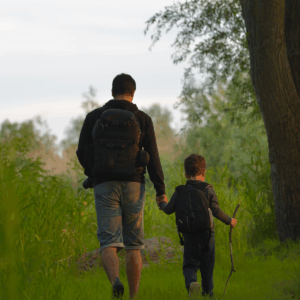
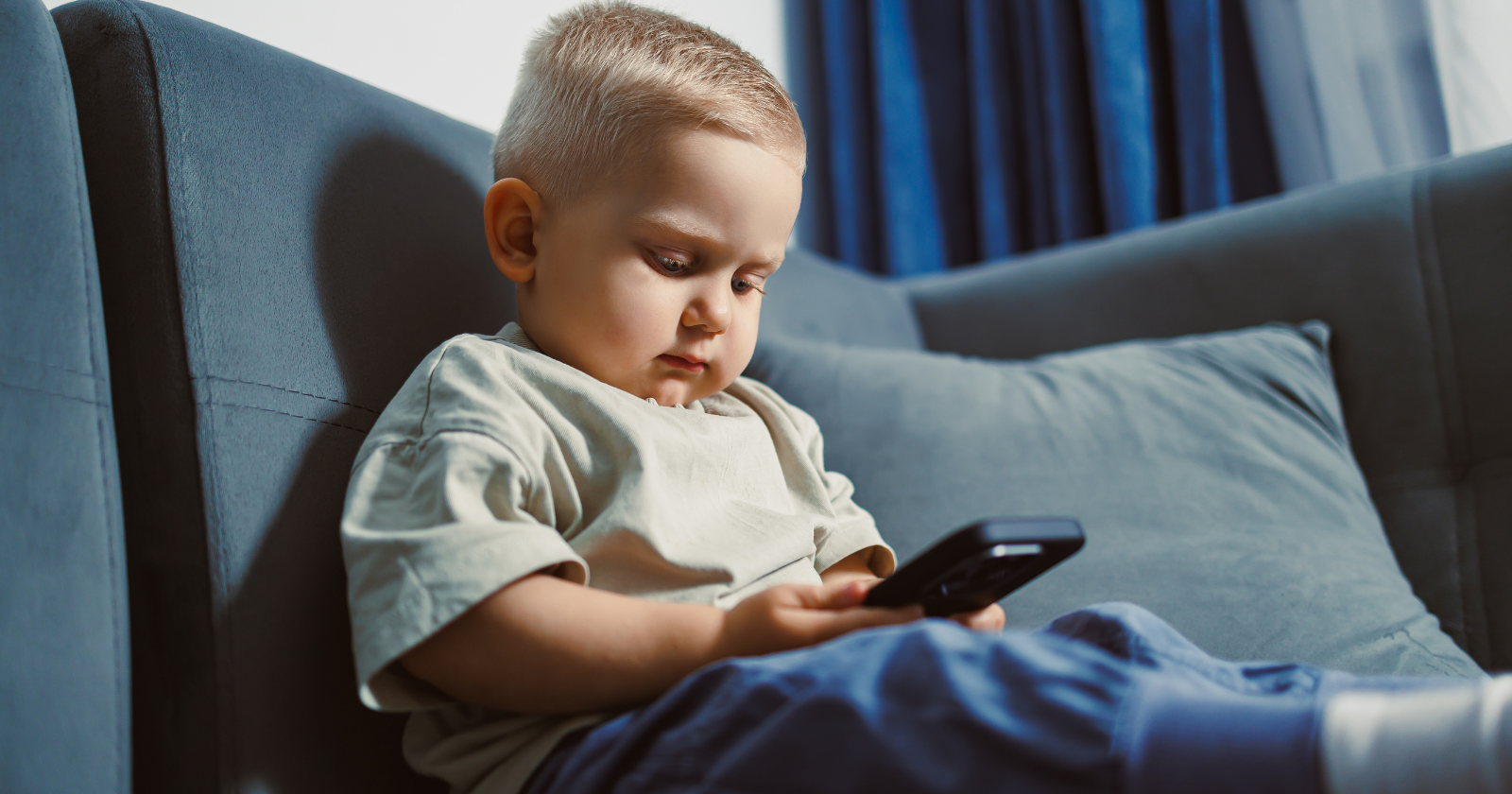
I watched my grandson sit in the backseat last week, staring out the window at nothing in particular. His mother reached for the tablet to hand back to him, and I found myself saying, “Let him be bored for a bit.”
She looked at me like I’d suggested we leave him on the side of the road. But here’s the thing. That empty space, that restless fidgeting, that “I’m so bored” whining? It used to be where childhood happened.
Now we’ve become so efficient at filling every quiet moment that we’ve accidentally stolen something precious from our kids. And most of us won’t realize what’s missing until years later, when we wonder why our teenagers can’t entertain themselves, solve problems, or sit with their own thoughts for more than thirty seconds.
1) The ability to generate their own ideas
When a child says “I’m bored,” they’re standing at the edge of a creative cliff. What happens next, if we don’t intervene, is remarkable. They start to think. They look around. They pick up a stick or a cardboard box or their own imagination, and they make something happen.
Hand them a screen instead, and you’ve just taught them that ideas come from outside themselves. The entertainment arrives pre-packaged, pre-designed, requiring nothing from them except passive consumption.
I’ve seen this play out with my own grandchildren. The ones who’ve had more unstructured time are the ones who build elaborate worlds with couch cushions.
The ones who’ve had screens at every quiet moment tend to stand in the middle of a room full of toys and declare there’s nothing to do. The muscle that generates original thought needs exercise, and boredom is the gym.
2) Comfort with their own company
There’s a particular skill that seems to be vanishing from childhood, and it’s the ability to be alone without feeling lonely. To sit with yourself, your thoughts, your daydreams, and find that perfectly acceptable.
Screens create a constant companion. There’s always someone talking, something moving, a notification arriving. The silence gets filled before a child even notices it’s there.
But learning to enjoy your own company is one of the most valuable gifts you can give yourself. It’s what allows you to be content on a quiet evening, to think through problems without distraction, to know who you are when no one’s watching.
Children who never experience comfortable solitude often grow into adults who can’t tolerate it. They reach for their phones the moment they’re alone, unable to sit with the quiet. That’s not connection. That’s dependency.
Related Stories from The Artful Parent
- 8 signs you’re raising an emotionally secure child even when it doesn’t feel like you know what you’re doing
- 9 things creative kids do that look like misbehavior but are actually signs their mind is working overtime
- The 8 messiest childhood activities are actually the ones building your child’s brain in ways screens never will
3) The development of patience
Boredom teaches children that not every moment will be exciting, and that’s okay. It shows them that waiting is survivable. That discomfort passes. That you don’t always get what you want the instant you want it.
Screens, on the other hand, deliver dopamine on demand. Research from the American Psychological Association has shown that the instant gratification of digital devices can interfere with children’s developing ability to delay gratification and regulate their impulses.
I remember waiting for Saturday morning cartoons as a kid. The anticipation was part of the joy. My grandchildren can watch anything, anytime, instantly.
And while that sounds like progress, something gets lost when you never have to wait for anything. Patience isn’t just a virtue. It’s a life skill that affects everything from relationships to career success to personal happiness.
4) The capacity for deep focus
Have you noticed how quickly content moves now? Videos are shorter. Cuts are faster. Everything is designed to grab attention before it wanders. And children’s brains are adapting to this pace.
The problem is that real life doesn’t work that way. Learning to read requires sustained attention. Mastering a musical instrument demands hours of focused practice. Building meaningful relationships takes patience and presence. These things don’t come with quick cuts and dopamine hits every few seconds.
When boredom strikes and no screen arrives to rescue them, children eventually settle into something. They might spend an hour examining bugs in the garden or building an increasingly complex block tower.
That sustained engagement, born from having nothing else to do, is where deep focus develops. It’s a skill that will serve them for the rest of their lives, and we’re training it out of them one handed-over tablet at a time.
5) Emotional self-regulation
Here’s something I’ve noticed that concerns me deeply. When children feel uncomfortable, restless, or upset, we increasingly hand them a screen to calm down. It works brilliantly in the moment. The crying stops. The fidgeting ends. Peace is restored.
But what have we actually taught them? That uncomfortable feelings are intolerable. That the solution to internal distress is external distraction. That they need something outside themselves to regulate their emotions.
Children who sit through boredom learn that the feeling passes. They discover they can tolerate discomfort. They develop internal resources for managing their emotional states.
As noted by Dr. Michael Rich, director of the Digital Wellness Lab at Boston Children’s Hospital, “When we use screens to calm children down, we’re not teaching them to self-soothe. We’re teaching them to outsource that function.” That’s a lesson that echoes through adolescence and adulthood in ways we’re only beginning to understand.
6) Physical awareness and movement
A bored child moves. They wander, they fidget, they eventually end up doing something physical. They might climb a tree, dig in dirt, or just roll around on the floor making strange noises. It looks unproductive, but their bodies are learning.
A child with a screen sits still. Sometimes for hours. Their eyes track movement, but their bodies remain static. The physical exploration that used to fill childhood’s empty moments has been replaced by thumb movements and screen taps.
If you are a regular reader, you may remember I’ve written about the importance of unstructured physical play. It’s how children develop coordination, spatial awareness, and comfort in their own bodies. It’s also how they burn off the energy that, when trapped inside, often gets labeled as behavioral problems.
The restlessness we medicate might sometimes just be a body that hasn’t moved enough because every still moment got filled with a screen.
7) Social imagination and empathy
When children are bored together, something magical happens. They negotiate. They create shared worlds. They assign roles and argue about rules and work through conflicts. It’s messy and loud and sometimes ends in tears, but it’s also where social skills are forged.
When children are bored separately, each staring at their own screen, none of that happens. They might be in the same room, but they’re in different worlds. The practice of reading faces, interpreting tone, and navigating the complex landscape of human interaction gets skipped.
I watch my grandchildren with their friends sometimes. When the screens are away, they transform into little directors and actors and world-builders.
When the screens come out, they become parallel consumers, occasionally showing each other something but rarely truly engaging. The difference is stark, and the implications for their social development worry me more than I can say.
8) The discovery of genuine interests
Boredom is often the doorway to passion. A child with nothing to do might pick up a pencil and start drawing. Or wander outside and become fascinated by insects. Or find an old guitar in the closet and pluck at strings until something resembling music emerges.
These discoveries happen in the empty spaces. They require time with nothing scheduled, nothing entertaining, nothing demanding attention. The child has to cast about, try things, get bored with those things, and try something else. Eventually, something sticks. Something sparks genuine interest.
Studies on creativity and boredom have shown that periods of understimulation often precede creative breakthroughs. The mind, having nothing external to process, turns inward and starts generating.
Children who never experience this understimulation may never stumble upon the interests that could define their lives. They’re too busy consuming content chosen by algorithms to discover what genuinely moves them.
9) Resilience and problem-solving
When a child is bored and no rescue arrives, they face a small problem: how do I make this moment bearable? It’s not a crisis. It’s not traumatic. But it is a genuine challenge that requires them to think, adapt, and act.
Every time they solve it, they build confidence. They learn that they can handle discomfort. They discover that they have agency, that they can change their circumstances through their own efforts. These are the building blocks of resilience.
Children who are always rescued from boredom miss these small victories. They don’t develop the same confidence in their ability to handle challenges because they’ve never had to handle this particular challenge. And boredom, for all its discomfort, is one of the safest challenges a child can face. It’s practice for the harder moments that life will inevitably bring.
What we can do about it
I’m not suggesting we throw all the tablets in the bin and send children to stare at walls. Screens aren’t evil, and they offer genuine benefits when used thoughtfully. But we’ve swung too far toward filling every quiet moment, and our children are paying a price we’re only beginning to recognize.
The fix isn’t complicated, though it does require something from us: tolerance for their discomfort and our own. When they say they’re bored, we have to resist the urge to solve it. We have to trust that the fidgeting and complaining will eventually give way to something else. Something they created themselves.
It might mean enduring some whining in the backseat. It might mean listening to “there’s nothing to do” for the hundredth time. It might mean being the mean parent who doesn’t hand over the tablet at the first sign of restlessness.
But what we’re protecting is worth the temporary discomfort. We’re protecting their creativity, their patience, their ability to be alone, their capacity for deep focus, their emotional regulation, their physical development, their social skills, their chance to discover genuine passions, and their resilience.
That’s quite a lot to lose to a few moments of quiet, isn’t it?