

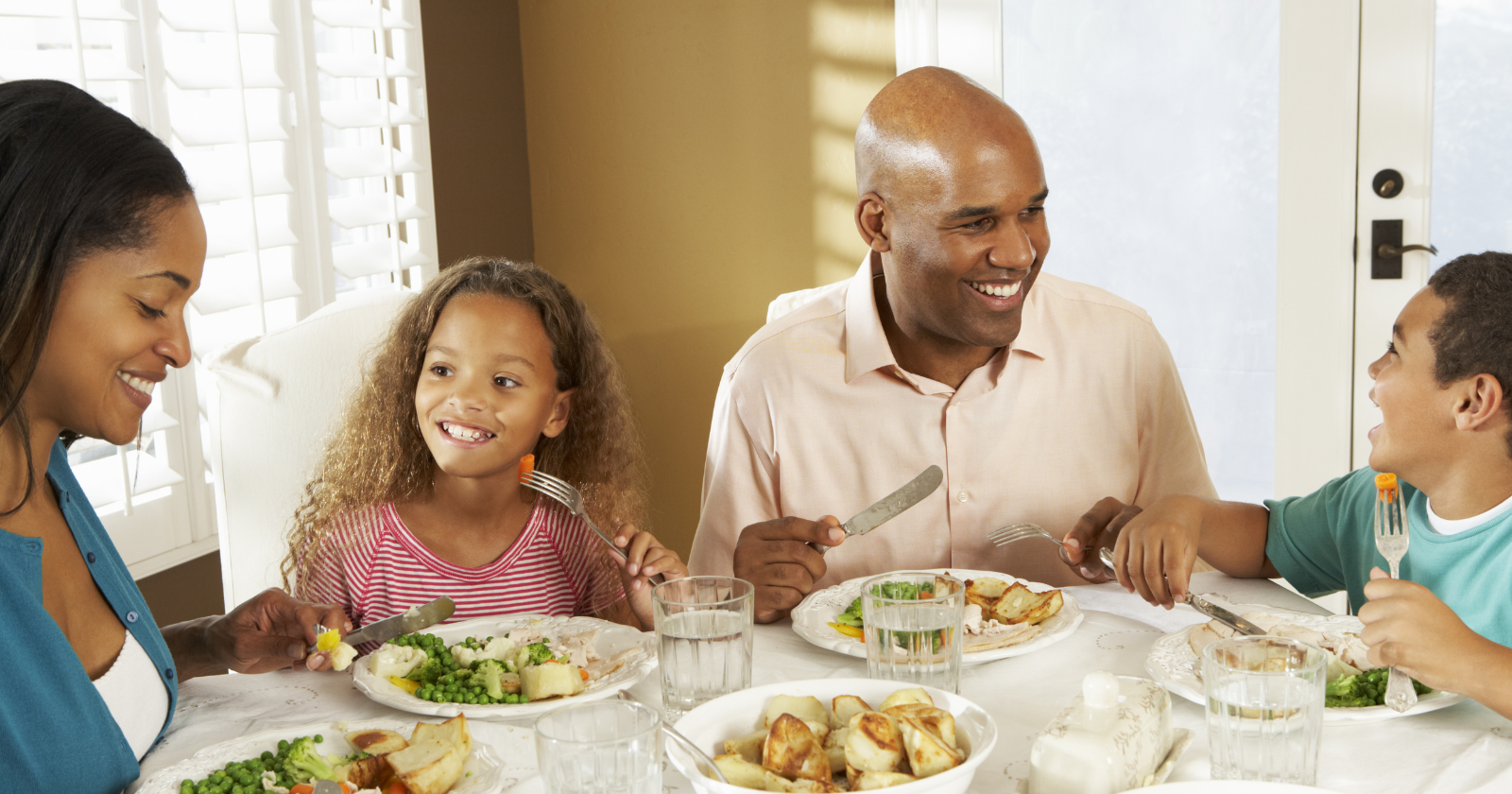
There’s something almost magical about the clatter of forks, the passing of dishes, and the simple question, “How was your day?” I’ve watched my own grandchildren light up during family dinners, sharing stories about playground dramas and classroom triumphs.
And I’ve noticed something over the years. The kids who grow up with regular family meals seem to carry themselves differently as adults.
This isn’t just a grandfather’s hunch. Research consistently shows that children who share meals with their families develop social and emotional skills that stick with them for life. We spend so much energy shuttling kids to activities, signing them up for enrichment programs, and worrying about their social development.
Yet the dinner table, that ordinary piece of furniture in your kitchen, might be doing more heavy lifting than we ever realized.
1) They learn the art of conversation
Think about it. Where else does a child get to practice real, sustained conversation with people of different ages? At the dinner table, kids learn to listen, to wait their turn, and to contribute meaningfully to a discussion. They hear how adults navigate topics, how questions get asked and answered, and how stories get told.
This is fundamentally different from chatting with peers at lunch or responding to a teacher’s questions in class. Family dinner is unstructured dialogue. There’s no curriculum, no right answer. Just people talking about their lives.
As noted by researchers at The Family Dinner Project at Harvard, children who participate in regular family meals show better communication skills and larger vocabularies. These aren’t skills you can drill into a child with flashcards. They’re absorbed slowly, meal after meal, year after year.
2) They develop emotional intelligence
The dinner table is where children first learn to read the room. They notice when Mom seems tired, when Dad is excited about something, when their sibling is upset. They learn to pick up on tone, body language, and the subtle cues that make up so much of human interaction.
Have you ever watched a child carefully observe a family conversation, trying to figure out the right moment to jump in? That’s emotional intelligence developing in real time. They’re learning empathy without anyone teaching it explicitly.
Over the years, I’ve seen how this plays out. Kids who grow up around the dinner table tend to be more attuned to others’ feelings. They notice when a friend is having a hard day. They know when to offer support and when to give space. These are skills that serve them well in friendships, romantic relationships, and eventually in the workplace.
3) They understand family identity and belonging
Every family has its own culture. Inside jokes, shared memories, traditions that seem silly to outsiders but mean everything to those who belong. The dinner table is where this culture gets created and reinforced.
Related Stories from The Artful Parent
- 8 signs you’re raising an emotionally secure child even when it doesn’t feel like you know what you’re doing
- 9 things creative kids do that look like misbehavior but are actually signs their mind is working overtime
- The 8 messiest childhood activities are actually the ones building your child’s brain in ways screens never will
When children hear family stories repeated, when they participate in the same rituals night after night, they develop a strong sense of who they are and where they come from. This sense of belonging is a powerful anchor.
I’ve mentioned this before, but my own grandchildren love hearing stories about their parents as kids. Their eyes go wide when they learn that their father once got in trouble for the exact same thing they did last week. These moments create connection across generations.
They help children understand that they’re part of something larger than themselves, and that understanding becomes a source of strength throughout their lives.
4) They learn conflict resolution
Let’s be honest. Family dinners aren’t always peaceful. Siblings bicker. Teenagers roll their eyes. Someone inevitably says something that lands wrong. But here’s the thing: this is actually valuable.
The dinner table is a safe space to experience and navigate conflict. Children learn that disagreements happen, that feelings can be hurt, and that repair is possible. They watch how adults handle tension. They practice apologizing and forgiving.
These are crucial life skills. So many adults struggle with conflict because they never learned how to sit with discomfort and work through it. Children who experience the normal friction of family meals, and see it resolved, carry that template into their adult relationships.
- The reason the kindest person you know is also the loneliest isn’t a paradox — it’s a transaction they set up in childhood where they traded being loved for being useful and now they’re fifty-seven and everyone around them adores what they do but nobody has any idea who they actually are - Global English Editing
- My husband and I have weekly date nights where we leave our daughter with the nanny and go out for dinner and drinks — and the number of people who’ve called that selfish taught me that most couples stop prioritizing their marriage the second they become parents, and then wonder why they feel like roommates - Global English Editing
- How solitude can make you a stronger and more self-aware creator - The Blog Herald
5) They absorb manners and social norms
I’m not talking about which fork to use or keeping elbows off the table, though those things have their place. I’m talking about the deeper social norms that govern how we treat each other. Saying please and thank you. Not interrupting. Showing appreciation for the person who cooked. Offering to help clean up.
These behaviors might seem small, but they add up to something significant. Children who learn basic courtesy at home carry it into the world. They know how to behave in social situations. They make others feel respected and valued.
According to research published in the Journal of Family Psychology, family routines like shared meals contribute significantly to children’s social competence. The dinner table is essentially a nightly training ground for being a decent human being.
6) They build stronger relationships with parents
Here’s something that might surprise you. Teenagers who eat dinner with their families regularly report feeling closer to their parents and more willing to talk to them about serious issues. In an age when parents worry constantly about losing connection with their adolescents, the dinner table offers a simple solution.
There’s something about the routine of it. The predictability. Kids know that every evening, there will be this time when the family comes together. Even if the conversation is mundane, even if the teenager barely contributes, the ritual itself communicates something important: we show up for each other.
These stronger parent-child relationships have ripple effects. Children who feel connected to their parents are less likely to engage in risky behaviors. They’re more likely to seek guidance when they need it. And as adults, they tend to maintain closer family ties.
7) They develop patience and delayed gratification
In our instant-everything world, the family dinner is a rare exercise in waiting. Waiting for everyone to sit down. Waiting for food to be served. Waiting for your turn to speak. Waiting for others to finish before leaving the table.
This might seem trivial, but the ability to delay gratification is one of the strongest predictors of success in life. Children who learn to wait, who understand that not everything happens on their timeline, develop self-control that serves them well academically, professionally, and personally.
The dinner table teaches this lesson gently, repeatedly, without lectures or lessons. Just the simple practice of sitting together and sharing a meal, night after night, builds the muscle of patience.
8) They gain confidence in group settings
Have you ever noticed how some people seem completely at ease in group situations while others shrink into the background? A lot of this comes down to early experience. Children who regularly participate in family meals get comfortable being part of a group.
They learn that their voice matters. They practice contributing to group discussions. They get used to the rhythm of social gatherings, the give and take, the way attention shifts around a table.
As Dr. Anne Fishel, co-founder of The Family Dinner Project, has noted, “Family dinners are a more powerful predictor of academic success than doing homework.” But beyond academics, this confidence in group settings translates to success in team projects, work meetings, and social situations throughout life.
Why extracurriculars can’t replace this
Now, I want to be clear. Extracurricular activities are wonderful. Sports teach teamwork. Music builds discipline. Clubs help kids find their people. I’m not suggesting anyone pull their children out of activities they love.
But here’s what those activities can’t provide: the intimate, multigenerational, unstructured social learning that happens at the family dinner table. Soccer practice has a coach running drills. Piano lessons have a teacher giving instruction. Even playdates have their own dynamics.
Family dinner is different. It’s where children learn to be themselves in the company of people who love them unconditionally. It’s where they can make mistakes, say the wrong thing, have a bad day, and still belong. No extracurricular offers that.
Making it work in real life
I know what you might be thinking. This all sounds lovely, but who has time for family dinners every night? Between work schedules, activities, and the general chaos of modern life, sitting down together can feel impossible.
Here’s my advice: aim for most nights, not every night. Research suggests that even three to four family dinners per week provide significant benefits. The meal doesn’t have to be elaborate. Takeout pizza eaten together counts. Breakfast can work too, if evenings are impossible.
What matters is the togetherness, the conversation, the ritual. Turn off screens. Put away phones. Create a space where everyone is present, even if just for twenty minutes.
The investment pays dividends for decades. Those children sitting at your table tonight will carry the lessons they’re learning into their adult relationships, their future families, their workplaces, and their communities.
So tonight, when you gather around whatever table you have, know that you’re doing something profound. You’re not just feeding bodies. You’re shaping the social and emotional foundation of the adults your children will become.
What conversations will happen at your table this evening?
