I watched my grandson swipe through an educational app the other day. His little fingers moved with impressive speed, matching shapes and collecting digital stars. The app promised to boost his cognitive development. And yet, something felt off.
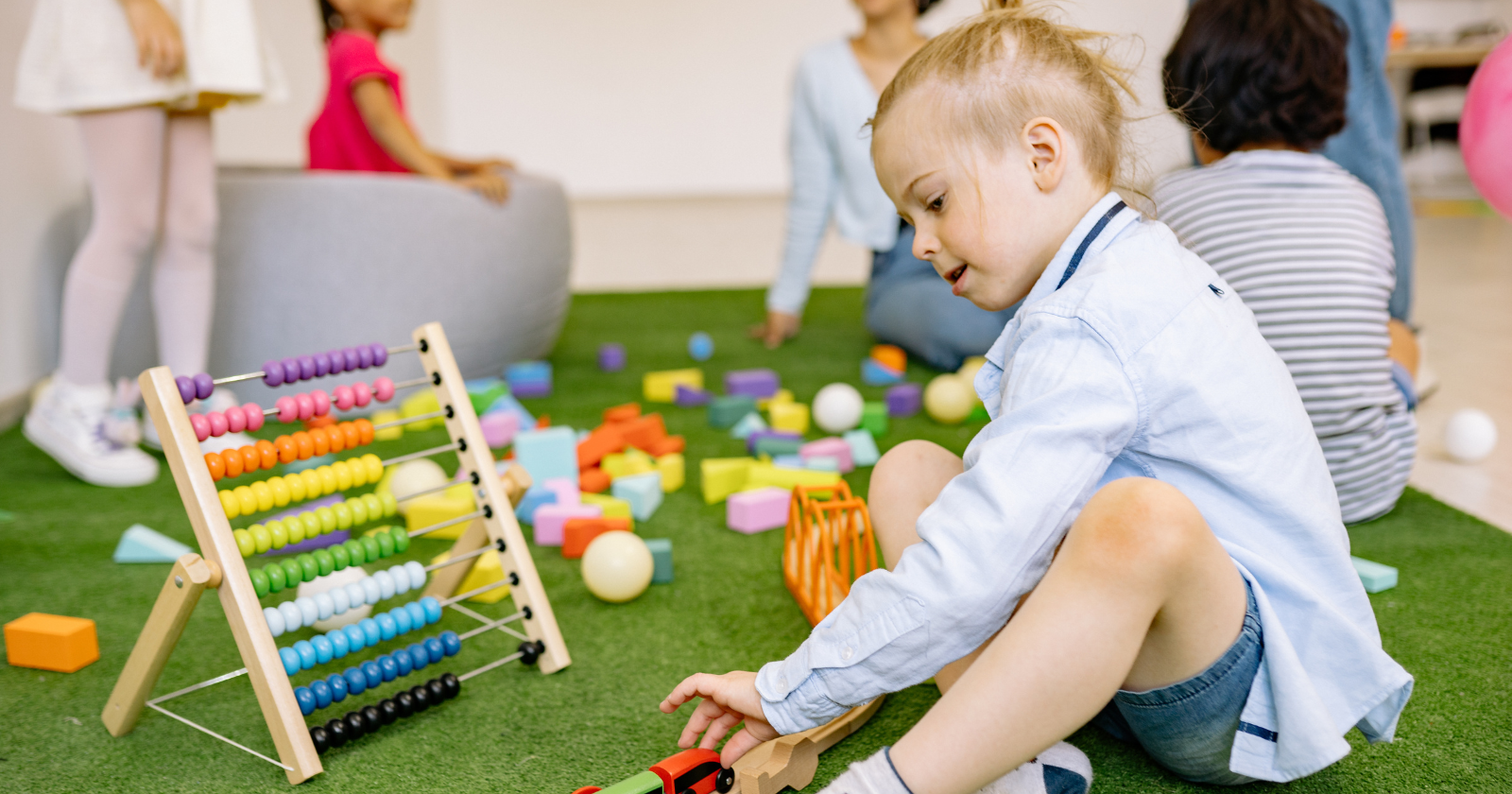
Later that afternoon, we abandoned the tablet and built a wobbly tower out of wooden blocks. He knocked it down, laughed, rebuilt it differently, knocked it down again. His whole body was engaged. His eyes sparkled in a way they hadn’t with the screen. That got me thinking about what actually builds young brains, and whether we’ve been looking in the wrong direction all along.
Turns out, the neuroscience backs up what many of us suspected. Those simple, messy, unplugged activities from our own childhoods? They’re doing something profound that no app can replicate.
1) Building with blocks and construction toys
There’s a reason blocks have been around forever. When children stack, balance, and arrange physical objects, they’re developing spatial reasoning skills that form the foundation for later mathematical thinking.
Research from the University of Delaware found that block play significantly improves spatial skills in children, which are strongly linked to success in STEM fields. The physical act of manipulating three-dimensional objects creates neural connections that flat screens simply cannot replicate.
What makes blocks special is the constant problem-solving. The tower falls. The bridge collapses. And each failure teaches something about physics, balance, and persistence. There’s no reset button, no algorithm adjusting the difficulty. Just gravity, friction, and a child’s growing understanding of how the physical world works.
I’ve mentioned this before, but my own kids spent countless hours with a simple set of wooden blocks. Nothing fancy. And I’m convinced those hours did more for their spatial intelligence than any rotating 3D puzzle on a screen ever could.
2) Playing in dirt and sand
Here’s something that might surprise you. Getting dirty is actually good for brain development.
When children dig, mold, and manipulate sand or soil, they’re engaging in what researchers call “sensory integration.” Their brains are processing texture, temperature, weight, and moisture all at once. This multi-sensory experience strengthens neural pathways in ways that touching smooth glass never will.
Beyond the sensory benefits, unstructured outdoor play exposes children to beneficial microbes that support immune function and, interestingly, mental health. The connection between gut bacteria and brain development is an emerging field, but early findings suggest that children who play in natural environments may have advantages in emotional regulation.
There’s also the creativity factor. A pile of sand becomes a castle, a mountain, a cake, a dinosaur habitat. The material responds to the child’s imagination without predetermined outcomes. No correct answers. No wrong moves. Just endless possibility shaped by small hands.
3) Climbing trees and playground structures
Remember the thrill of climbing higher than you probably should have? That slightly dangerous feeling wasn’t just exciting. It was building your brain.
Climbing requires what neuroscientists call “proprioceptive awareness,” which is the sense of where your body is in space. Children must constantly calculate distances, assess grip strength, and make split-second decisions about their next move. This kind of dynamic problem-solving activates multiple brain regions simultaneously.
A fascinating study published in Perceptual and Motor Skills found that activities like climbing trees can dramatically improve working memory. The researchers believe this happens because such activities require both physical navigation and mental planning at the same time.
Yes, there’s risk involved. Scrapes happen. Bruises appear. But managed risk is how children learn to assess danger, trust their bodies, and develop confidence. An app might simulate climbing, but it can’t teach a child what their own muscles are capable of.
4) Playing make-believe and dress-up
When a child pretends to be a doctor, a pirate, or a talking rabbit, something remarkable happens in their brain. They’re practicing a skill that psychologists consider fundamental to human intelligence: theory of mind.
Theory of mind is the ability to understand that other people have thoughts, feelings, and perspectives different from your own. Pretend play exercises this capacity constantly. A child playing “house” must imagine what a parent thinks, how a baby feels, what a neighbor might say.
This kind of imaginative play also strengthens executive function, which includes the ability to plan, focus attention, and control impulses. Children must remember the rules of their imaginary world, stay in character, and adapt when playmates take the story in unexpected directions.
The beauty of make-believe is its open-endedness. There are no levels to complete, no achievements to unlock. The reward is the play itself, and the neural pathways being quietly strengthened along the way.
5) Drawing, painting, and sculpting
Hand a child some crayons and paper, and you’re giving them more than an art project. You’re offering a workout for their developing brain.
Creating visual art requires the coordination of fine motor skills, visual processing, and creative thinking. When children draw, they must translate three-dimensional observations into two-dimensional representations. This is sophisticated cognitive work, even when the result looks like a purple blob with legs.
Art also provides an outlet for emotional expression that words often cannot capture. Children process experiences, fears, and joys through their drawings in ways that support emotional development and self-regulation.
What matters most is the process, not the product. A child experimenting with how colors mix, how pressure affects line thickness, how shapes can represent objects is engaged in genuine discovery. No tutorial needed. No correct technique required. Just exploration and the gradual building of neural connections.
6) Playing simple card and board games
Before there were apps designed to teach counting and strategy, there were card games at kitchen tables. And honestly? The old way might be better.
Games like Go Fish, Memory, and simple board games teach children to take turns, follow rules, cope with losing, and plan ahead. These social and cognitive skills are bundled together in ways that solitary screen time cannot match.
As noted by the American Academy of Pediatrics, play-based learning, especially when it involves social interaction, is essential for healthy brain development. The back-and-forth of a card game, the negotiation over rules, the shared laughter and occasional tears all contribute to social-emotional learning.
There’s also the math hiding in plain sight. Counting spaces, adding dice, comparing quantities, calculating whether you have enough cards to win. Children absorb numerical concepts naturally when they’re embedded in something fun and social.
7) Listening to stories read aloud
In an age of audiobooks and animated story apps, there’s still something irreplaceable about a human voice reading to a child.
When children listen to stories, their brains are doing heavy lifting. They must create mental images, follow narrative threads, remember characters, and predict what might happen next. This is far more cognitively demanding than watching a story unfold visually on a screen.
The shared experience matters too. A child curled up with a parent or grandparent, asking questions, pointing at pictures, feeling the warmth of connection while absorbing language. This combination of emotional bonding and cognitive engagement creates optimal conditions for learning.
I still remember the books my father read to me. Not just the stories, but the sound of his voice, the way he did different characters, the feeling of safety and wonder mixed together. Those memories are stored deep, and I suspect the neural pathways formed during those evenings are still serving me well.
8) Helping with cooking and baking
The kitchen might be the most underrated classroom in your home.
When children help prepare food, they’re learning measurement, sequencing, cause and effect, and patience. They see raw ingredients transform through heat and time. They practice following instructions while also making small decisions. They engage multiple senses simultaneously.
Cooking also teaches something apps struggle to convey: that mistakes are part of the process. The cookies burned? The soup is too salty? These are learning opportunities that feel real because they are real. The feedback is immediate and tangible.
There’s also the delayed gratification aspect. Children must wait for dough to rise, for water to boil, for the timer to ding. In a world of instant digital rewards, learning to wait for something good is a valuable skill. And the reward of eating something you helped create? That satisfaction runs deep.
9) Unstructured outdoor play
Perhaps the most powerful brain-building activity is also the simplest: letting children play outside without a plan.
Unstructured outdoor play combines physical movement, sensory experience, social interaction, and imaginative thinking all at once. Children running, jumping, exploring, and inventing games are getting a full-brain workout that no structured activity can match.
The unpredictability is part of the magic. A stick becomes a sword, then a fishing rod, then a magic wand. A puddle invites splashing, then floating leaves, then questions about where the water goes. Each moment of curiosity followed by exploration strengthens the brain’s capacity for creative thinking and problem-solving.
Nature adds another layer. The irregular surfaces, the changing weather, the living creatures encountered along the way all provide stimulation that manufactured environments cannot replicate. There’s a reason children seem calmer and more focused after time outside. Their brains have been fed something essential.
I spend a lot of time at the park with my grandchildren. Sometimes we have plans. Often we don’t. And those unplanned hours, following their curiosity wherever it leads, feel like the most valuable time we spend together.
Bringing it back to basics
None of this means technology is bad or that educational apps have no value. They can be useful tools in the right context. But they’re tools, not replacements for the rich, messy, physical experiences that young brains are wired to learn from.
The activities on this list share something important. They engage the whole child: body, senses, emotions, and mind working together. They involve real materials, real consequences, and often real human connection. They’ve stood the test of time because they work.
So the next time you’re tempted to hand over a device to keep a child occupied, consider the alternatives. A cardboard box. A pile of leaves. A deck of cards. A story read in your own voice. These simple things might be doing more for their developing brain than the most sophisticated app ever could.
What old-school activities do you remember most fondly from your own childhood?