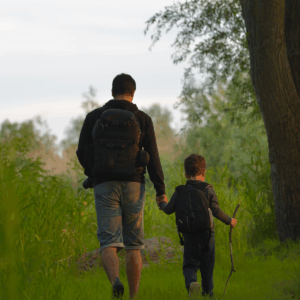
Last week, I sat on the same park bench where I usually watch my grandchildren play, but this time the swings were empty and the only sound was the wind rustling through the trees. A grandmother I’d never seen before sat down beside me, and within minutes, tears were streaming down her face as she told me about not seeing her granddaughter for two years.
Her story hit me hard because I’ve heard variations of it so many times. Grandparents who’ve been cut off from their grandchildren carry a unique kind of grief that most people simply don’t understand. Friends tell them to “just give it time” or “they’ll come around,” but these well-meaning platitudes miss the depth of what’s really happening.
If you’re going through this yourself, or know someone who is, I want you to know that what you’re experiencing is real, valid, and more common than you might think. Here are eight things that grandparents in this situation quietly endure that rarely get talked about.
1) The physical ache that feels like actual grief
When I became a grandfather for the first time, being present at my grandson’s birth reminded me what really matters and what’s just noise. Now imagine having that connection suddenly severed.
The pain isn’t just emotional. Many grandparents describe a physical heaviness in their chest, like carrying stones around all day. Your arms literally ache to hold those little ones. You wake up thinking about them and go to bed wondering if they remember you.
This isn’t being dramatic. Research shows that social rejection activates the same pain centers in the brain as physical injury. Your body doesn’t distinguish between a broken bone and a broken heart.
2) The torture of milestone moments you’re missing
Every first day of school, every birthday, every lost tooth becomes a dagger. You know these moments are happening without you. Maybe you see glimpses on social media through mutual connections, or maybe you’re completely in the dark, which might be worse.
I have four grandchildren myself, and taking them to the park most weekends is genuinely the highlight of my week. I can’t imagine knowing they’re out there growing, changing, becoming who they’re meant to be, and not being part of it. The three-year-old who’s now five and wouldn’t recognize you. The eleven-year-old navigating middle school without your encouragement.
Time doesn’t pause for reconciliation, and that’s what makes this so unbearable.
3) The impossible explanations to well-meaning friends
“How are the grandkids?”
Such an innocent question that lands like a punch to the gut. Do you tell the truth and watch their face fall into uncomfortable silence? Do you give a vague answer and change the subject? Or do you lie and say everything’s fine?
Related Stories from The Artful Parent
- A clinical psychologist explains that today’s parents give children more freedom, more voice, and more emotional validation than any generation before them, and the children are more anxious than ever — not because freedom is harmful, but because a child’s brain was never designed to carry the weight of unlimited choice before it can carry a conversation
- Most people assume the grandmother who keeps calling even when nobody picks up is lonely — they don’t realize she’s doing the only thing she knows how to do with love that no longer has anywhere to land
- The hardest lesson of parenthood doesn’t arrive when your children are small, it arrives when they’re grown and you hear yourself described through their memories — because the parent you thought you were and the parent they experienced are almost never the same person, and sitting with that gap is the real work of later life
Most grandparents in this situation become masters of deflection. But the energy it takes to navigate these conversations day after day is exhausting. You start avoiding social situations altogether because you can’t bear another awkward exchange about why you don’t have recent photos to share.
4) The haunting what-ifs that play on repeat
At 3 AM, your mind becomes a courtroom where you’re both prosecutor and defendant. What if you’d handled that conversation differently? What if you’d apologized sooner, or not apologized at all? What if you’d set different boundaries, or no boundaries?
The truth nobody tells you is that sometimes there’s nothing you could have done differently. Sometimes family dynamics are complicated by factors beyond your control. Mental health issues, substance abuse, toxic relationships, old wounds that never healed properly. But knowing this intellectually doesn’t stop the mental replay.
5) The secondary losses nobody talks about
Losing access to your grandchildren often means losing more than just them. Maybe you’ve also lost your relationship with your adult child. Perhaps their spouse, who you considered family, is now a stranger. The family gatherings that once filled your calendar are now painful reminders of what’s missing.
There’s also the loss of your identity as an active grandparent. Being a grandparent isn’t just something you do; for many of us, it’s who we are. I see grandparenting as my chance to be present in ways work didn’t allow when my own kids were young. When that’s taken away, you’re left wondering who you are now.
6) The judgment from people who’ve never walked this path
- “Well, you must have done something really terrible.”
- “There are two sides to every story.”
- “Blood is thicker than water; they’ll come around.”
People who’ve never experienced estrangement often assume it only happens in cases of abuse or extreme dysfunction. They can’t fathom that good, loving grandparents get cut off too. Sometimes over misunderstandings.
- What veteran bloggers who stay happy and passionate years into their career have learned to let go of - The Blog Herald
- A 2005 warning that the blogging world ignored — and is still paying for - The Blog Herald
- The rise and quiet exit of MSN Spaces: what bloggers should still learn from it - The Blog Herald
Sometimes over boundaries. Sometimes over things that seem impossibly small in hindsight.
The judgment stings because it compounds your own self-doubt. You already wonder if you’re the villain in someone else’s story. You don’t need others reinforcing that narrative.
7) The cruel hope that makes moving forward impossible
Every phone call could be the one. Every unexpected knock at the door might be them. You can’t fully grieve because the loss isn’t final. They’re out there, somewhere, living their lives without you.
This limbo state is torture. At least with death, there’s finality. There are rituals for mourning, support groups that understand, a clear before and after. But estrangement leaves you suspended between hope and despair, unable to fully embrace either.
Some days you start to accept it, to build a life around the absence. Then you see a child at the grocery store who looks like your grandchild, or you find an old drawing they made for you, and you’re right back at square one.
8) The fear that they’ll forget you entirely
This might be the cruelest cut of all. Young children’s memories are fragile. If your three-year-old grandchild hasn’t seen you in two years, do they remember the songs you sang, the games you played, the special bond you shared?
You worry that if reconciliation ever comes, you’ll be a stranger to them. That you’ll have to rebuild from nothing. That the precious early years you shared will be erased, existing only in your memory and maybe some photos they’ll see someday and not recognize themselves in.
Closing thoughts
If you’re reading this and recognizing your own pain in these words, I want you to know something: your grief is real, your love is valid, and you’re not alone.
There are support groups specifically for estranged grandparents, therapists who understand this unique loss, and slowly, society is beginning to recognize that family estrangement is more common than we’d like to admit.
Hold onto hope, but don’t let it hold you hostage. Build a life that has meaning beyond this loss, while keeping your heart open to reconciliation.
And if someone you know is going through this, please don’t offer solutions or judgments. Just listen. Sometimes that’s all we need.
What small step could you take today to care for yourself while carrying this grief?