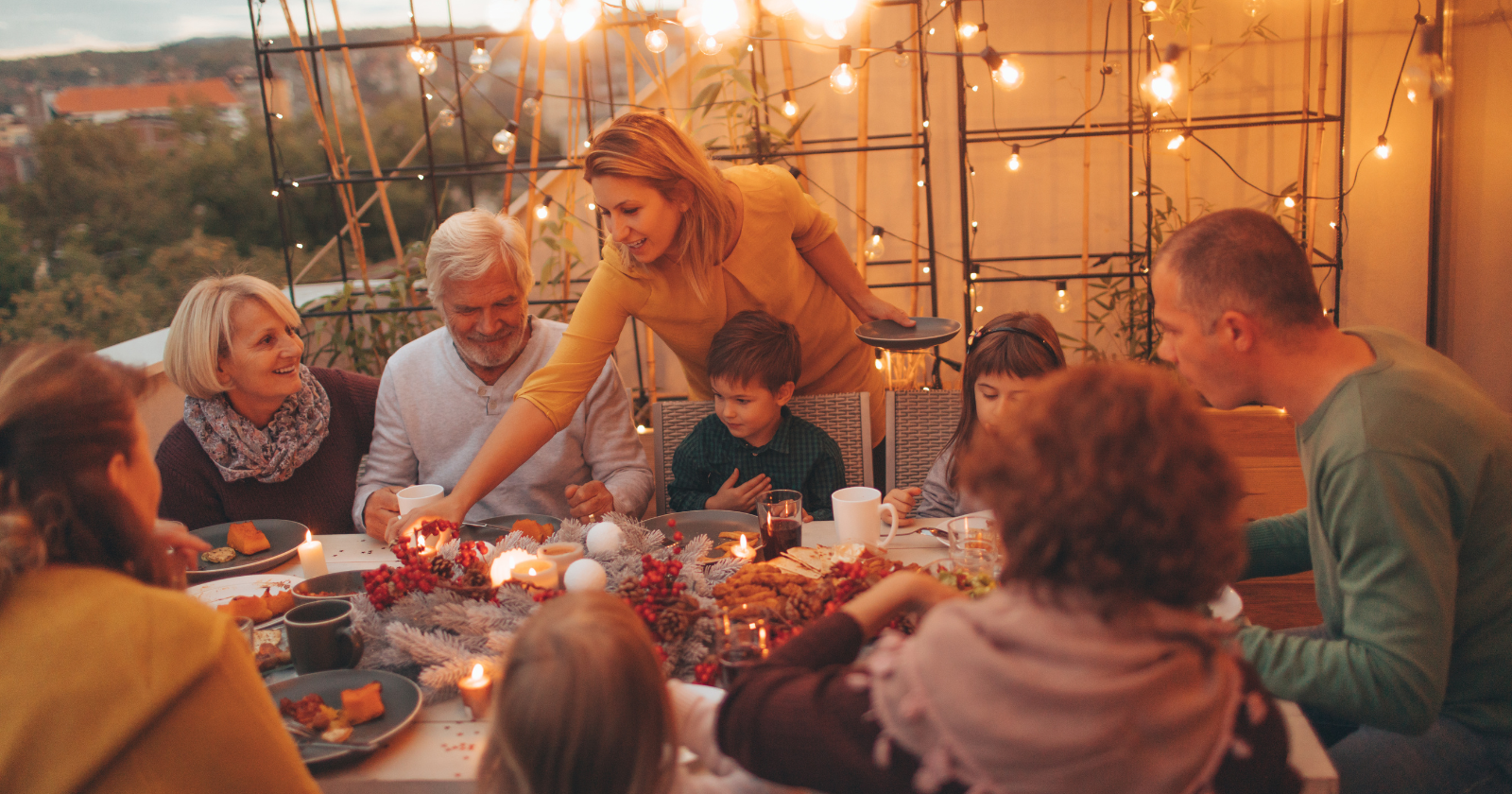
That morning, the familiar clink of china against wood filled my mother’s dining room as she methodically placed each plate, each fork, each carefully folded napkin.
The November sun streamed through her lace curtains, catching the dust motes that danced above six place settings. Six. Even though she knew perfectly well it would just be the two of us this year.
I stood in the doorway watching her weathered hands move with practiced precision, arranging the good silverware she only brings out for holidays.
When I finally asked why she was setting places for people who wouldn’t come, she paused, looked at her hands as if seeing them for the first time, and said something that knocked the wind out of me: “My hands just remember what my family forgot.”
In that moment, watching her continue with her ritual, I understood something profound about memory, loss, and the way our bodies hold onto love even when the people we love drift away.
The body remembers what the heart can’t let go
There’s something about muscle memory that runs deeper than conscious thought. My mother’s hands knew exactly where each plate should go, the proper distance between the knife and spoon, the angle of the water glass. Forty-some years of setting this same table for her family had carved these movements into her very bones.
It reminded me of how I still reach for my reading glasses on the nightstand even though I’ve worn contacts for the past five years. Or how my fingers still dial my childhood phone number when I’m distracted. Our bodies become living archives of our habits, our routines, our loves.
But what struck me most was that she wasn’t confused or forgetful. She knew my brother lives across the country now. She knew my sons had their in-laws to visit this year. She set those places anyway because, as she later explained, it felt wrong not to. The absence of those settings would make the empty chairs even emptier.
Have you ever noticed how the hardest habits to break are the ones tied to people we love? Even when those people are gone or distant, we keep making their coffee the way they liked it, buying their favorite cookies at the store, setting their place at the table.
When traditions become acts of hope
As we ate our quiet Thanksgiving meal at that too-large table, my mother told me she’d been setting extra places for three years now. Three years since the family started scattering, choosing other obligations, other tables.
“I keep thinking,” she said, cutting her turkey into smaller and smaller pieces, “that maybe if I keep everything the same, they’ll remember to come back.”
Related Stories from The Artful Parent
- 7 things amazing parents do every day that make their adult children actually want to visit (not just feel obligated)
- The moment I knew I was becoming my parents wasn’t when I caught myself repeating their phrases — it was when I caught myself defending the exact behaviors I spent my 20s promising I’d never replicate
- Nobody warns you that the first year of parenthood isn’t really about the baby — it’s a full audit of every decision your own parents made, delivered in real time, and the verdict changes hourly
There’s a particular kind of optimism in maintaining traditions that no one else seems to value anymore. It’s like keeping a porch light on for someone who might never return. Some might call it denial. I see it as hope in its purest form.
I thought about my own sons and how their lives have grown increasingly complex. Jobs, mortgages, school plays, soccer tournaments. I don’t blame them for the missed dinners, the shortened visits.
I was the same at their age, wasn’t I? Always sure there would be more time, more holidays, more chances to sit at my parents’ table.
That health scare I had a few years back taught me that we live as if time is infinite when it’s actually the most finite resource we have. We assume the table will always be set, the door always open, our parents always waiting. Until one day, they’re not.
The weight of being the one who shows up
Being the only one at that table with my mother felt like carrying a weight meant for six. Every story she told echoed in the empty spaces. Every pause in conversation seemed longer. The food, prepared with the same love and effort as when the house was full, seemed almost accusatory in its abundance.
But here’s what I learned: showing up matters more when you’re the only one who does. My presence couldn’t fill all those chairs, but it could fill one. And sometimes, one is enough to keep hope alive.
- If you heard these 9 phrases as a child, you were raised by parents who didn’t know how to show love - Global English Editing
- People who drive luxury cars but can barely afford their rent usually display these 7 behaviors (without realizing it) - Global English Editing
- Psychology says the most successful people don’t fill their free time with more work disguised as self-improvement — they do things that activate completely different parts of their brain, and that mental cross-training is what gives them an edge that pure grinders never develop - Global English Editing
There’s a unique responsibility in being the family member who maintains the bridge between what was and what is. You become the keeper of stories, the witness to traditions, the one who remembers why we used the good china and why grandma’s stuffing recipe must never be altered.
I watched my mother’s face light up when she told the same stories I’d heard dozens of times before. About the Thanksgiving when my brother dropped the turkey.
About the year we ran out of chairs and had to pull in the piano bench. She needed someone to remember with her, to confirm that yes, those times were real, that family was real, that all of it mattered.
Learning from hands that remember
Before I left that day, I helped my mother clear the table. We wrapped the untouched place settings carefully, putting them away until Christmas. She moved slowly but deliberately, her arthritis making each movement measured.
“You know,” she said, “your father used to say that traditions are just memories we haven’t made yet.”
The profundity of that hit me as I drove home. Every empty chair at her table once held someone. Every unused plate once served someone’s favorite dish. Those six settings weren’t just about the past. They were an invitation to the future, a standing offer of belonging.
What would happen, I wondered, if we all set tables for more people than we expect? Not out of sadness for who’s missing, but out of faith that connection is still possible?
Closing thoughts
My mother still sets the table for six. I’ve stopped suggesting she shouldn’t. Because now I understand that those extra places aren’t about denial or living in the past. They’re about keeping space open for love, for return, for the possibility that someone might surprise us and walk through that door.
We all have our versions of setting the table for six. The friend we keep texting even though they stopped responding. The birthday card we still send to the relative we haven’t seen in years. The tradition we maintain even when we’re the only one who seems to care.
These aren’t acts of foolishness. They’re acts of faith.
So here’s my question for you: What table are you setting, and who are you holding space for? Because sometimes, the most powerful thing we can do is simply refuse to let our hands forget what others might have abandoned.
Sometimes love looks like an empty chair, waiting.